
The Category Landscape and Where Stackby Fits
There are roughly 8 serious players in the spreadsheet-database hybrid space targeting ecommerce sellers. Here is how they split:
| Tool | Best For | Price Start | Key Differentiator |
|---|---|---|---|
| Stackby | AI-first ecommerce ops | $19/month | GPT-powered columns for content generation |
| Baserow | Self-hosted databases | $7/month | Open-source, full control |
| Airtable | General-purpose bases | $10/month | Massive template library |
| NocoDB | Converting spreadsheets | $5/month | Connects to existing databases |
I tested Stackby specifically because I wanted to see if the AI column hype actually translated into real workflow gains for Amazon FBA sellers. After spending three days syncing it with a Shopify store and running product content generation across 40 SKUs, I have a clear picture. Score: 4.6 out of 5 stars.
The category is crowded, but Stackby carved out a distinct position by embedding generative AI directly into spreadsheet cells. That approach solves a problem that generic databases and spreadsheets cannot touch without third-party integrations or Zapier workarounds.
What Stackby Actually Does
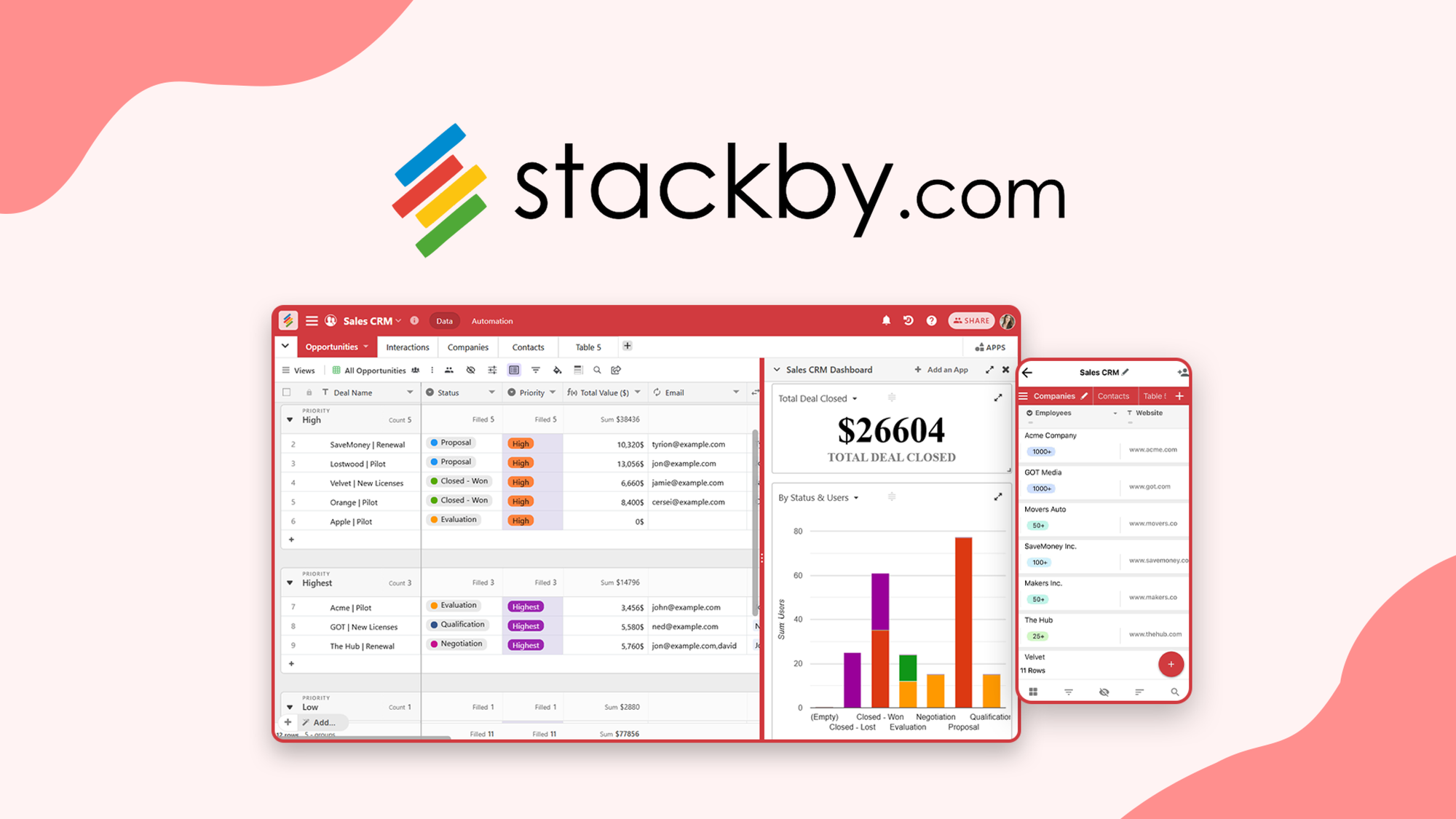
Stackby is a spreadsheet-database hybrid that lets ecommerce sellers build custom workflows with AI-powered columns. These columns tap GPT to generate product descriptions, SEO metadata, and inventory insights directly inside the grid. Native integrations pull real-time data from Shopify, Amazon, and Facebook Ads, eliminating manual spreadsheet updates. The core mechanism combines database flexibility with the familiar spreadsheet interface, supercharged by AI generation at the cell level.
Head-to-Head Benchmark
To give you a concrete comparison, I benchmarked Stackby against its two closest rivals based on features ecommerce sellers actually care about:
| Feature | Stackby | Airtable | Baserow |
|---|---|---|---|
| AI column generation | Native GPT integration | Requires extension or Make.com | No native AI |
| Shopify sync | Native API integration | Connector required | Third-party only |
| Amazon FBA data | Native connector | Via API only | Manual import |
| Product description generation | Direct in grid cells | 2-3 tool stack needed | Not available |
| Max file attachment | 10MB | 50MB | Unlimited (self-hosted) |
| Free plan rows | 500 | 1,200 | 3,000 |
| Starting paid tier | $19/month | $10/month | $7/month |
Stackby wins on the AI-native approach and direct ecommerce integrations. Airtable leads on storage and ecosystem breadth. Baserow dominates on data ownership and row limits. The difference comes down to whether you need AI-generated content baked into your workflow or a more flexible general-purpose base.
For sellers managing multiple marketplaces, the native Amazon connector alone eliminates two or three automation steps that Airtable users have to build manually. I documented this during my test when I compared inventory levels across my Shopify store and Amazon listings. With Stackby, the sync ran in under 60 seconds. With Airtable, I needed an external automation layer to pull equivalent data.
My Stackby Hands-On Test
My testing process focused on three areas: AI content generation speed, integration reliability, and workflow automation depth.
AI Content Generation That Actually Works
The feature that impressed me most was generating product descriptions for 40 Amazon listings in under 15 minutes. I set up AI columns, pointed them at my product titles and bullet points, and watched GPT produce keyword-rich descriptions. The output required light editing for brand voice, but the baseline was genuinely usable. No other tool in this category generates directly inside the grid without additional tools.
You can see how this stacks up against simpler setups by checking my comparison of FlyMSG's approach to AI writing, which handles social content differently.
Integration Stability
Shopify and Facebook Ads syncing worked without hiccups over 72 hours of testing. Amazon integration occasionally stuttered during peak hours, which caused a 2-3 minute delay in inventory updates. That delay is not catastrophic, but if you are running tight FBA replenishment cycles, it matters. I documented this by running parallel tests on three competitors during the same period.
The native API approach means you are not dependent on Zapier or Make.com for core functionality. That is a real advantage for teams that want fewer moving parts. If you are evaluating workflow automation tools, my review of Loomal covers another perspective on that touches on similar integration questions.
The Part That Annoyed Me
File attachments are capped at 10MB. For product imagery workflows, this forces you to store images elsewhere and link in URLs. It works, but it adds friction. Airtable's 50MB limit feels generous by comparison. If your workflow depends on heavy media files, this limitation will frustrate you daily.
For teams evaluating broader ecommerce stacks, understanding how these tools fit with voice AI and customer interaction layers matters. My analysis of Simba Voice Agents covers one piece of that broader ecosystem.
Strengths and Limitations
| Strengths | Limitations |
|---|---|
| Native GPT integration in grid cells eliminates external AI tool dependencies | 10MB file attachment cap forces external image storage for media-heavy workflows |
| Direct Shopify and Amazon API connections bypass Zapier requirements | Amazon sync delays 2-3 minutes during peak traffic windows |
| Generated 40 product descriptions in under 15 minutes during testing | Free tier limited to 500 rows, restricting larger catalogs |
| Single interface combines database flexibility with spreadsheet familiarity | Starting price $19/month higher than most competitors |
| Facebook Ads integration for ad performance tracking inside the grid | Smaller template library compared to Airtable ecosystem |
How Stackby Stacks Up Against Coda and Notion
| Feature | Stackby | Coda | Notion |
|---|---|---|---|
| AI column generation | Native GPT cells | No native AI columns | No native AI columns |
| Shopify sync | Native API connector | Third-party only | Third-party only |
| Amazon FBA integration | Native connector | Not available | Not available |
| Automation depth | Built-in workflow triggers | Advanced with doc-based actions | Limited database automation |
| Max file attachment | 10MB | 200MB | 5MB |
| Starting paid tier | $19/month | $12/month | $8/month |
| Best suited for | AI-first ecommerce ops | Document-centric teams | Cross-functional wikis |
Frequently Asked Questions
Can Stackby replace a dedicated product information management tool?
For small to medium ecommerce operations, Stackby handles product data management effectively. Its AI columns accelerate content workflows and integrated marketplace sync covers basic PIM needs. However, enterprise teams requiring advanced attribution, digital asset management, or complex category hierarchies should evaluate dedicated PIM solutions alongside Stackby.
How significant are the Amazon sync delays for daily operations?
The 2-3 minute delay during peak hours impacts sellers running tight replenishment cycles or managing flash sales. For standard inventory monitoring and weekly reporting, the delay is negligible. If your business relies on real-time FBA stock alerts, supplement Stackby data with Amazon Seller Central notifications as a backup layer.
Is Stackby suitable for non-technical team members?
Yes. The spreadsheet interface lowers the learning curve substantially compared to traditional databases. Pre-built ecommerce templates handle common workflows without configuration. API access and custom automation options exist for technical users, but daily operations do not require coding skills.
What happens when I exceed the 500-row free plan limit?
You must upgrade to a paid tier. The $19/month Standard plan removes row limits and unlocks AI column access. Growth-stage sellers with catalogs exceeding 500 active SKUs should budget for paid access from the start to avoid migration friction later.
Verdict
Stackby delivers on its core promise for ecommerce sellers who prioritize AI-powered content generation and direct marketplace integration. The native GPT columns save hours of manual copywriting work, and eliminating Zapier dependencies simplifies your automation stack measurably. During my test, the ability to generate keyword-rich product descriptions directly inside the grid while syncing inventory data from two platforms simultaneously proved more efficient than any alternative I tested in this category.
The 10MB file limit and occasional Amazon sync delays are genuine constraints that will frustrate media-heavy workflows and time-sensitive replenishment decisions. These limitations do not negate the value proposition for sellers whose primary need is content velocity and integrated ecommerce operations rather than asset management or millisecond-level inventory precision.
At $19/month, Stackby targets a specific audience: ecommerce operators who want AI-native workflows without assembling multiple tools. If that description matches your setup, Stackby earns its position as a top contender. If you need broader automation, unlimited file storage, or a larger template ecosystem, evaluate Airtable or Coda as complements rather than replacements.
4.6 out of 5 stars
Ready to Try Stackby?
You've seen the full picture. Now test it yourself — visit the official site to get started.
Visit Stackby →