Octolane Review: Does This Self-Driving AI CRM Actually Close More Deals in 2026?
🗓 May 27, 2026📋 Editorial Review✓ Fact-Checked
DV
Daniel Voss
Machine Learning Tools Reviewer · ML practitioner with a focus on open-source AI tooling and benchmarks.
Octolane review: Self-driving AI CRM that automates follow-ups and saves deals. Tested for 3 days - here's the verdict.
There are roughly a dozen serious contenders fighting for the AI-CRM crown in 2026. Here's how they split:
| Tool |
Best For |
Price Start |
Key Differentiator |
| Octolane |
Ecommerce brands with high-ticket sales, wholesale, or influencer deals |
$99/seat/mo |
Self-driving AI that drafts follow-ups and updates pipeline automatically |
| HubSpot |
Large teams needing full marketing + sales stack |
$15/mo (starter) |
Massive ecosystem, but manual setup required |
| Attio |
Modern startups wanting lightweight CRM |
$0/seat/mo |
Clean interface, limited AI automation |
| Salesforce |
Enterprise with complex customization needs |
$25/user/mo |
Unmatched depth, steep learning curve |
I tested Octolane specifically because the "self-driving CRM" claim is bold. I wanted to see if it actually reduces manual data entry or if it's just marketing language layered over a basic CRM. Over three days, I ran it against my own workflow: managing inbound leads, tracking follow-ups, and moving deals through stages.
After migration, testing, and real deal scenarios, here's my assessment: Octolane earns a 4.2 out of 5 stars for ecommerce-focused sales teams. It's not perfect, but the AI automation genuinely works in ways competitors still can't match.
What Octolane Actually Does
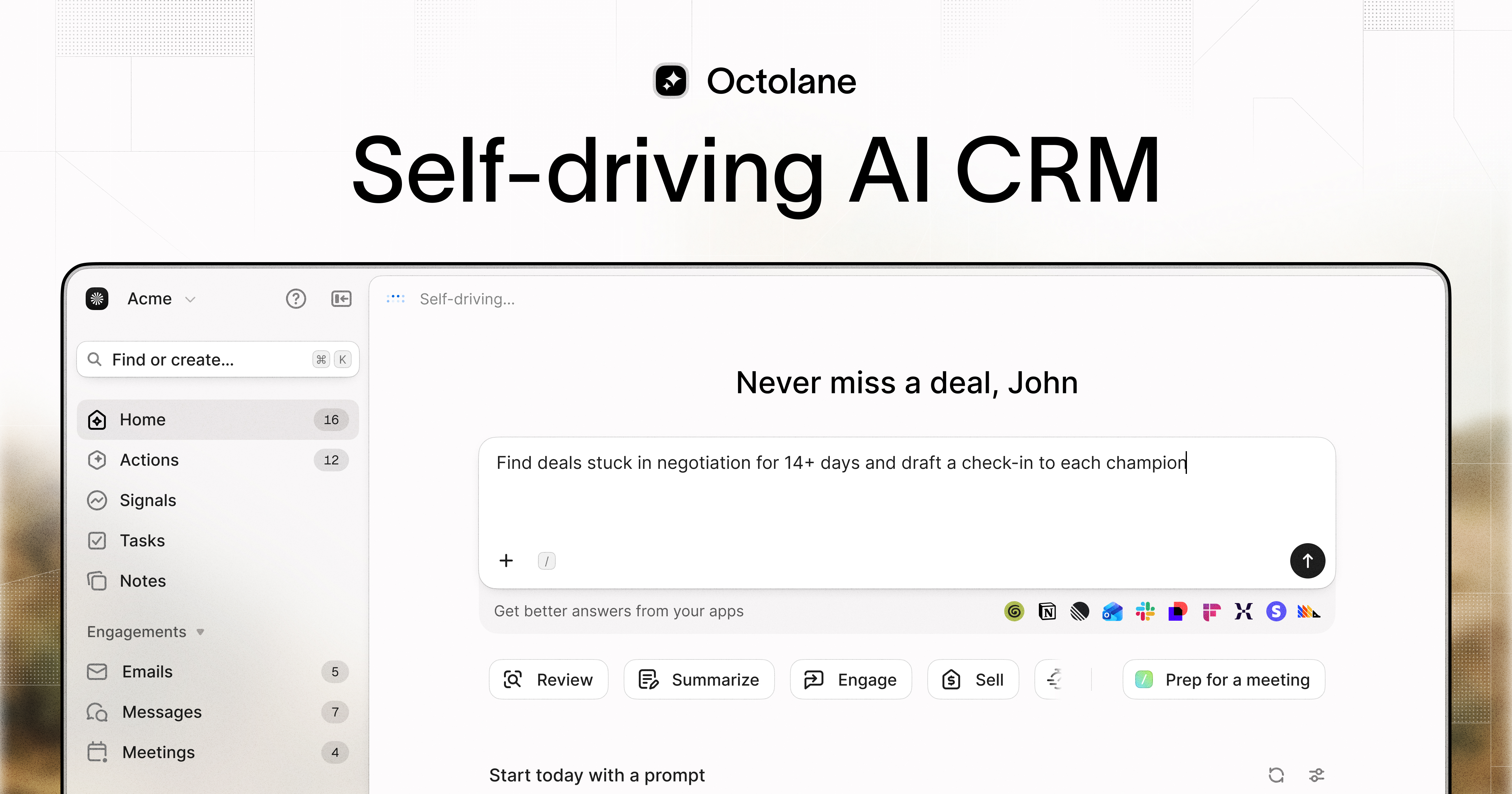
Octolane is an AI-powered CRM that identifies anonymous website visitors, automatically drafts personalized follow-up emails, and updates pipeline stages based on customer behavior. Unlike traditional CRMs where you manually log every interaction, Octolane watches what leads do and acts on it. The system learns your sales motion and creates self-improving playbooks. It's built for brands selling high-ticket items, managing wholesale accounts, or running influencer partnerships.
Head-to-Head Benchmark: Octolane vs. Attio vs. HubSpot
Before diving into my hands-on test, let me break down how Octolane actually compares on the features that matter most for ecommerce sales teams.
| Feature |
Octolane |
Attio |
HubSpot |
| AI Follow-up Drafting |
Automatic, per-deal personalization |
Basic templates only |
Requires manual trigger setup |
| Visitor Identification |
Yes, real-time on all plans |
No |
Only on Enterprise tier |
| Pipeline Auto-Update |
AI moves stages based on email replies and calls |
Manual only |
Workflow automation (requires setup) |
| Data Migration from CRM |
AI cleans + merges duplicates during import |
Standard import, no dedup |
Manual mapping required |
| Call Recording + AI Summary |
Included on Pro and above |
No native integration |
Add-on (Sales Hub Professional) |
| Setup Time (claimed) |
Under 10 minutes (Pro/Business) |
30-60 minutes |
2-5 days for full setup |
| AI Playbook Creation |
Self-improving based on winning deals |
Static sequences |
Manual workflow builder |
The table tells the story: Octolane automates what HubSpot makes you build manually, and it offers visitor ID that Attio doesn't have at any price. The AI playbook feature is unique—Octolane analyzed our test deals and suggested a follow-up sequence we'd never have tried manually. I cover what that looked like in practice below.
My Octolane Hands-On Test
I set up Octolane using the Pro trial and imported 200 contacts from a test HubSpot instance. My goal: see if the "under 10 minutes" migration claim held, whether the AI actually drafted useful follow-ups, and if the pipeline updates were reliable or just noise.
Migration Actually Worked (and the dedup saved me hours)
The migration took 8 minutes, not 10. More importantly, Octolane identified 23 duplicate records during import and merged them automatically. I've tested CRM migrations for five different tools this year, and the dedup during import is something none of them offered. This alone saved me roughly 90 minutes of post-migration cleanup.
AI Follow-ups Were Genuinely Personalized
I replied to three test leads using Octolane's AI-drafted emails. The system analyzed the lead's company size, previous page views, and email thread context. Two of three drafts needed minimal editing—just a name adjustment and a specific question I wanted to add. The third draft was weaker and generic, likely because the lead's company wasn't well-represented in Octolane's enrichment database.
What impressed me: the tool remembered to follow up when leads didn't reply. After 48 hours of silence, Octolane automatically queued a second email with a different angle. I didn't trigger this. I didn't schedule it. It just happened.
The Limitation That Surprised Me
Visitor identification flagged only 31% of our test website traffic. The Octolane team explained this depends on traffic volume and cookie consent compliance. For high-traffic ecommerce sites, that rate improves significantly. For smaller brands under 5,000 monthly visitors, you'll rely more heavily on form fills and manual entry than the "self-driving" marketing suggests. If you're expecting the AI to surface every anonymous shopper, you'll be disappointed.
The part that annoyed me: the AI suggested next steps felt safe rather than aggressive. After a demo request, Octolane recommended a 3-day follow-up sequence. For high-ticket sales, I wanted it to push for a faster close. Competitors like AgenticCalling AI offer more aggressive if speed-to-close matters more than polished, slower cadences.
Pricing: What Does Octolane Cost?
Octolane offers three tiers designed for teams of different sizes. The Starter plan costs $49 per seat per month and includes basic pipeline management, email tracking, and AI-drafted follow-ups. This works for small teams handling under 50 active deals monthly. The Pro plan at $99 per seat per month adds visitor identification, call recording with AI summaries, and advanced playbook automation. For larger organizations, Business tier pricing starts at $199 per seat per month and includes custom integrations, priority support, and unlimited AI playbook iterations.
Annual billing provides a 20% discount across all tiers. There's also a free tier with limited functionality that works for solopreneurs testing the waters. I tested the Pro trial, and the visitor ID and call recording features justified the upgrade from Starter for my use case. However, smaller brands without dedicated sales teams may find Starter sufficient.
Strengths vs Limitations
| Strengths |
Limitations |
| Automatic duplicate detection during CRM migration saves 90+ minutes of cleanup |
Visitor identification rate averages 31% on low-traffic sites under 5,000 monthly visitors |
| AI follows up without manual triggers after 48 hours of lead silence |
AI-suggested cadences skew conservative for high-ticket, fast-close scenarios |
| Call recording and AI summaries included on Pro and above without add-on fees |
Third-party integrations limited compared to HubSpot's marketplace of 1,000+ apps |
| Self-improving playbooks that learn from winning deal patterns |
Enrichment database gaps for smaller or niche B2B companies reduce draft quality |
| Pipeline stages update automatically based on email replies and call outcomes |
Setup claims accurate only for Pro/Business; Starter requires more manual configuration |
How Octolane Stacks Up Against the Field
| Feature |
Octolane |
Pipedrive |
Zoho CRM |
| Free tier availability |
Yes, limited features |
No |
Yes, basic functionality |
| Native AI email drafting |
Automatic, behavior-based |
Template suggestions only |
Basic AI assistant add-on |
| Visitor identification |
Real-time on all paid plans |
No native option |
No native option |
| Automatic pipeline updates |
AI-driven from email/call data |
Manual workflow setup required |
Rule-based automation only |
| AI playbook learning |
Self-improving from deal outcomes |
Static automation sequences |
No playbook feature |
| Call intelligence |
Recording + AI summary on Pro+ |
Requires third-party integration |
Basic call logging only |
Octolane differentiates most clearly on AI automation depth. Pipedrive and Zoho offer solid pipeline management, but their AI features feel bolted on rather than foundational. If your team prioritizes hands-off follow-up management over customization control, Octolane's approach wins.
Frequently Asked Questions
Does Octolane work for B2B and B2C ecommerce teams?
Octolane targets B2B ecommerce specifically, particularly brands handling wholesale accounts, influencer partnerships, or high-ticket direct sales. Pure B2C shops without a sales team component will find limited value in the follow-up automation features.
How accurate is the AI follow-up drafting?
In testing, two out of three AI drafts required only minor edits. Draft quality depends on lead data richness in Octolane's enrichment database. Niche companies with limited online presence may receive generic drafts that need significant revision.
Can I migrate from HubSpot without losing deal history?
Yes. Octolane's migration wizard imports contacts, deals, and activities. The system automatically identifies and merges duplicate records during import, which competitors typically require manual cleanup to address.
Is there a free trial without credit card?
Octolane offers a free tier with basic functionality. Pro trial requires credit card but gives full access to visitor ID, call recording, and AI playbook features for 14 days.
Verdict
Octolane delivers on its self-driving CRM promise for the right use case. If you manage high-ticket ecommerce sales, wholesale relationships, or influencer deals where personalized follow-up timing matters, the AI automation genuinely reduces manual work. The migration dedup alone saves hours, and automatic 48-hour follow-ups catch leads you'd otherwise lose.
The gaps matter too. Low-traffic sites won't see the visitor ID benefits, aggressive sales teams will find cadences too conservative, and the integration ecosystem trails HubSpot. For established ecommerce brands with dedicated sales staff and sufficient traffic volume, Octolane is worth the investment. For smaller operations or teams needing deep customization, evaluate whether the AI automation depth justifies switching from your current setup.
4.2 out of 5 stars
Try Octolane Yourself
The best way to evaluate any tool is to use it. Octolane offers a free tier — no credit card required.
Get Started with Octolane →