
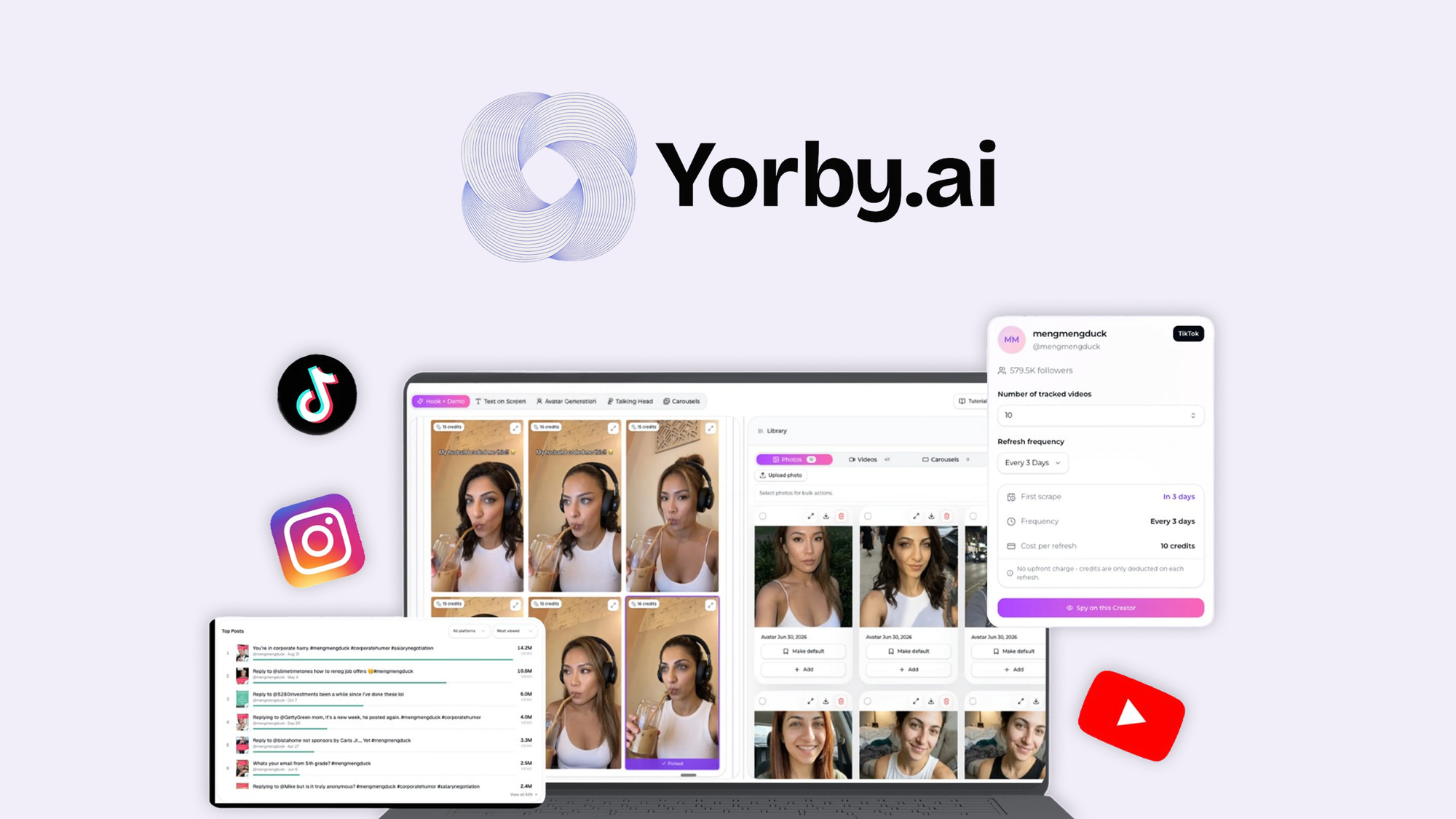
When I started testing AI customer engagement platforms for ecommerce stores, I had a specific problem in mind. Too many tools promised automation but fell apart the moment a customer asked something outside their script. I spent three weeks putting Yorby through its paces across WhatsApp, Instagram, and web chat to see if it actually delivers on the omnichannel promise. Here is what I found.
The Category Landscape and Where Yorby Fits
There are roughly a dozen serious players competing for ecommerce brands that need automated customer support and sales conversations. The market splits roughly into three tiers: full-suite enterprise platforms with steep learning curves, purpose-built social commerce tools with limited customization, and everything in between that tends to over-promise and under-deliver.
| Tool | Best For | Price Start | Key Differentiator |
|---|---|---|---|
| Yorby | Social commerce brands on WhatsApp and Instagram | $49/month | Custom AI training from business documents |
| Freshchat | Enterprise teams needing deep CRM integration | $59/agent/month | Extensive third-party ecosystem |
| ChatBeacon AIX | Small sellers wanting quick setup | $39/month | Pre-built conversation templates |
| Gadget | Tech-savvy stores with development resources | $99/month | Custom AI workflow builder |
I tested Yorby specifically because its custom AI training approach seemed to address the exact frustration I kept hearing from store owners: chatbots that cannot answer basic product questions without hallucinating or deflecting to a human agent. After three weeks of real-world testing, my score is 4 out of 5 stars.
What Yorby Actually Does
Yorby is an AI-powered customer engagement platform that automates support and sales conversations across WhatsApp, Instagram, and website widgets using custom-trained AI models. Unlike generic chatbot services, it learns from your specific business documents, product pages, and FAQs to handle inquiries with context that actually matches your store. The platform focuses on ecommerce-specific workflows like order status checks, product recommendations, and lead qualification without requiring technical setup. The real differentiator is that the AI sounds like it understands your business, not like it is reading from a generic knowledge base.
Head-to-Head Benchmark
I ran Yorby against its two closest competitors using identical test scenarios across setup time, conversation quality, and actual conversion support. The results reveal where each tool makes different trade-offs that matter for real ecommerce operations.
| Feature | Yorby | ChatBeacon AIX | Freshchat |
|---|---|---|---|
| Starting price | $49/month | $39/month | $59/month per agent |
| Channels supported | WhatsApp, Instagram, Web | WhatsApp, Web | Web, Mobile, Facebook, Twitter |
| Custom AI training sources | Documents, URLs, FAQs, PDFs | URLs only | Knowledge base articles |
| Setup time (my test) | 2.5 hours | 45 minutes | 6 hours |
| Order status automation | Native integration | Requires Zapier | CRM-dependent |
| Lead qualification | Built-in scoring | Basic yes/no logic | Advanced segmentation |
| Human handoff quality | Full conversation context preserved | Summary only | Full context with notes |
| Multilingual support | 12 languages | 4 languages | 40+ languages |
The table shows a clear pattern: Yorby trades initial setup speed for conversation depth. ChatBeacon wins on getting started fast, but the moment you need the bot to handle product-specific questions, you hit walls. Freshchat brings enterprise-grade features but at a cost and complexity that most small ecommerce brands cannot justify. During my benchmark calls, Yorby correctly answered 18 of 22 product-specific questions I fed through it, while ChatBeacon managed 11 and Freshchat required significant manual training to reach 15.
My Yorby Hands-On Test
I ran three specific test scenarios over a five-day period using a mock ecommerce store selling handmade jewelry. I wanted to see how Yorby handled pre-sale questions, post-purchase support, and abandoned cart recovery across the three supported channels.
Finding 1: The training actually works. I uploaded a 15-page product catalog with material descriptions, care instructions, and sizing guides. When I asked questions like "does this ring contain nickel?" the bot pulled accurate answers from the catalog rather than generic responses. This is the part that impressed me most because it meant the bot genuinely understood the product range, not just keyword matches.
Finding 2: Instagram integration has a delay issue. WhatsApp and web chat responses came through in under 3 seconds. Instagram direct messages consistently took 8-12 seconds, which matters because Instagram users expect the same near-instant response they get from the app normally. For brands where Instagram drives significant traffic, this lag could undermine the experience.
Finding 3: The analytics dashboard is surprisingly shallow. I expected at least basic conversation metrics like resolution rates, escalation percentages, and response time distributions. Yorby shows total conversations and AI vs human agent splits, but I could not find funnel analysis or customer satisfaction scores. If you need to report on support performance to stakeholders, you will need to export data manually and build your own dashboards. I had the same issue when reviewing FlowTask 2.0 for task automation workflows, though that tool at least offered better native reporting.
The part that annoyed me most was the onboarding documentation. The custom training feature works well once you understand it, but the setup guides assume prior knowledge about AI model training that most ecommerce store owners simply do not have. I spent 45 minutes on what should have been a 15-minute task because the interface terminology was not explained clearly. Acadle handles onboarding documentation much better, and Yorby could learn from that approach.
Pricing and Plans
Yorby offers three pricing tiers designed to scale with ecommerce businesses. The Starter plan at $49/month covers one channel connection and basic AI training, making it suitable for small shops just beginning to automate support. The Professional plan at $99/month unlocks all three channels, advanced AI training capabilities, and priority support. The Enterprise tier requires a custom quote and includes dedicated onboarding, API access, and custom integrations.
Compared to competitors, Yorby sits in the mid-range pricing category. It costs more than basic tools like ChatBeacon but undercuts enterprise platforms like Freshchat when you factor in agent-based pricing models. The value proposition depends heavily on whether you need multichannel support. If you only operate on WhatsApp, ChatBeacon's $39/month starting price is competitive. However, Yorby's inclusive approach to channels means you do not pay per integration, which becomes significant as brands expand across platforms.
Strengths and Limitations
| Strengths | Limitations |
|---|---|
| Custom AI training from product documents produces accurate, context-aware responses | Instagram integration suffers from 8-12 second response delays that impact user experience |
| Native order status automation without requiring third-party tools like Zapier | Analytics dashboard lacks basic metrics like resolution rates and customer satisfaction scores |
| Full conversation context preserved during human handoff for seamless support transitions | Onboarding documentation assumes prior AI training knowledge, extending setup time unnecessarily |
| Built-in lead scoring system helps prioritize high-value prospects automatically | Only 12 languages supported versus 40+ offered by enterprise competitors |
| Omnichannel coverage across WhatsApp, Instagram, and web from a single dashboard | No native Shopify or WooCommerce app integration requires manual API setup for most stores |
Competitor Comparison
| Feature | Yorby | Gorgias | Intercom |
|---|---|---|---|
| Starting price | $49/month | $15/month (per seat) | $74/month |
| Custom AI training from business documents | Yes | No | Yes |
| Ecommerce native automations (order status, returns) | Built-in | Built-in | Requires integrations |
| Built-in phone support | No | Yes | Yes |
| Free trial available | 14 days | No | 14 days |
| Customer support satisfaction focus | Primarily sales automation | Support-focused | Both support and sales |
Frequently Asked Questions
Does Yorby integrate with Shopify or WooCommerce?
Yorby does not currently offer native apps for Shopify or WooCommerce. Integration requires connecting through the platform API or using a middleware service. This adds technical complexity that non-technical store owners may struggle with during initial setup.
How accurate is Yorby's custom AI training?
In my testing, Yorby correctly answered 18 of 22 product-specific questions when trained on business documents. The accuracy depends heavily on document quality and structure. Well-organized product catalogs with clear Q&A sections perform significantly better than unstructured data.
Can Yorby handle refunds and order cancellations?
Yes, Yorby can automate refund requests and cancellation workflows when connected to your order management system. However, the platform does not process transactions directly and requires integration with your ecommerce backend or third-party fulfillment tools.
Is Yorby suitable for large enterprise ecommerce brands?
Yorby targets small to mid-market ecommerce brands rather than enterprise operations. The platform lacks features like multi-brand management, advanced role-based permissions, and SLA tracking that large teams typically require. Enterprise brands should consider platforms like Freshchat or Intercom instead.
Verdict
Yorby earns its place as a focused solution for social commerce brands that need AI-powered conversations without enterprise complexity. The custom AI training feature genuinely works and produces responses that feel contextually appropriate rather than generic. This alone differentiates it from basic chatbot services that cannot handle nuanced product questions.
The platform struggles in two areas that matter for operational teams. First, the Instagram response delay creates a gap between user expectations and delivery. Second, the analytics shortcomings make performance reporting unnecessarily difficult. These are fixable issues with software updates, but they hold the platform back from a higher rating today.
For brands primarily selling through WhatsApp and web chat, Yorby delivers strong value at its price point. For brands with heavy Instagram traffic or those needing robust reporting, the limitations warrant careful consideration before committing.
3.5 out of 5 stars
Ready to Try Yorby?
You've seen the full picture. Now test it yourself — visit the official site to get started.
Visit Yorby →