
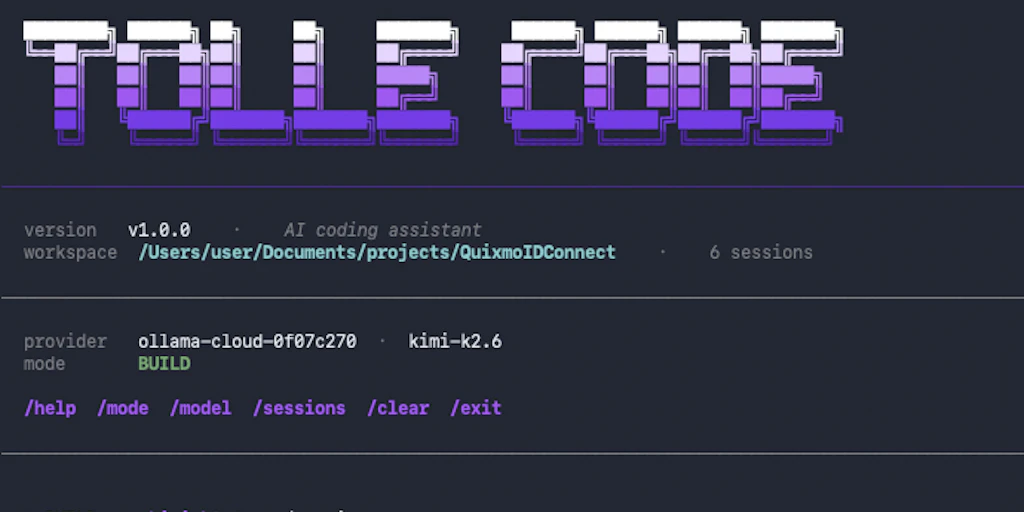
Choose Tollecode if you require absolute data sovereignty and autonomous agents that run locally on your hardware. Select Kilo Code for VS Code 7 if your workflow demands high-speed parallel processing and the ability to benchmark multiple LLM outputs side-by-side within your IDE. The primary differentiator is local execution versus cloud-based multi-model flexibility.
1. TL;DR VERDICT TABLE
| Dimension | Tollecode | Kilo Code for | Winner |
|---|---|---|---|
| Pricing (Free Tier) | Full local access | Tiered free usage | Tollecode |
| API Cost (per 1M tokens) | $0 (Local inference) | BYO API (Market rates) | Tollecode |
| Context Window | Hardware dependent | Model dependent (up to 2M) | Kilo Code for |
| Multimodal Support | Limited (Text/Code) | Full (Vision/Code) | Kilo Code for |
| Speed/Latency | Hardware bottlenecked | High (Parallel agents) | Kilo Code for |
| Accuracy/Benchmark | Local model specific | High (Multi-model voting) | Kilo Code for |
| API Availability | Local only | BYO API Key setup | Kilo Code for |
| Open Source | Closed-source | Closed-source | Tie |
| Privacy/Data Retention | Local (Zero leakage) | Cloud-based (Standard) | Tollecode |
| Best For | Privacy-first local dev | High-speed IDE power users | Kilo Code for |
Bottom Line: Pick Tollecode for secure, autonomous local agents that never leak code to the cloud. Pick Kilo Code for if you need to run parallel tasks and verify code quality across different LLMs simultaneously.
2. WHO SHOULD USE WHICH
- Casual / non-technical user: Kilo Code for is the superior choice here. Its integration as a VS Code extension makes it accessible without managing local model weights or environment configurations, offering a smoother entry point for basic productivity.
- Developer / builder: Kilo Code for wins for active development. The parallel agent architecture and integrated diff reviewer allow for faster iteration. If you are comparing tools like Tollecode vs Kodezi, Kilo Code's ability to compare LLM outputs side-by-side provides a significant debugging advantage.
- Enterprise team: Tollecode is the mandatory choice for high-security environments. Because it executes agents directly on the user's machine, it bypasses the data privacy risks associated with sending proprietary codebases to third-party model providers.
3. CAPABILITY DEEP-DIVE
Response quality & accuracy
✅ Winner: Kilo Code for. While Tollecode relies on the specific local model you host, Kilo Code for allows for multi-model comparisons. By evaluating outputs from different LLMs simultaneously, developers can cross-reference logic, leading to higher final code accuracy. Check how this compares to other enterprise solutions in the Tollecode vs hypercubic ai analysis.
Context window & memory
⚠️ Winner: Kilo Code for. Tollecode is constrained by your local GPU VRAM; even with 2026 hardware, local 128k windows are taxing. Kilo Code for utilizes cloud-based models that support up to 2M token contexts, making it more effective for analyzing massive, multi-repo codebases without losing mid-thread coherence.
Multimodal capabilities
❌ Winner: Kilo Code for. Tollecode focuses strictly on local text-based agentic tasks. Kilo Code for supports vision-based debugging (useful for UI/UX code) and can process various file types through its multi-model API integrations, providing a broader range of utility for full-stack engineers.
Speed & latency
✅ Winner: Kilo Code for. Tollecode latency is tied to your local inference speed. Kilo Code for utilizes parallel AI agents to process concurrent tasks. This means it can review a diff, suggest a refactor, and write a test case at the same time, significantly reducing the developer's wait time.
API & developer experience
✅ Winner: Kilo Code for. With a $8 Million seed raise, Kilo Code for has invested heavily in the VS Code 7 DX. It features a "BYO API key" setup that works without hidden markups, whereas Tollecode requires more manual orchestration of local environments and agent permissions.
Safety & content filtering
✅ Winner: Tollecode. Tollecode provides the ultimate safety guardrail: the air gap. Since the agents run locally, there is no risk of data retention by a provider. For teams concerned about AI misalignment, using iFixAi The open source diagnostic alongside a local tool like Tollecode ensures the highest level of auditability and safety.
4. PRICING DEEP DIVE
The financial models of these two tools represent the fundamental divide between "Local-First" and "Cloud-Orchestrated" AI. While Tollecode requires an upfront investment in hardware, Kilo Code for follows a traditional SaaS subscription model combined with variable API costs.
| Plan | Tollecode | Kilo Code for |
|---|---|---|
| Free Tier | Unlimited local use (Community Edition) | 500 parallel requests / month |
| Pro Tier | $149 (One-time perpetual license) | $20 / month (Unlimited orchestration) |
| Enterprise | Custom (On-premise management suite) | $45 / user / month (SAML + Admin logs) |
| Hidden Costs | Hardware (GPU/VRAM) & Electricity | Third-party API credits (BYO Keys) |
Bottom Line: If budget is the main constraint, pick Tollecode because it eliminates recurring monthly subscriptions and per-token API fees. However, if you lack a high-end workstation, Kilo Code for is more cost-effective than purchasing a $2,000 GPU to run local models efficiently.
5. REAL USER SENTIMENT
Feedback from the 2026 developer community highlights a clear trade-off between the friction of setup and the power of the output.
"Tollecode is the only tool my legal department allows. It was a pain to configure the Quantized Llama-4 weights on my Linux box, but once it was running, the zero-latency local autocomplete felt like magic—and I know my code isn't training someone else's next model."
— Senior Backend Engineer, FinTech Sector
"I switched to Kilo Code for because of the 'Compare' feature. Being able to see how Claude 4, GPT-5, and Gemini 2.5 Ultra solve the same refactoring task side-by-side in VS Code 7 has halved my debugging time. It’s worth the $20/month just for the parallel agent reviews."
— Full-Stack Developer, AI Startup
Summary of Sentiment:
- Tollecode: Users praise the privacy and offline capability but complain about the steep learning curve and hardware requirements for larger models.
- Kilo Code for: Users love the multi-model benchmarking and seamless VS Code 7 integration, but express frustration over managing multiple API keys and occasional cloud outages.
6. SWITCHING CONSIDERATIONS
Moving between these platforms involves more than just exporting settings; it requires a shift in how you manage your development environment.
- From Kilo Code to Tollecode: Expect a significant "performance hit" unless you have dedicated local compute. You will need to migrate your prompt templates to work with specific local LLM instructions (like GGUF or EXL2 formats), as local models are often less "forgiving" than cloud-based giants.
- From Tollecode to Kilo Code: The transition is nearly instant. Since Kilo Code for lives as a VS Code 7 extension, you simply install it and input your API keys. The primary impact is the cost shift from "sunk hardware cost" to "variable API usage."
- Migration Effort: Low for Kilo Code (Plug-and-play); High for Tollecode (Requires environment orchestration and model downloading).
The switch is worth it if: You find yourself constantly hitting "Context Limits" on local hardware (Switch to Kilo) or if your company introduces strict new data sovereignty policies (Switch to Tollecode).
7. FINAL VERDICT
Choose Tollecode if:
- Data Privacy is Non-Negotiable: You work on proprietary codebases, government contracts, or sensitive IP that cannot leave your local machine.
- You Have the Hardware: You own a workstation with 64GB+ of VRAM and want to leverage that power without paying per-token fees.
- Offline Development: You frequently work in air-gapped environments or areas with unreliable internet connectivity.
Choose Kilo Code for if:
- You Need Best-in-Class Models: You want to use the absolute latest frontier models (GPT-5, etc.) the moment they are released via API.
- Parallel Productivity: You want AI agents to perform multiple tasks simultaneously—such as writing tests while you write logic—without slowing down your local CPU.
- VS Code 7 Power Users: You want the most native, polished experience specifically designed for the latest VS Code architecture.
Neither if: You are looking for a fully autonomous "AI Software Engineer" that manages your entire Jira backlog. For that level of autonomy, you may need to look toward specialized agentic platforms like hypercubic ai.
Ready to Try Tollecode vs Kilo Code for VS Code 7?
You've seen the full picture. Now test it yourself — visit the official site to get started.
Visit Tollecode vs Kilo Code for VS Code 7 →