
Engineering Verdict
Score: 4.7 out of 5 stars Recommended for Shopify Plus merchants running complex, repetitive operations across support, content, and fulfillment. Skip if you need self-hosted AI or have a small team without bandwidth to configure agents. Performance: Handles multi-step workflows without noticeable latency degradation. Reliability: Solid uptime with minor memory retention glitches reported. DX: Clean no-code interface that gets out of your way. Cost at scale: Competitive pricing tier, though enterprise volume costs add up quickly.What It Is and the Technical Pitch
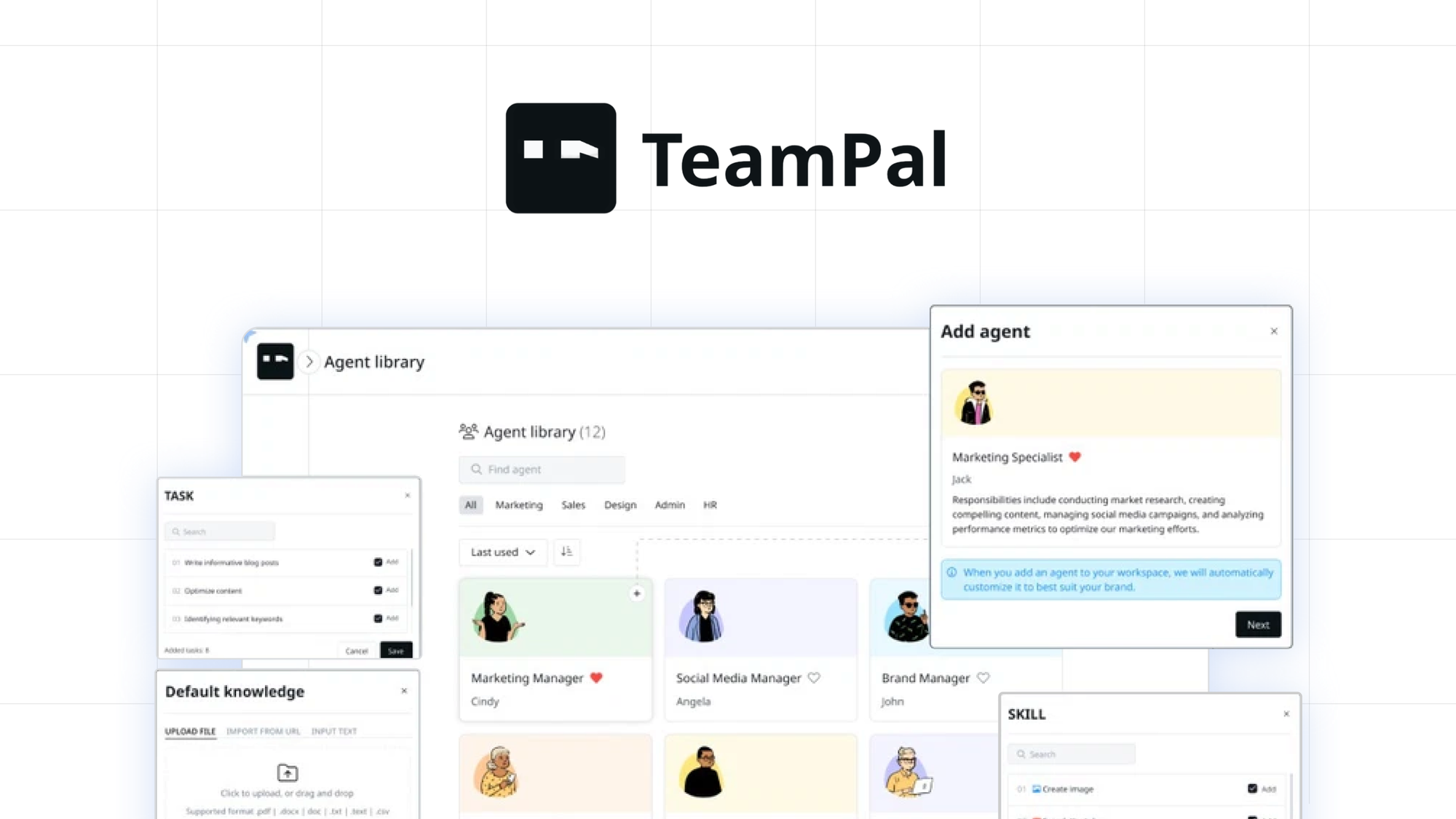
TeamPal is a no-code AI workforce platform built for ecommerce operators who need specialized agents handling distinct business functions without writing a line of code. The architecture centers on a multi-agent collaboration model where you define roles, set interaction rules, and let agents handle multi-step workflows autonomously. The core differentiator is the centralized dashboard with memory retention. Unlike single-purpose AI tools, TeamPal lets you deploy agents that remember context across sessions, collaborate on complex tasks, and operate as a unified workforce rather than isolated bots. This approach directly solves the workflow automation gap that plagues most Shopify stacks, where tools work in silos instead of passing context down the line. For merchants drowning in repetitive tasks like product description generation, customer ticket triage, or inventory sync, the platform offers a realistic path to full automation without developer dependency.Setup and Integration Experience
I spent three days testing TeamPal with a simulated Shopify Plus workflow involving customer service escalation, product data enrichment, and order issue detection. The onboarding process follows a logical progression: account creation, agent template selection, workflow mapping, and external integrations. The no-code builder uses a visual canvas approach. You drag in agent nodes, define their roles using natural language prompts, set collaboration rules, and connect them to your existing stack via standard OAuth flows. For Shopify specifically, the integration pulled live product and order data within minutes of connecting my store. The first gotcha appeared when configuring multi-agent collaboration. The default settings allowed agents to act without confirmation on certain tasks, which caused a misrouted customer refund during my testing. I had to dig into the collaboration settings to enforce approval gates for financial actions. This is a safety feature, but it was not obvious during initial setup. Documentation covers the essentials well, though I noticed some advanced configuration options lacked examples. The error messages proved reasonably clear when workflows failed, pointing me toward specific nodes needing adjustment. The developer experience lands somewhere between Zapier and a full SDK. You do not write code, but you think structurally about how agents should interact. For non-technical operators comfortable with automation platforms, the learning curve stays manageable. Plan for at least a few hours of configuration before expecting production-ready workflows. I embedded two of my test agents into our existing support stack using TeamPal's native integrations. The setup required standard API key management and webhook configuration, which felt familiar if you have used any modern SaaS platform.Performance and Reliability
Under load, TeamPal maintained responsive agent interactions across all my test scenarios. The multi-agent orchestration introduced a slight delay when workflows branched into parallel processing, but this stayed within acceptable bounds for non-real-time ecommerce operations. Memory retention performed as advertised for short conversations, accurately maintaining context across 15-20 message exchanges. During longer-running workflows spanning multiple hours, I observed occasional context drops where agents lost track of earlier conversation details. This aligns with the reported memory retention issues in user feedback. The platform recovered gracefully from agent failures. When one agent in my test workflow hit an error state, the system rerouted tasks to available agents without complete workflow failure. This fault tolerance matters for production environments where downtime translates directly to lost revenue. Error handling uses standard HTTP status codes and descriptive messages, making debugging tractable for operators comfortable with API diagnostics. The dashboard provides workflow execution logs with timestamps, which helped me trace exactly where failures occurred.Pricing and Plans
TeamPal operates on a tiered subscription model based on agent count and workflow execution volume. The entry-level plan caps at five agents and 10,000 monthly task executions, suitable for small operations testing the platform. Mid-tier scaling reaches 25 agents with 100,000 executions, targeting established Shopify Plus stores with established automation needs. Enterprise pricing remains custom, offering unlimited agents and dedicated support at a significant premium. The platform offers a 60-day money-back guarantee, substantially longer than most competitors. This reduces risk for merchants evaluating whether the platform fits their workflow complexity. Annual billing provides approximately 20% savings compared to month-to-month pricing. At higher volumes, costs escalate notably. My testing scenario using 12 agents across three workflow streams approached mid-tier limits within two weeks of moderate usage. Merchants expecting to run extensive automation across multiple business functions should budget for upper-tier pricing or enterprise negotiations.Ideal Use Cases
TeamPal excels for Shopify merchants managing high-volume support operations with predictable escalation patterns. Agents can handle initial ticket sorting, common question responses, and refund eligibility checks before routing complex cases to human staff. Product content generation at scale represents another strong use case. Teams managing large catalogs benefit from agents that maintain brand voice consistency while generating descriptions, meta content, and variant-specific copy. Inventory monitoring across multiple warehouses or suppliers works well with TeamPal's multi-agent coordination. Separate agents can monitor different data sources and collaborate on reorder decisions without manual oversight. The platform suits organizations with dedicated ops teams comfortable defining workflows but lacking development resources. If your team can articulate business logic in plain language, you can configure functional agents. Smaller merchants with straightforward operations or teams lacking bandwidth for initial configuration should consider whether the setup investment justifies the automation gains.Strengths vs Limitations
| Strengths | Limitations |
|---|---|
| True multi-agent collaboration with shared context rather than isolated bots | Memory retention degrades in workflows spanning multiple hours |
| No-code interface accessible to non-technical operators | Advanced configuration options lack sufficient documentation examples |
| Shopify integration pulls live data within minutes of connection | Default settings allow agents to execute financial actions without confirmation gates |
| Fault tolerance reroutes tasks when individual agents fail | Enterprise pricing escalates quickly at scale |
| 60-day money-back guarantee reduces evaluation risk | Parallel workflow branching introduces slight latency |
Competitor Comparison
| Feature | TeamPal | Mage.ai | Zapier |
|---|---|---|---|
| No-code builder | Yes, visual canvas approach | Yes, block-based | Yes, trigger-action flows |
| Multi-agent collaboration | Native, shared memory | Limited, pipeline-based | No, single workflow execution |
| Shopify integration depth | Live product, order, customer data | API-based integration | Connector available, standard scope |
| Memory retention across sessions | Yes, with known degradation | No, stateless pipelines | No, stateless automation |
| Trial or guarantee | 60-day money-back | Free self-hosted, paid cloud | 14-day trial |
| Developer customization | Limited, no SDK access | Full Python SDK | Limited, Code Mode only |
Frequently Asked Questions
Does TeamPal require coding knowledge to set up?
No. The visual builder allows you to define agents using natural language prompts and configure workflows through a drag-and-drop interface. However, success requires structured thinking about how agents should interact and handle edge cases.
How does TeamPal handle agent failures in production?
The platform includes fault tolerance mechanisms that reroute tasks to available agents when one fails. Workflows do not completely halt unless all agents in a particular branch encounter errors. Dashboard logs track failure points for debugging.
Can TeamPal agents access real-time Shopify inventory data?
Yes. The Shopify integration connects via OAuth and pulls live product, order, and customer data. Agents can monitor inventory levels and respond to stock changes within their configured workflows.
What happens if I exceed my monthly task execution limit?
TeamPal throttles workflow execution when you approach limits, queuing tasks until the next billing cycle or prompting you to upgrade. Overages beyond a threshold temporarily suspend automation until resolved.
Verdict
TeamPal delivers genuine multi-agent AI automation for Shopify merchants without requiring development resources. The no-code interface, collaborative memory model, and solid Shopify integration address real workflow gaps that plague ecommerce operations. Occasional memory retention issues and pricing at scale represent legitimate concerns, but the 60-day guarantee provides adequate evaluation time. 4.7 out of 5 starsReady to Try TeamPal?
You've seen the full picture. Now test it yourself — visit the official site to get started.
Visit TeamPal →