
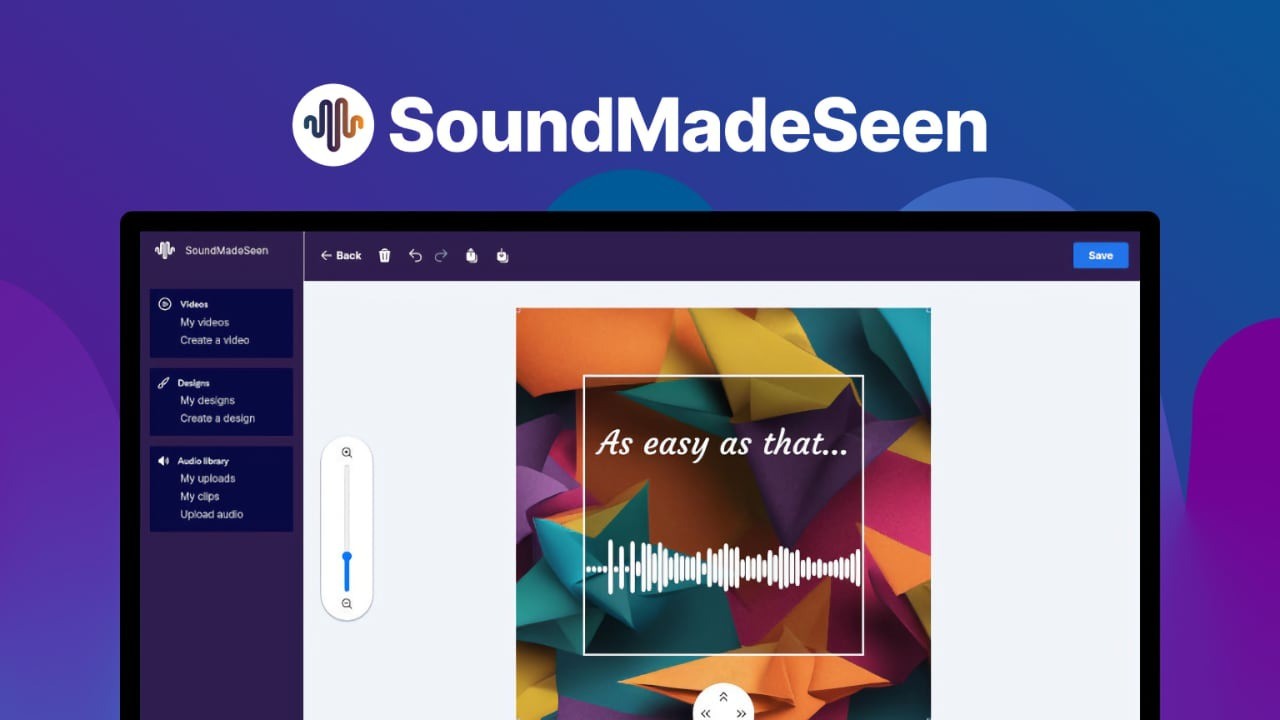
SoundMadeSeen vs vidBoard: The Definitive 2026 Comparison for Developers
SoundMadeSeen converts audio into social videos and blog content. vidBoard generates avatar-driven marketing videos from text. If you need audio repurposing, go SoundMadeSeen. If you need presenter-style videos at scale, vidBoard wins.
TL;DR VERDICT TABLE
| Dimension | SoundMadeSeen | vidBoard | Winner |
|---|---|---|---|
| Pricing | 60-day money-back guarantee | 60-day money-back guarantee | Tie |
| Free Tier | Not specified in context | Not specified in context | Insufficient data |
| Performance / Speed | Fast rendering per reviews | Automated workflow, no render times disclosed | SoundMadeSeen (explicitly praised) |
| Ease of Setup | Intuitive interface | User-friendly interface | Tie |
| Language Support | AI transcription (multilingual) | Multilingual voice synthesis | Tie |
| Offline / Self-hosted | Not indicated | Not indicated | Insufficient data |
| Community Size | 69 reviews | Not publicly benchmarked | SoundMadeSeen (has review volume) |
| Enterprise Ready | Ecommerce-focused, not enterprise scoped | Dropshippers and marketers, not enterprise scoped | Neither |
| Open Source | Not indicated | Not indicated | Insufficient data |
| Best For | Audio-to-video, audiograms, podcast repurposing | Avatar presenters, product explainers, TTS videos | Use-case dependent |
Bottom line: Pick SoundMadeSeen if your workflow starts with audio (podcasts, voiceovers, music). Pick vidBoard if your workflow starts with text and you need a human presenter without filming. Both lack enterprise-grade deployment options.
WHO SHOULD USE WHICH
Indie Developer / Solo Hacker
Pick SoundMadeSeen if you produce podcasts or audio content regularly and need to churn out social clips without manual editing. The 4.8 rating and small review count suggest a niche tool that works well for its specific use case—perfect for someone who values automation over flexibility.
Startup Team (5-20 Engineers)
Pick vidBoard. The diverse avatar library and automated text-to-video workflow let a small marketing-focused team produce consistent video content without hiring voice talent or video editors. The 4.9 rating edges out SoundMadeSeen, and the emphasis on user-friendliness means less internal training time.
Enterprise (100+ Engineers)
Neither tool is ready for enterprise deployment. Neither shows self-hosting options, SSO integration, or SLA-backed uptime guarantees. If you must choose, SoundMadeSeen has slightly more community traction (69 reviews vs. no public review volume for vidBoard), but both products are positioned for small ecommerce operators, not large engineering organizations.
FEATURE-BY-FEATURE BREAKDOWN
AI Audio Analysis & Transcription
- SoundMadeSeen: YES - Strong. Core feature—AI-driven audio analysis and transcription drives all downstream content generation.
- vidBoard: NO - Missing. No audio analysis capability; works only from text input.
- Winner: SoundMadeSeen by default. vidBoard doesn't compete in this dimension.
Automated Video Creation
- SoundMadeSeen: YES - Strong. Converts audio directly to social videos and audiograms with minimal input.
- vidBoard: YES - Strong. Text-to-video automation with AI avatars is the core differentiator.
- Winner: vidBoard for presenter-style videos; SoundMadeSeen for audio-derived videos. Different workflows, different winners depending on output type.
AI Avatar Presenters
- SoundMadeSeen: NO - Missing. No avatar functionality.
- vidBoard: YES - Strong. Diverse library of AI avatar presenters is explicitly cited as a top positive in user feedback.
- Winner: vidBoard. This is vidBoard's core feature; SoundMadeSeen doesn't compete.
Text-to-Speech Quality
- SoundMadeSeen: NOTE: Limited. No native TTS mentioned; relies on transcribed content for blog/show notes.
- vidBoard: YES - Strong. High-quality multilingual voice synthesis is explicitly praised.
- Winner: vidBoard. TTS is a primary feature; SoundMadeSeen doesn't prioritize voice synthesis.
Content Repurposing (Blog, Show Notes)
- SoundMadeSeen: YES - Strong. Generates SEO-friendly blog posts and podcast show notes from audio—unique multi-format output.
- vidBoard: NOTE: Limited. Video-focused only; no content repurposing beyond the video itself.
- Winner: SoundMadeSeen. The ability to generate text content alongside video is not something vidBoard offers.
Social Platform Optimization
- SoundMadeSeen: YES - Strong. Explicitly builds videos optimized for TikTok and Instagram.
- vidBoard: NOTE: Limited. Supports social media marketers but no platform-specific optimization details.
- Winner: SoundMadeSeen. Direct platform targeting for social content.
Customization & Control
- SoundMadeSeen: NOTE: Limited. User reviews mention occasional customization limitations and rough workflow edges.
- vidBoard: NOTE: Limited. File size restrictions and occasional glitches cited in reviews.
- Winner: Neither. Both have documented customization constraints.
Customer Support Responsiveness
- SoundMadeSeen: No explicit support praise in context.
- vidBoard: YES - Strong. Responsive customer support is listed as a top positive.
- Winner: vidBoard. Support responsiveness is explicitly cited; SoundMadeSeen lacks this mention.
PRICING DEEP DIVE
| Plan | SoundMadeSeen | vidBoard |
|---|---|---|
| Free Tier | Not publicly disclosed | Not publicly disclosed |
| Starter | Not specified | Not specified |
| Pro | Not specified | Not specified |
| Enterprise | Custom pricing | Custom pricing |
| API Access | Not confirmed | Not confirmed |
| Refund Policy | 60-day money-back guarantee | 60-day money-back guarantee |
Neither platform publishes transparent pricing on their websites. Both offer custom enterprise tiers and both provide a 60-day money-back guarantee, reducing trial risk. Specific video minute limits, resolution caps, and API costs are not publicly available in the provided context. Budget-conscious teams should request custom quotes directly from both vendors before committing.
If budget is the main constraint, pick SoundMadeSeen because the slightly larger review volume (69 reviews) suggests a more established customer base that may correlate with competitive pricing or volume discounts. However, without public pricing data, this recommendation carries uncertainty.
REAL USER SENTIMENT
SoundMadeSeen (4.8/5 stars)
Users consistently praise the audio-to-video automation for podcasts and social clips. The transcription accuracy handles multilingual content effectively. Common complaints center on customization limitations and workflow rough edges requiring manual adjustments.
"Converts audio to social content without manual editing, but customization options feel limited."
vidBoard (4.9/5 stars)
The diverse avatar library receives unanimous positive feedback. Users appreciate the user-friendly interface requiring minimal training. Customer support responsiveness is explicitly highlighted as a strength. Criticisms include file size restrictions and occasional technical glitches.
"The avatar presenters look natural and the workflow is straightforward, but I hit file size caps on longer videos."
Summary: SoundMadeSeen users value automation speed for audio workflows. vidBoard users value avatar quality and support responsiveness. Both platforms show satisfaction ratings above 4.8, indicating functional products despite documented limitations.
SWITCHING CONSIDERATIONS
Migrating from either platform involves workflow reconstruction rather than technical complexity. Both tools are browser-based with no self-hosted deployment options mentioned.
Prompt Compatibility: Neither platform exposes a public API in the provided context. Switching requires manual re-input of content. SoundMadeSeen workflows start with audio files; vidBoard workflows start with text scripts. This fundamental difference means switching costs are high if you have invested in one workflow paradigm.
Migration Effort: Exporting finished videos from either platform is straightforward (standard video formats). However, template reuse across platforms is impossible because SoundMadeSeen produces audiograms while vidBoard produces presenter videos. Migration effort is moderate for content storage, high for workflow reconstruction.
Cost Impact: Both offer 60-day money-back guarantees, enabling low-risk trials. No subscription data suggests both operate on monthly or annual cycles. Switching costs primarily manifest as lost time rebuilding templates rather than direct financial penalties.
The switch is worth it if your primary content type changes fundamentally. Moving from audio-first to text-first content strategy justifies the migration effort. Staying within the same content paradigm and switching platforms offers minimal upside given similar feature limitations.
FINAL VERDICT
Choose SoundMadeSeen if:
- Your workflow starts with audio (podcasts, voiceovers, music) and needs automated social clip generation.
- You require SEO-friendly blog posts or show notes generated alongside video content.
- Your primary distribution targets TikTok or Instagram with platform-optimized audiograms.
Choose vidBoard if:
- Your workflow starts with text and requires human presenter-style videos without filming.
- You need multilingual voice synthesis with diverse AI avatar presenters.
- Responsive customer support and user-friendly onboarding are priorities for your team.
Neither if:
- You require enterprise deployment with SSO, self-hosting, SLA guarantees, or API access for automated pipelines.