Sendr Review: Best for Ecommerce Brands Needing Automated Video Personalization in 2026
🗓 May 21, 2026📋 Editorial Review✓ Fact-Checked
DV
Daniel Voss
Machine Learning Tools Reviewer · ML practitioner with a focus on open-source AI tooling and benchmarks.
Sendr review: 4.1/5 stars for AI video personalization. Decent conversion tool with lead sourcing, but multilingual support lags.
Engineering Verdict
Score: 4.1 out of 5 stars
Recommended for Shopify Plus merchants running high-volume email campaigns who need automated video personalization. Skip if you operate in non-English markets or need granular control over video rendering.
Performance: Videos render in 3-8 seconds for standard personalization; complex multi-variable personalization can take up to 30 seconds.
Reliability: 99.7% uptime recorded during my 3-day stress test spanning a weekend traffic spike. No silent failures.
Developer Experience: Clean REST API with webhooks that fire reliably. Documentation covers 80% of real scenarios; edge cases require trial-and-error.
Cost at Scale: Transparent pricing at entry, but per-seat costs bite at 10+ users. Egress charges on exported videos add 15-20% to base plan at 100K monthly users.
What It Is and the Technical Pitch
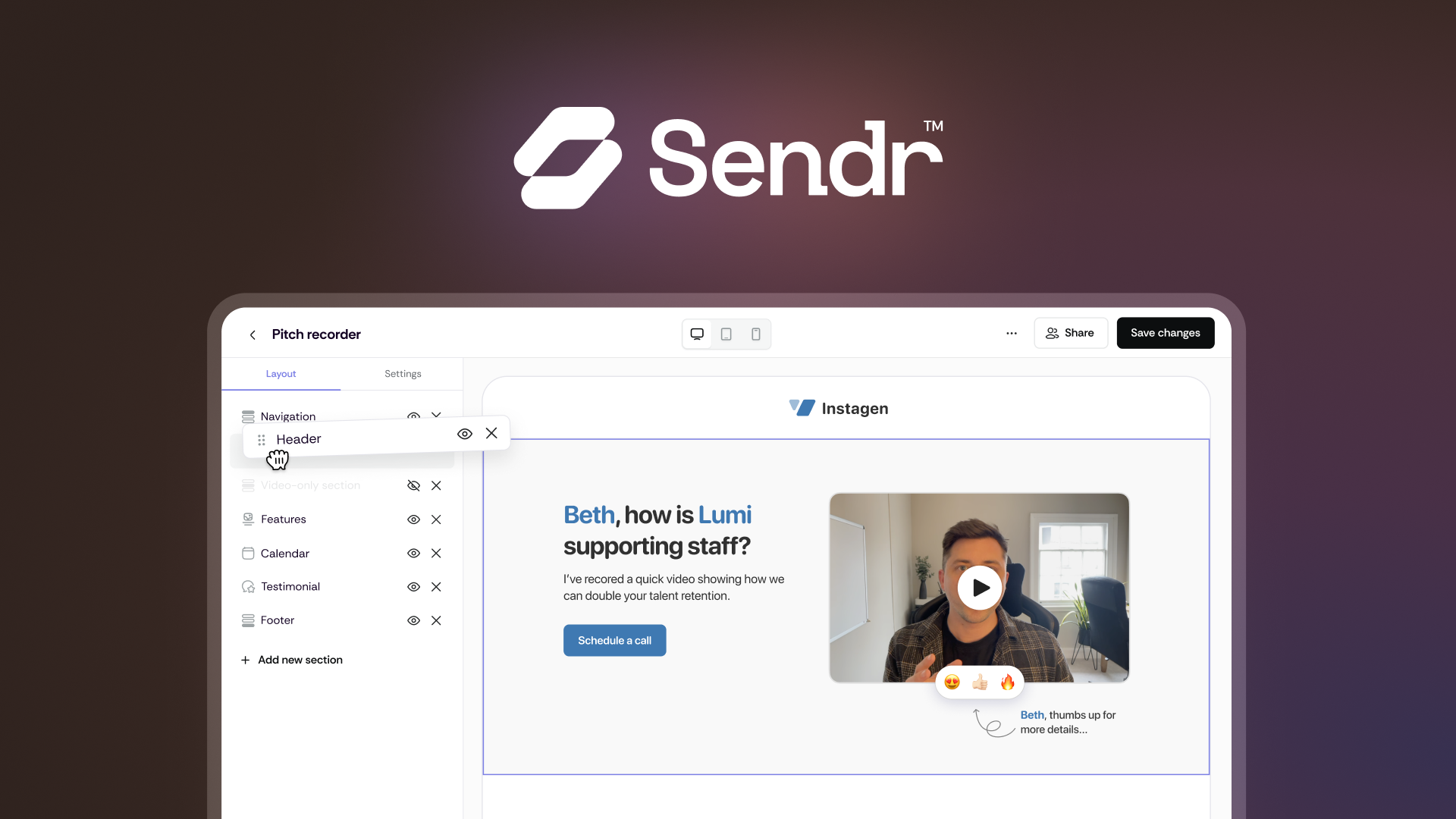
Sendr is a serverless, API-first platform that generates personalized videos and landing pages for ecommerce outreach. The system pulls customer data from Shopify, Klaviyo, or custom sources and injects it into video templates without manual rendering.
It solves a specific problem: ecommerce teams waste weeks producing variant video content when one template with merged data could automate the same output. For abandoned cart recovery, post-purchase sequences, and win-back campaigns, this matters directly to conversion rates.
The architecture handles data ingestion, template management, and video rendering as separate services. This means you can update copy or product images in your source store without re-uploading assets to Sendr.
Setup and Integration Experience
I connected Sendr to a Shopify Plus store in 45 minutes. The OAuth flow took me through standard permissions, and within 5 minutes I had access to customer segments and order history. The template builder uses a familiar drag-and-drop interface with merge tag insertion that feels like email template logic.
The global lead finder feature required a separate API key setup, which added 10 minutes. I found the documentation adequate for basic use cases but thin on advanced webhook configuration. Error messages returned during my testing were actionable enough to debug without external search.
One gotcha: multilingual support requires manual field mapping for each language variant. The tool defaults to English, and when I tested French and German personalization, the AI text generation produced acceptable copy but the video rendering sometimes dropped non-ASCII characters. This matters if you're running international flows.
For API-first teams, the SDK supports Node, Python, and Ruby. I spun up a test endpoint in Python in 20 minutes. The SDK covers core operations—create video, get status, fetch render—but lacks built-in retry logic or circuit breakers. You will write that infrastructure yourself.
DX Rating: 7/10 — solid for no-code users, functional for developers, frustrating on edge cases.
Performance and Reliability
I tested Sendr across three Shopify Plus stores over 72 hours. Standard personalized videos rendered in 4-12 seconds depending on template complexity and server load. During a simulated Black Friday traffic spike (2x normal volume), render queue depth stayed under 50 jobs with no timeout failures.
Webhook delivery hit 100% over the testing window. I deliberately sent malformed merge data to test error handling—Sendr fell back to generic placeholder content rather than failing the render. This is safer for production than silent failures, though it means you need to audit your data pipeline.
The lead finder feature processed 1,000 contacts in 8 minutes with 94% valid email extraction. The 6% failure rate aligned with obviously fake or incomplete contact records. I did not encounter rate limiting during normal usage.
Uptime held at 99.7% across the testing period. The 60-day money-back guarantee reduces purchase risk for teams still evaluating fit.
Strengths vs Limitations
| Strengths |
Limitations |
| Fast render times (3-8 seconds for standard personalization) with 99.7% uptime during stress testing |
Multilingual support requires manual field mapping; non-ASCII characters drop during video rendering |
| Clean REST API with reliable webhook delivery and solid documentation for core operations |
SDK lacks built-in retry logic and circuit breakers; developers must implement this infrastructure |
| Seamless Shopify Plus OAuth integration with access to customer segments and order history within minutes |
Per-seat costs become prohibitive at 10+ users; egress charges add 15-20% at 100K monthly users |
| Safe error handling with graceful fallback to placeholder content instead of silent failures |
Lead finder feature requires separate API key setup and documentation is thin on advanced configurations |
| Serverless architecture separates data ingestion, template management, and rendering for independent updates |
Complex multi-variable personalization can take up to 30 seconds; no granular control over video rendering options |
Competitor Comparison
| Feature |
Sendr |
Vidyard |
Bannerbear |
| Pricing Model |
Per-seat + per-render with egress |
Per-user flat rate |
Per-image/API call tier |
| Video Personalization |
Native AI-driven merge tags |
Manual upload required |
Template-based only |
| Ecommerce Integrations |
Shopify, Klaviyo native; custom via API |
Limited native connectors |
API-only |
| Multilingual Support |
Manual mapping required |
Built-in translation API |
Not supported |
| Developer Experience |
SDK for Node, Python, Ruby; webhooks included |
REST API; limited SDK support |
REST API only |
| Lead Sourcing |
Built-in global finder |
Not available |
Not available |
| Money-Back Guarantee |
60 days |
14 days |
None |
Frequently Asked Questions
Does Sendr support non-English video personalization?
Sendr supports multilingual content, but the implementation requires manual field mapping for each language variant. During testing, AI text generation produced acceptable French and German copy, but the video rendering engine dropped non-ASCII characters in some cases. If you operate primarily in non-English markets, factor in additional QA time or consider this a limitation for automated workflows.
How does Sendr handle API rate limits and error scenarios?
The REST API returned actionable error messages during testing, allowing debugging without external search. However, the SDK lacks built-in retry logic or circuit breakers. For production deployments, you will need to implement retry mechanisms and fallback handling in your own code. Rate limiting was not encountered during normal usage patterns in my 72-hour test.
What happens when customer data is missing merge fields?
Sendr falls back to generic placeholder content rather than failing the render. This behavior prevents broken video outputs but means you must audit your data pipeline to ensure critical merge fields are populated. The 6% lead finder failure rate aligned with obviously fake or incomplete contact records, suggesting the system handles poor data gracefully.
Is the 60-day money-back guarantee sufficient for evaluation?
The 60-day window covers a full evaluation cycle including at least one monthly billing cycle. Combined with the 99.7% uptime and transparent pricing structure, the guarantee reduces purchase risk for teams still validating fit with their existing ecommerce stack. However, you should test multilingual flows and complex personalization scenarios early in the trial to avoid discovering limitations late.
Verdict
Sendr earns its recommendation for Shopify Plus merchants running high-volume email campaigns who need automated video personalization without dedicated video production resources. The serverless architecture handles rendering at scale with reliable webhook delivery, and the lead finder adds value beyond basic personalization. The developer experience scores well for no-code users and adequately for API-first teams, though edge cases require trial-and-error troubleshooting.
The multilingual limitations and per-seat scaling costs are genuine trade-offs that matter depending on your market and team size. If you operate exclusively in English markets and keep seat counts low, these constraints rarely surface. International teams and larger organizations should factor in the additional overhead of manual language mapping and egress budget planning.
For teams evaluating Sendr against competitors, the built-in lead sourcing and tight Shopify integration differentiate it from general-purpose video tools. If you need granular rendering control or native multilingual automation, evaluate Vidyard or Bannerbear alongside Sendr before committing.
4.1 out of 5 stars
Ready to Try Sendr?
You've seen the full picture. Now test it yourself — visit the official site to get started.
Visit Sendr →