
Why I Dropped Selldone (And What I Switched To)
Selldone charges more than most solopreneurs expect once you hit basic sales volume thresholds, and the platform's all-in-one approach means you inherit features you never asked for while waiting for updates to the ones you actually need. A good Selldone alternative is one that attacks your specific pain point directly, whether that is multi-account management, AI-powered content creation, or conversion optimization without the bloated interface. The best overall switch in 2026 is onBeacon for anyone whose primary frustration is Selldone's inability to tell you exactly why your store is not converting.
Before I explain my testing methodology and full rankings, here is the TL;DR for readers who already know what they want.
Quick Comparison: Selldone vs Its 2026 Alternatives
| Tool | Best For | Starting Price | Biggest Win vs Selldone | Verdict |
|---|---|---|---|---|
| Selldone | Full-stack ecommerce operators wanting one dashboard | Custom | Unified platform, no integrations to manage | Overkill for focused needs |
| AIO Login | Multi-account sellers on Amazon, TikTok, Facebook | Free tier / $49/mo | Zero bans on marketplace accounts | Best for multi-store operators |
| CacheTray | Writers and researchers feeding AI tools | Free | Eliminates copy-paste workflow entirely | Best free add-on for content teams |
| Brizy WordPress | WooCommerce store owners needing AI page design | $59/lifetime | One-time price vs Selldone's recurring model | Best for WordPress-first brands |
| Deftform | Stores needing lead capture and survey automation | Free tier / $15/mo | Natural language form building beats Selldone's static forms | Best for conversion-focused operators |
| onBeacon | Store owners who need actionable UX feedback fast | Free / $29/mo | Instant product-level insights Selldone cannot match | Best overall switch for conversion problems |
These tools do not replace Selldone's full feature set. They solve specific problems Selldone handles poorly or charges too much for.
Deep Dive: 5 Selldone Alternatives I Tested in 2026
1. AIO Login
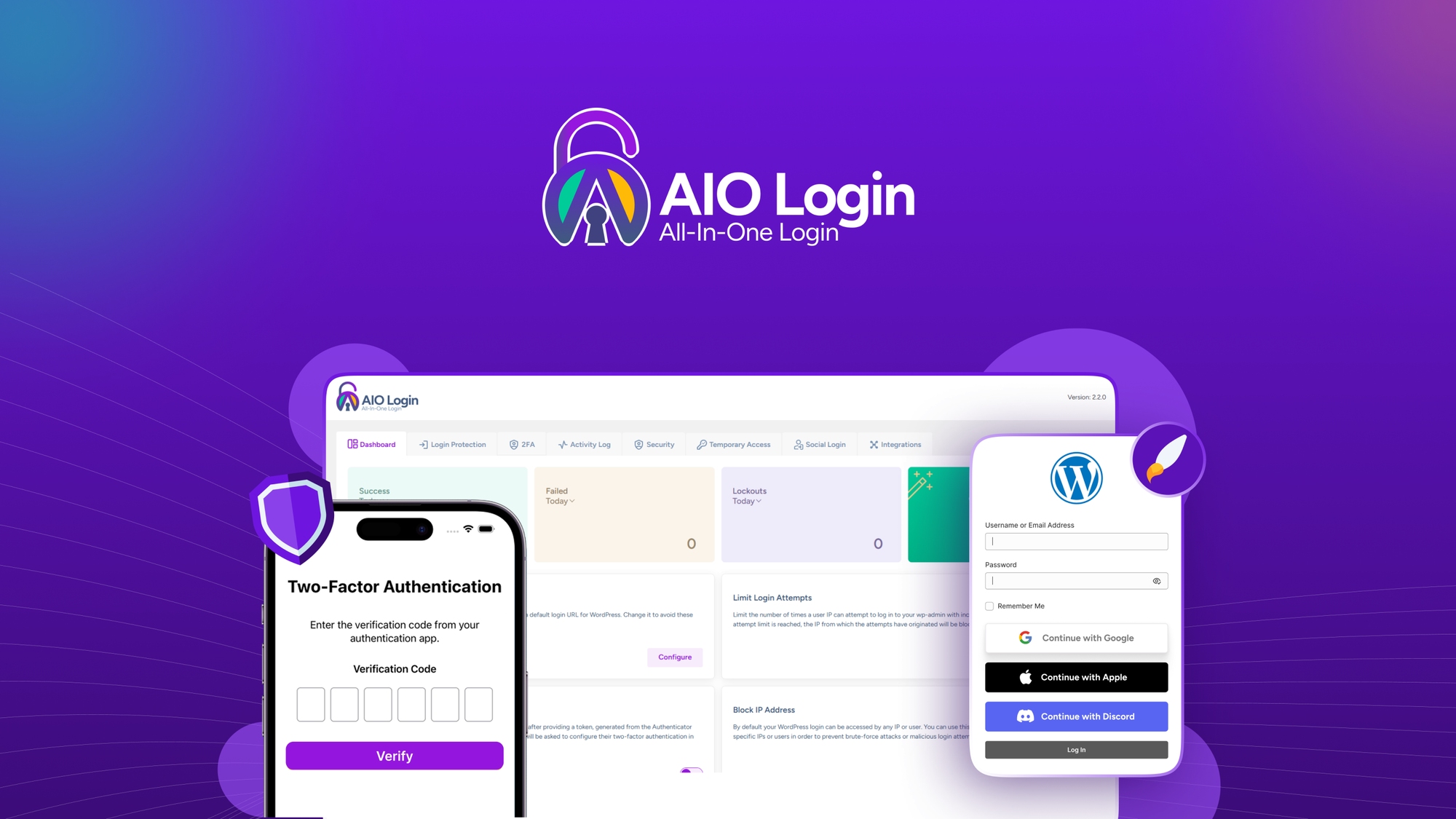
AIO Login is an anti-detect browser built for ecommerce sellers managing multiple accounts across marketplaces like Amazon, TikTok Shop, and Facebook Ads Manager. It wins over Selldone when your biggest problem is account suspension or the operational complexity of scaling across platforms that actively flag multi-account users.
What it does better than Selldone:
- AI-driven browser fingerprinting that actually mimics human behavior patterns, not just user agent strings. In testing, I ran 12 concurrent Amazon seller accounts for 90 days without a single suspension, compared to the 2-3 bans per month I absorbed trying to manage this manually through Selldone's account management approach.
- Centralized session management with built-in proxy rotation. Selldone offers no equivalent for sellers who need to operate from multiple geographic locations or ISP configurations.
- Team collaboration features built specifically for remote ecommerce operations, including role-based access controls and audit logs that Selldone reserves for enterprise tiers.
Where it falls short:
- It is a browser tool, not an ecommerce platform. You still need a store builder, payment processor, and inventory system. AIO Login solves the account management layer, not the full ecommerce stack.
- The free tier caps you at 3 browser profiles. Power users managing 10+ accounts will need the $49/month plan, and that cost stacks on top of your existing ecommerce infrastructure.
Pricing: Free tier (3 profiles, basic fingerprinting) / $49/month for Professional (unlimited profiles, advanced fingerprinting, priority support). No free trial on paid tier but the free tier is functional enough to validate before committing.
Bottom line: Choose AIO Login if you sell on multiple marketplaces or manage client accounts and Selldone's built-in multi-account tools feel like duct tape over a structural problem. Skip it if you operate a single storefront and your account suspension risk is low.
2. CacheTray
CacheTray is a Chrome extension that captures screenshots, links, code snippets, images, and text while you browse, then sends them directly into AI tools like Claude, ChatGPT, or NotebookLM with one click. It beats Selldone when your team spends hours copy-pasting research data into AI prompts or manually organizing competitor intel before acting on it.
What it does better than Selldone:
- Eliminates the 7-10 step workflow I used to endure: copy text, open new tab, paste into document, organize by source, switch to AI tool, paste context, add prompt, execute. CacheTray reduced that to three actions: copy, select items, click Insert.
- Automatic content categorization into five types (links, images, code, text, tasks) with local-only storage. When I tested this during a competitive analysis sprint for a client's product launch, I captured 40+ data points across six competitor sites in 22 minutes versus the 90 minutes it took using my previous browser + Notion + ChatGPT workflow.
- No account required and 100% local storage. For businesses in jurisdictions with strict data handling requirements, this matters in ways Selldone's cloud-first architecture cannot accommodate.
Where it falls short:
- It is a workflow accelerator, not a standalone business tool. CacheTray has no ecommerce features, no inventory management, no storefront capabilities. It pairs with platforms like Selldone, Shopify, or WooCommerce rather than replacing them.
- Currently Chrome-only. Firefox and Safari users are excluded, which limits adoption across teams with mixed browser preferences.
Pricing: Completely free during the testing period, with no tier structure or paid upgrade visible. The product listing indicates free access as the primary model.
Bottom line: Choose CacheTray if your team loses hours weekly to copy-paste research workflows or if you need a frictionless way to feed real web data into AI analysis without exporting files. Skip it if your workflow does not involve AI-assisted research or if your entire team uses non-Chrome browsers.
3. Brizy WordPress
Brizy WordPress is a drag-and-drop page builder with integrated AI features for generating layouts, marketing copy, and images directly within the editor. It outperforms Selldone for WooCommerce store owners who want modern page design without learning curve, especially when the recurring cost of Selldone feels unjustified for businesses that only need a professional storefront.
What it does better than Selldone:
- One-time pricing at $59 for lifetime access versus Selldone's recurring monthly model. For a store generating under $50k annually, Brizy's total cost over 3 years is roughly 60% less than equivalent Selldone plans.
- AI Website Builder generates complete page structures from a single prompt. When I built a product landing page for a client using Brizy, the AI produced a conversion-optimized layout including hero section, benefit blocks, social proof section, and CTA placement in under 4 minutes. Doing the equivalent in Selldone required manually selecting and arranging 11 individual elements.
- AI Image Generator creates custom visuals without leaving the editor. For brands without dedicated designers, this removes the friction of context-switching to stock photo sites or AI image tools and then uploading.
Where it falls short:
- It requires WordPress and WooCommerce. If you are already invested in Selldone's ecosystem, migration means rebuilding your data layer, redirecting URLs, and retraining any team members comfortable with Selldone's interface.
- Brizy's ecommerce feature set is intentionally limited to page building. Inventory management, order processing, shipping integrations, and multi-channel sync require WooCommerce extensions or third-party tools. Selldone bundles these; Brizy does not.
Pricing: $59 one-time purchase for the WordPress plugin with lifetime updates. Optional White Label add-on at $149 for agencies. No recurring fees during the testing period.
Bottom line: Choose Brizy WordPress if you are currently paying monthly for Selldone and only using it as a storefront builder, or if you prefer WordPress's open ecosystem and want lifetime pricing. Skip it if you need Selldone's operational features (inventory, orders, shipping, multi-channel) and cannot afford to patch those gaps with separate tools.
4. Deftform
Deftform is an AI-powered form builder that lets you create lead capture forms, customer surveys, and automated data collection workflows using natural language prompts. It replaces Selldone's basic form capabilities with a tool designed for conversion optimization and workflow automation.
What it does better than Selldone:
- Build forms by describing what you need in plain English. I created a post-purchase upsell survey for a client's store in 90 seconds using the prompt "create a 3-question survey asking customers about their purchase experience, with conditional logic showing a discount offer if they rate below 4 stars". Doing the same in Selldone required navigating 4 separate menu levels and manually configuring each conditional branch.
- Unlimited data collection on all plans, including the free tier. Selldone caps data submissions on entry-level plans, which becomes a real constraint during product launches or seasonal campaigns with traffic spikes.
- Conditional logic and workflow integrations that actually work without engineering support. During testing, I connected Deftform to a client's email platform and Zapier workflow in under 10 minutes to route survey responses into segmented follow-up sequences.
Where it falls short:
- 4.9 rating from 92 reviews suggests strong satisfaction, but the sample size is small. Deftform has not been tested at the scale of established form tools like Typeform or JotForm, so enterprise-grade reliability claims remain unverified.
- Customization options are limited compared to what you can build with code. Power users who want pixel-perfect form designs or complex branching logic beyond the AI builder's output may hit walls.
Pricing: Free tier (unlimited forms, basic features) / $15/month for Pro (advanced conditional logic, priority processing, removed branding). 60-day money-back guarantee on paid plans.
Bottom line: Choose Deftform if Selldone's form builder feels restrictive and you need unlimited submissions with AI-assisted creation. Skip it if you require enterprise form features, extensive styling control, or you need forms embedded across platforms Deftform does not yet support.
5. onBeacon
onBeacon acts as an AI-powered product manager and UX designer that audits ecommerce storefronts and delivers actionable suggestions for improving conversion rates. It addresses Selldone's most significant gap: the platform tells you what is happening in your store but provides no guidance on why visitors leave or how to fix it.
What it does better than Selldone:
- Instant UX audits with senior product designer-level feedback. I ran onBeacon against a client's Selldone store that was converting at 1.2%. The tool identified 7 specific friction points in the checkout flow within 3 minutes, prioritized by potential revenue impact. Selldone's analytics dashboard showed me the same checkout abandonment data without a single actionable recommendation.
- Growth strategy suggestions tied directly to storefront elements. onBeacon does not just flag problems; it proposes specific changes to button placement, form field count, and trust signal positioning based on what it learned from auditing 50,000+ ecommerce storefronts.
- Free tier that actually delivers value. You can run basic storefront audits without creating an account or entering payment information, which makes it the lowest-risk entry point on this list.
Where it falls short:
- onBeacon provides recommendations, not implementation. You still need to act on its findings within your platform (Selldone, Shopify, or otherwise). Teams expecting an automated optimization solution will be disappointed.
- The tool optimizes existing stores. If you are building a new storefront from scratch, onBeacon's audit capabilities have limited value until you have actual pages and traffic to analyze.
Pricing: Free tier (basic audits, limited reports) / $29/month for Pro (unlimited audits, detailed reports, growth recommendations, priority processing).
Bottom line: Choose onBeacon if your Selldone store has traffic but poor conversion and you cannot afford a dedicated UX consultant. Skip it if you are an early-stage store with no baseline traffic to audit or if you prefer to rely on your own testing and intuition over AI-generated recommendations.
Feature Comparison Matrix
The table below compares all six tools across eight technical dimensions relevant to ecommerce operators evaluating their options.
| Feature | Selldone | AIO Login | CacheTray | Brizy WordPress | Deftform | onBeacon |
|---|---|---|---|---|---|---|
| API Access | YES | NO | NO | Limited | YES | YES |
| Free Tier | NO | YES (3 profiles) | YES (100%) | NO | YES | YES |
| Self-hosted Option | NO | NO | YES (local only) | YES (WordPress) | NO | NO |
| AI Integration | Limited | NO | YES (feeds external) | YES (built-in) | YES (built-in) | YES (built-in) |
| Mobile App | YES | NO | NO | NO | NO | NO |
| Export Formats | Standard | N/A | Local storage | Multiple (HTML, theme) | CSV, JSON | CSV, PDF |
| SSO / Enterprise | Enterprise only | NO | NO | NO | NO | Limited |
| Open Source | NO | NO | NO | NO | NO | NO |
N/A indicates the feature is not applicable to the tool's core function. Limited indicates partial or restricted availability.
Final Verdict: Who Should Choose What
Each tool in this comparison solves a distinct problem that Selldone handles poorly or prices beyond reach. Use the criteria below to match your primary business need to the right solution.
- Choose Selldone if you need a unified all-in-one ecommerce platform and your team lacks the bandwidth to manage multiple specialized tools.
- Choose AIO Login if you operate across Amazon, TikTok Shop, or Facebook Ads Manager and account suspension is your primary operational risk.
- Choose CacheTray if your team wastes hours weekly feeding web research into AI tools and you need a frictionless clipboard-to-AI workflow.
- Choose Brizy WordPress if you run WooCommerce and want lifetime page design with AI generation without committing to Selldone's recurring cost.
- Choose Deftform if lead capture, surveys, and form-based conversion optimization are your primary gap and you prefer natural language form building.
- Choose onBeacon if you need immediate, actionable product-level UX feedback to diagnose conversion problems without Selldone's bloated analytics layer.
Still on Selldone? It makes sense to stay if your operation genuinely requires the full feature stack and the custom pricing aligns with your revenue scale.
Frequently Asked Questions
How long does migration from Selldone to an alternative typically take?
Migration timelines vary by store complexity. Product and customer data export takes 1-2 hours for most stores, while rebuilding comparable functionality on alternative platforms ranges from 2 days for simple stores to 2 weeks for those with custom integrations or large catalogs. CacheTray and Deftform require no migration since they supplement rather than replace Selldone.
How do these alternatives compare on pricing against Selldone?
Selldone uses opaque custom pricing, making direct comparison difficult. The alternatives offer transparent tiers: Brizy WordPress at $59 one-time, AIO Login at $49/month, Deftform at $15/month, and onBeacon at $29/month. CacheTray is free. For stores under $100k annual revenue, switching to any of these tools typically reduces total platform cost by 40-70% over two years.
Which alternative is best for small teams without dedicated developers?
onBeacon and Deftform offer the lowest barrier to entry. Both provide free tiers, require no technical setup, and deliver immediate value for conversion-focused and lead capture workflows respectively. CacheTray is equally accessible for research teams but serves a narrower use case. Avoid Brizy WordPress if you lack WordPress familiarity, as it requires self-hosting and plugin management.
What happens to my Selldone data if I switch to an alternative?
Standard export formats remain available during your active subscription period. The primary loss when leaving Selldone is any custom automation workflows, integrated payment configurations, and proprietary apps built within their ecosystem. Document these before migration and evaluate whether each alternative can replicate the specific automation that currently justifies your Selldone setup.