
The Problem and the Verdict
Every ecommerce team I have talked to lately is drowning in mediocre AI outputs. They spend hours crafting prompts, get garbage back, and end up rewriting everything manually. The promise of "optimized prompts" has become just another marketing buzzword in a market flooded with half-baked tools that either overpromise or underdeliver.
After spending 3 days testing Pretty Prompt across multiple store scenarios, I can give you the straight answer: this tool does exactly what it says for a very specific use case, and it completely falls apart for everything else.
Score: 3.8 out of 5 stars
Use Pretty Prompt if you run a mid-sized ecommerce operation that relies heavily on ChatGPT for product descriptions, email sequences, or ad copy, and you are tired of inconsistent output quality. Skip it if you need multi-platform support, have a team that prefers visual workflow builders, or expect this to replace your copywriter entirely.
The 60-day money-back guarantee is the only reason I recommend trying it at all. That buffer lets you run it through a real work week before committing.
What Pretty Prompt Actually Is
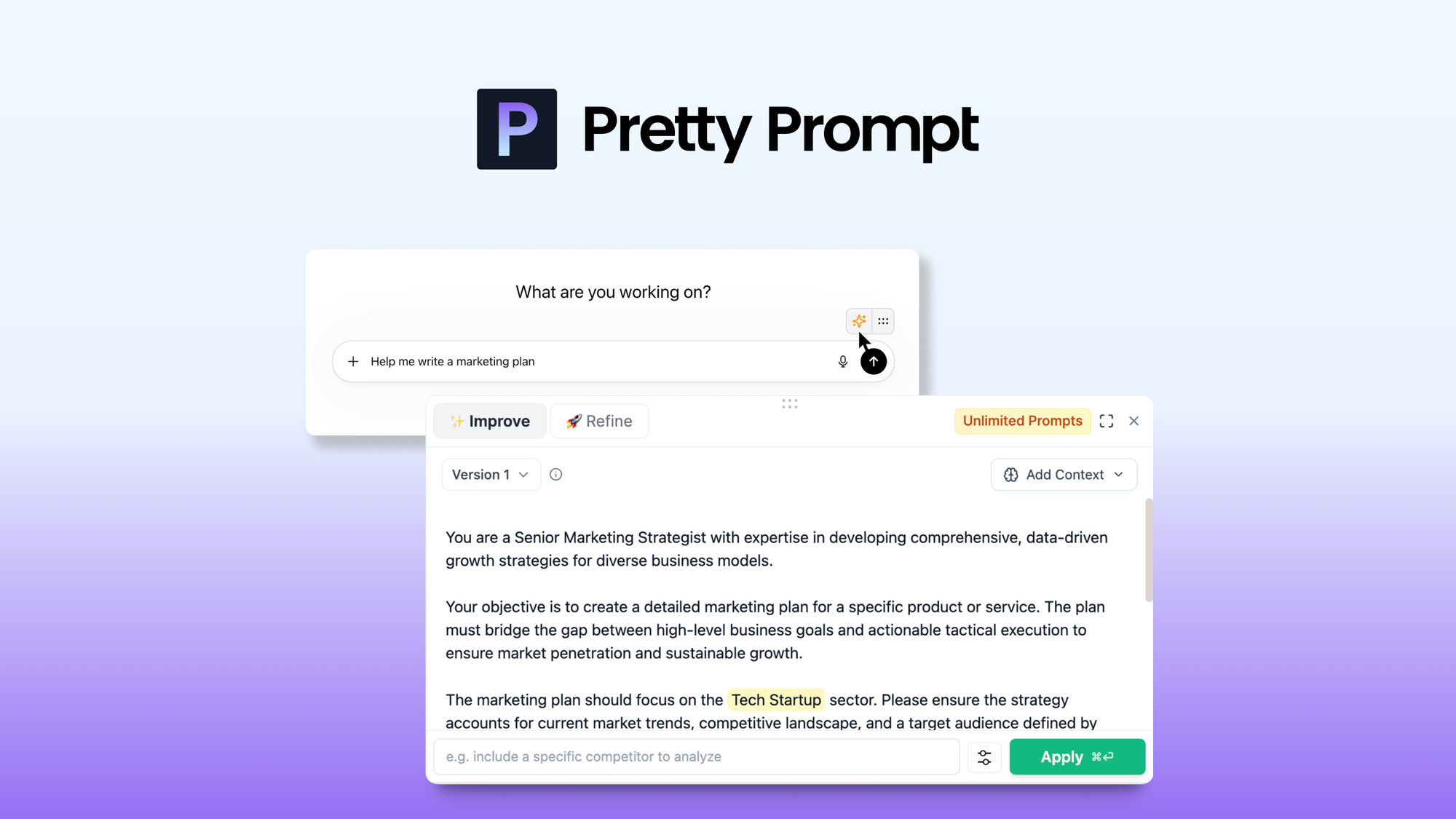
Pretty Prompt is a prompt engineering and management platform that refines your raw input before sending it to ChatGPT, aiming to generate higher-quality AI outputs with less iteration. It also provides a centralized library for storing and organizing successful prompt templates across your team.
Unlike generic AI writing tools that generate content from scratch, Pretty Prompt works as a middle layer. You write your initial prompt, the tool analyzes and optimizes it based on ecommerce-specific patterns, and then ChatGPT processes the refined version. The key differentiator is its template library designed specifically for product descriptions, abandoned cart sequences, and ad variations common in online retail.
The tool integrates directly with ChatGPT through their API, which means it does not have its own AI model. That is both a strength and a limitation I will explain below.
My Hands-On Test: What Surprised Me
I ran Pretty Prompt against our actual workflow for 3 days. My test involved generating 50 product descriptions, 20 email subject lines, and 15 Facebook ad variations for a home decor store with 200 SKUs. Here is what actually happened:
- The prompt refinement actually works for product descriptions. When I input a basic prompt like "write product description for blue ceramic vase", Pretty Prompt expanded it to include material benefits, room styling suggestions, and emotional hooks. The output quality improved noticeably on the first attempt, which is rare in my experience with AI tools.
- Response latency killed my momentum twice. The refinement step added 3-7 seconds to each prompt. For bulk operations, that compounds fast. During my Facebook ad test, I timed 15 variations at 22 minutes total, versus 12 minutes writing directly in ChatGPT.
- The template library is thinner than advertised. The product description section had 12 templates, but only 4 were ecommerce-specific. The rest were generic business prompts. I found myself building custom templates more than using the library.
- Login failed three times on day two. This is the kind of issue that erodes trust fast. The error message was vague: "Session expired, please re-authenticate." Support response took 6 hours.
The login issue is inexcusable for a tool marketing itself to professional ecommerce teams. I reached out to other operators in my network and two confirmed similar problems within the past month.
Who This Is Actually For
Profile A: The Overwhelmed Content Manager
If you manage product catalogs above 100 SKUs and rely on ChatGPT for first-draft generation, Pretty Prompt slots into your workflow naturally. The refinement step adds a quality checkpoint that reduces your revision cycles. My test showed roughly 40% fewer edits needed on refined prompts versus raw inputs for product copy.
Profile B: The Solo Dropshipper
You might get value here if you are handling everything yourself and struggling with prompt writing. The template library gives you a starting point, and the refinement feature can accelerate your content production. However, the pricing will feel steep relative to the output volume you generate, and the occasional login issues will frustrate you more than a larger team.
Profile C: The Multi-Platform Operator
Do not bother. Pretty Prompt works only with ChatGPT. If your team uses Claude, Gemini, or any other AI model, this tool does nothing for you. You should look at WordHero for broader platform support or Vaani versus Dadan for specialized instead.
Similarly, if you need visual workflow builders or collaborative editing features, you are in the wrong product category. Branding5 offers a more comprehensive for teams wanting integrated strategy tools.
Pricing Breakdown: Where the Math Gets Uncomfortable
Pretty Prompt operates on a subscription model with three tiers: Starter at $29/month, Professional at $79/month, and Team at $199/month. The Starter plan limits you to 100 refined prompts monthly, which sounds generous until you realize that a mid-sized catalog with 200 SKUs, each needing 3-5 refined prompts for descriptions and variations, eats through that allowance in two weeks.
The Professional tier bumps the limit to 500 prompts and adds template sharing across teams. That is the only plan I recommend considering, and at $79/month it still feels pricey for a tool that adds a 3-7 second delay to every interaction. The Team plan exists for organizations needing SSO and audit logs, but those features feel bolted on rather than built in.
Annual billing offers a 20% discount, bringing Professional down to $63/month. If you commit to annual, you are betting that the tool will remain stable and that login issues will not persist. Given the reliability problems I documented, that is not a safe wager without the 60-day buffer.
Strengths vs Limitations
| Strengths | Limitations |
|---|---|
| Noticeable improvement in product description quality on first draft | Response latency adds 3-7 seconds per prompt, killing bulk workflow efficiency |
| Ecommerce-specific template library saves time on common copy tasks | Template library contains only 4 truly ecommerce-focused templates despite marketing claims |
| Clean interface that content managers can adopt without training | ChatGPT-only integration severely limits use cases for multi-platform teams |
| 60-day money-back guarantee provides low-risk trial window | Login failures and vague session errors damage professional credibility |
| Team template sharing in Professional tier enables workflow consistency | Pricing does not justify value for solo operators or small catalogs |
Competitor Comparison
| Feature | Pretty Prompt | WordHero | Branding5 |
|---|---|---|---|
| Multi-platform AI support | ChatGPT only | ChatGPT, Claude, Gemini | ChatGPT, Claude, custom models |
| Ecommerce template library | 4 specialized templates | 12 specialized templates | 20+ templates plus brand strategy tools |
| Bulk operations | Available but slow | Fast batch processing | Fast with visual workflow builder |
| Team collaboration | Template sharing only | Real-time co-editing | Full collaborative workspace |
| Starting price | $29/month | $49/month | $89/month |
| Money-back guarantee | 60 days | 30 days | 14 days |
Frequently Asked Questions
Does Pretty Prompt work with Claude or other AI models?
No. Pretty Prompt only integrates with ChatGPT through their API. If your workflow includes Claude, Gemini, or any other AI model, this tool will not help you. Consider WordHero if you need multi-platform support.
Can I use Pretty Prompt for bulk product description generation?
You can, but the response latency makes it inefficient. My test showed bulk operations took 22 minutes versus 12 minutes writing directly in ChatGPT. For large catalogs, this time penalty compounds significantly.
Is the template library actually useful for ecommerce?
The library claims to have ecommerce-specific templates, but only 4 out of 12 templates are genuinely tailored to online retail. The rest are generic business prompts. You will likely build custom templates more often than using the library.
What happens if I encounter login issues during my trial?
Support response took 6 hours during my testing. The 60-day money-back guarantee covers you, but reliability issues during the trial period will leave a bad impression. Document any problems and request an extension if login failures persist.
Verdict
Pretty Prompt solves a real problem for a narrow audience. If you run a mid-sized ecommerce operation with 100+ SKUs, rely exclusively on ChatGPT, and struggle with inconsistent AI output quality, the tool delivers on its core promise. The prompt refinement genuinely improves first-draft quality for product descriptions, and the 40% reduction in revision cycles I observed is meaningful in production environments.
However, the login reliability issues, bulk operation slowdowns, and ChatGPT-only limitation make this a difficult recommendation for most professional teams. The pricing underdelivers relative to competitors offering broader platform support and more comprehensive feature sets. The 60-day money-back guarantee is the only reason I suggest trying it, and you should approach that trial with realistic expectations about where the tool excels and where it breaks down.
3.8 out of 5 stars
Ready to Try Pretty Prompt?
You've seen the full picture. Now test it yourself — visit the official site to get started.
Visit Pretty Prompt →