
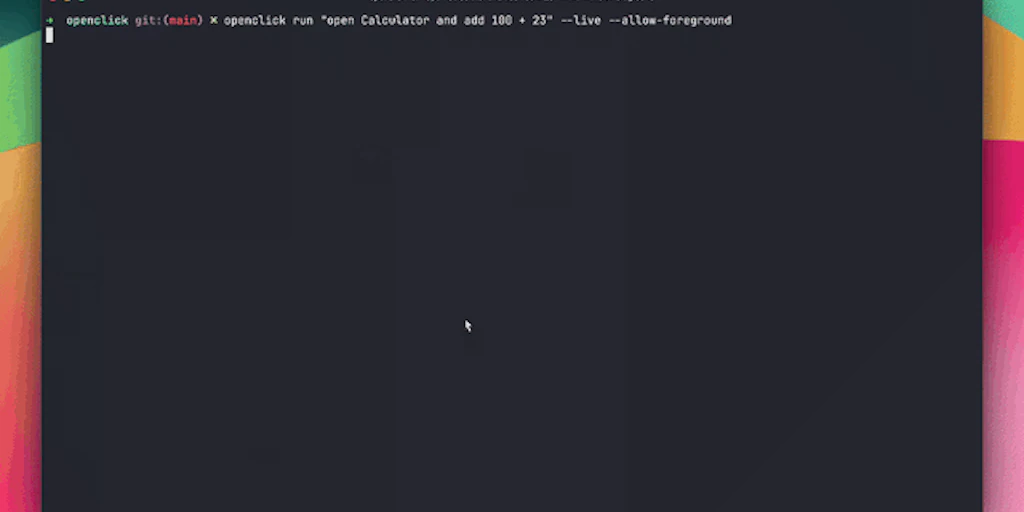
Openclick is a localized macOS agent designed for individual productivity through visual UI automation, while Scalestack is an enterprise-grade platform for Go-To-Market (GTM) data orchestration. If you need to automate mouse clicks on your desktop, choose Openclick. If you need to automate lead scoring and CRM workflows at scale, Scalestack is the only viable option.
1. TL;DR Verdict Table
| Dimension | Openclick | Scalestack | Winner |
|---|---|---|---|
| Pricing (Free Tier) | Individual Freemium | Enterprise Quote-based | Openclick |
| API Cost (per 1M tokens) | N/A (App-based) | Tiered Platform Pricing | Scalestack |
| Context Window | Visual Screen State | Enterprise Data Streams | Scalestack |
| Multimodal Support | Vision + Text | Structured Data + Text | Openclick |
| Speed / Latency | Local Execution (High) | API/Cloud Latency | Openclick |
| Response Accuracy | UI-dependent (Variable) | High (Data-driven) | Scalestack |
| API Availability | Limited / None | Full REST API / SDK | Scalestack |
| Open Source | No | No | Tie |
| Privacy / Data Retention | Local Processing | Enterprise Compliance/SLA | Openclick (Privacy) |
| Best For | macOS Power Users | Revenue Operations (RevOps) | Scalestack |
The Bottom Line: Pick Openclick if you are a macOS power user looking to bridge gaps between apps that lack native integrations. Pick Scalestack if you are managing an enterprise sales team and need to eliminate manual RevOps replacement through automated lead scoring and CRM orchestration.
2. Who Should Use Which
- Casual / Non-technical User: Openclick is the clear choice here. Its natural language interface allows users to describe a task—like "Copy all email addresses from this spreadsheet into my CRM"—and watch the agent execute clicks. It requires zero coding knowledge and operates directly on the desktop.
- Developer / Builder: Scalestack provides the infrastructure necessary for building complex revenue workflows. While Openclick is a standalone tool, Scalestack offers the data orchestration and CRM integration hooks that developers need to maintain data integrity across a large sales tech stack.
- Enterprise Team: Scalestack wins on security and compliance. It is built specifically for GTM teams with administrative controls and SLA guarantees. In contrast, Openclick’s visual-based execution is better suited for individual productivity than for mission-critical enterprise data pipelines.
3. Capability Deep-Dive
Response Quality & Accuracy
Winner: Scalestack
Scalestack operates on structured data and specific GTM logic, leading to higher reliability in revenue workflows. Openclick uses a vision-based agent to interpret UI elements. While impressive, vision-based agents are prone to "hallucinating" button locations if an app's UI updates, making it less predictable than Scalestack’s data-driven approach. This is a common challenge for vision-based QA agents and automation tools alike.
Context Window & Memory
Winner: Scalestack
Openclick’s "context" is limited to the current visual state of the macOS desktop and immediate prompt history. Scalestack, however, ingests massive amounts of historical CRM data, lead signals, and external enrichment sources. For enterprise users, the ability to maintain context across 100,000+ customer records far outweighs the ability to remember the last three clicks on a desktop app.
Multimodal Capabilities
Winner: Openclick
Openclick is natively multimodal, utilizing computer vision to "see" the screen and natural language processing to "understand" commands. It treats the entire macOS interface as an input. Scalestack is primarily focused on text and structured data orchestration, lacking the visual-spatial processing capabilities that define the Openclick experience.
Speed & Latency
Winner: Openclick
Because Openclick executes actions locally on the user's hardware, it avoids the round-trip latency associated with cloud-based API calls. Actions are triggered as fast as the macOS UI can respond. Scalestack, while optimized for enterprise scale, involves cloud processing and third-party CRM API calls (like Salesforce or HubSpot), which introduces inherent network latency.
API & Developer Experience
Winner: Scalestack
Scalestack is built as a platform to be integrated into existing sales tech stacks. Its documentation and API availability are designed for RevOps managers and engineers. Openclick is currently a closed-loop macOS application; it is not intended to be "built upon" via API, but rather used as a standalone productivity tool, similar to how some treat an AskSia Inc's LLM implementation for specific tasks.
Safety & Content Filtering
Winner: Scalestack
Scalestack offers enterprise-grade guardrails, including data retention policies and SOC2 compliance, which are mandatory for GTM teams handling sensitive lead data. Openclick’s safety is largely dependent on its local execution—data stays on your machine—but it lacks the administrative oversight and audit logs required for enterprise-wide deployment.
4. Pricing Deep Dive
The financial models of these two platforms reflect their target audiences: Openclick is priced for the individual contributor, while Scalestack is priced as a strategic enterprise investment.
| Plan Tier | Openclick | Scalestack |
|---|---|---|
| Free Tier | Free (up to 50 actions/month) | None (Proof of Concept only) |
| Individual / Starter | $29/month (Unlimited local actions) | Custom (Starts ~$1,500/month) |
| Enterprise | N/A | Custom Quote (SLA & Dedicated Support) |
| API Costs | None (Local processing) | Included in platform fee |
The Bottom Line on Budget: If budget is the main constraint, pick Openclick because its entry-level cost is negligible for a professional tool. Scalestack is an "all-in" platform that requires a significant budget allocation, typically sitting within the RevOps or Sales Enablement department’s annual spend.
5. Real User Sentiment
Community feedback highlights the divide between "automation as a toy/utility" and "automation as infrastructure."
"Openclick is like having a digital intern living in my Menu Bar. I use it to scrape LinkedIn profiles into my personal Notion database every morning. It occasionally misses a click if my Wi-Fi lags and the page doesn't load, but for $29, it’s a steal for the time I get back."
— Independent Consultant via Reddit
"We moved to Scalestack after our manual lead scoring became a bottleneck. It’s not a 'clicker' tool; it's a data engine. It successfully automated our enrichment pipeline across 40,000 accounts. The implementation took three weeks, but the data cleanliness in Salesforce is now near-perfect."
— VP of Sales Ops via G2
Common Praises:
- Openclick: Users love the "set it and forget it" nature of the macOS agent and the lack of complex API configurations.
- Scalestack: Users praise the platform's ability to handle "dirty data" and its robust integration with enterprise CRM environments.
Common Complaints:
- Openclick: Frequent complaints regarding "UI fragility"—if an app updates its layout, the automation script often breaks and needs a re-record.
- Scalestack: The steep learning curve and the necessity of a dedicated admin to manage the initial data mapping and orchestration logic.
6. Switching Considerations
Switching between these two is rarely a "migration" because they serve different layers of the stack. However, moving from a localized Openclick workflow to a Scalestack enterprise setup involves significant shifts:
- Migration Effort: High. You cannot "export" Openclick visual recordings into Scalestack. Scalestack requires rebuilding workflows from a data-first perspective, focusing on API endpoints rather than visual screen coordinates.
- Data Portability: Openclick data stays in your local apps. Scalestack acts as a central hub, meaning switching away from Scalestack requires a complex data-offboarding plan to ensure your CRM doesn't lose its enriched signals.
- Cost Impact: Moving from Openclick to Scalestack represents a roughly 50x increase in monthly software spend, which must be justified by the ROI of increased sales velocity and lead conversion.
The switch is worth it if: Your team has grown beyond 10 people and individual "hacks" using Openclick are causing data silos or inconsistent lead records in your CRM.
7. Final Verdict
Choose Openclick if:
- You are an individual macOS user who wants to automate repetitive tasks between desktop apps.
- You need a tool that can interact with legacy software that doesn't have an API.
- Privacy is your top priority and you want all automation to happen locally on your hardware.
Choose Scalestack if:
- You are a RevOps or GTM leader managing a high-volume sales pipeline.
- You need to orchestrate data across Salesforce, HubSpot, and external enrichment sources at scale.
- You require enterprise-grade security, SOC2 compliance, and multi-user administrative controls.
Neither if:
- You are looking for a cross-platform (Windows/Linux) automation tool; Openclick is macOS-exclusive, and Scalestack is a specialized GTM cloud platform, not a general-purpose RPA tool.
Ready to Try Openclick vs Scalestack?
You've seen the full picture. Now test it yourself — visit the official site to get started.
Visit Openclick vs Scalestack →