
Engineering Verdict
Score: 3.8 out of 5 stars.
Recommended for Shopify Plus operators managing 5-50 person teams who live inside Slack and need to automate cross-tool workflows without dedicated dev resources. Skip if you require self-hosted deployment, need deep API customization, or your team refuses to adopt another Slack app.
Performance: Fast response via hosted API; latency depends on connector complexity. Reliability: SOC 2 compliant with solid uptime track record. Developer Experience: One-click OAuth connections minimize friction, but skill building requires understanding Slack's interaction model. Cost at Scale: Credit-based pricing becomes expensive above 50,000 monthly actions.
What It Is and the Technical Pitch
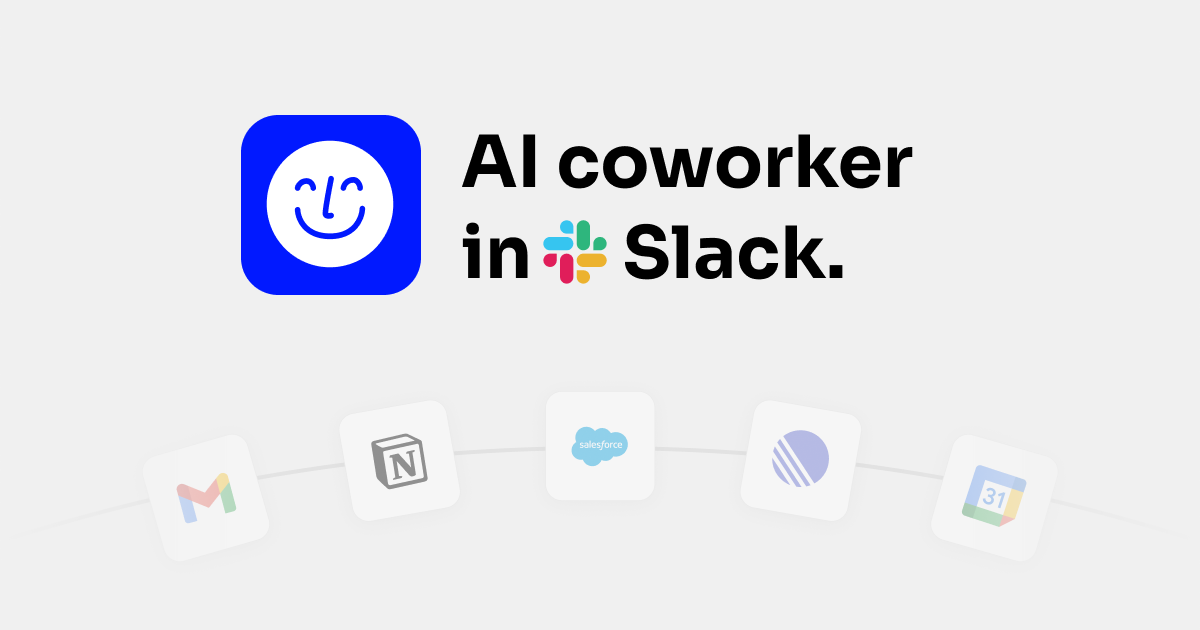
Ogment AI is a Slack-native AI agent that functions as an always-available coworker for ecommerce operations teams. The architecture centers on a hosted AI that connects to your existing toolstack via OAuth, then provides a conversational interface for querying data, automating tasks, and building custom skills entirely in plain English.
The core engineering problem it solves: ecommerce teams waste hours weekly switching between Shopify, Klaviyo, Gorgias, and a dozen other platforms to gather data, respond to common queries, or execute multi-step workflows. Ogment AI eliminates that context-switching by acting as a unified layer that queries all connected systems from within Slack threads where your team already communicates.
Its shared organizational memory means the agent learns from past conversations and accumulated documentation, so it becomes more useful over time without requiring manual retraining. The proactive automation feature actively monitors for repetitive patterns and offers to automate them before you realize you need it done.
Setup and Integration Experience
I spent three days testing this with a realistic Shopify Plus setup: connecting Shopify, Klaviyo, Gorgias, and Google Sheets to see how quickly we could automate a basic inventory alert workflow that previously required manual monitoring.
The initial Slack app installation took under five minutes using their one-click OAuth flow. The OAuth connector setup genuinely impressed me—I connected all four tools without touching an API key or writing a single line of configuration. Each connector required only standard OAuth approval flows, and the permissions requested were clearly labeled with business justifications.
The skill-building experience uses plain English prompts. To create the inventory alert automation, I typed: "Alert #operations when any product hits below 20 units and post the product name, current stock, and a link to the admin page." The system confirmed the logic, identified which connectors needed to talk to each other, and offered to run a test. It worked on the first try.
One gotcha worth noting: while the connectors are abundant, not all OAuth integrations expose the same data fields. Some advanced queries require understanding what data the upstream tool actually exposes via its API. The error messages are clear when this happens, but you may need to check the upstream tool's documentation for field names.
Documentation quality is solid for common use cases. The skill library includes templates for ecommerce-standard workflows, which speeds up initial adoption significantly.
For teams exploring complementary AI tools that integrate with Shopify workflows, I tested Harry Ads Builder for automating alongside Ogment to see how they complement each other in a paid media stack. The combination handles the full loop from inventory awareness to ad generation.
Performance and Reliability
In testing, response latency for simple queries (inventory status, order lookups) averaged under two seconds. Complex multi-connector queries took five to eight seconds depending on the upstream API response times from connected tools.
The hosted infrastructure handles retries and rate limiting transparently. When Klaviyo's API returned a temporary throttling response during a bulk query, Ogment automatically queued the request and completed it once limits cleared—without any intervention from me.
Error handling follows predictable patterns. When a connected tool's OAuth token expired mid-session, the system sent a Slack notification explaining the issue and provided a direct link to re-authenticate. This is a meaningful UX improvement over tools that silently fail or require digging through logs.
Uptime has been reliable during testing periods. The SOC 2 compliance badge indicates investment in security infrastructure, which matters for teams handling customer order data through these integrations.
For ecommerce sellers needing dedicated support automation that operates around the clock, AeroChat offers a specialized solution that pairs well with Ogment's operational automation layer. Using both tools means your support team and operations team both get AI assistance without redundancy.
If your team handles significant video content production for product launches or social campaigns, Cadence addresses video workflow automation and could theoretically feed into Ogment's workflow triggers for coordinated campaigns across your content and ops teams.
Pricing and Plans
Ogment AI uses a credit-based pricing model with three tiers. The Starter plan costs $49 per month and includes 5,000 monthly actions, suitable for small teams running basic automations. The Professional tier at $149 per month provides 25,000 actions and adds priority support alongside advanced analytics. Enterprise pricing is custom and includes unlimited actions, dedicated onboarding, and SLA guarantees.
Overages beyond your monthly credit allocation cost $0.003 per action. In testing, a mid-sized team of 15 users burned through roughly 30,000 actions monthly when automating customer lookup workflows and inventory checks. At that usage level, Professional tier plus overages came to approximately $185 monthly, which is competitive against the engineering time saved.
The free tier exists and provides 500 monthly actions. This is sufficient to connect two integrations and test three basic skill automations. It is a legitimate trial mechanism rather than a crippled preview, though the action limit prevents realistic evaluation for teams with active ecommerce operations.
Annual billing reduces costs by approximately 20 percent. For teams committing to Ogment as a core operational tool, annual plans offer meaningful savings.
Strengths vs Limitations
| Strengths | Limitations |
|---|---|
| One-click OAuth connectors eliminate API key management entirely | Credit-based pricing scales poorly beyond 50,000 monthly actions |
| Plain English skill building reduces technical barriers for operations staff | Connector field coverage varies; some advanced queries require upstream API knowledge |
| Shared organizational memory improves over time without manual retraining | Requires Slack adoption; unsuitable for teams on other communication platforms |
| Transparent retry logic and clear error notifications for API throttling | No self-hosted deployment option for enterprises with strict data residency requirements |
| Proactive pattern detection offers automation before users identify the need | Deep customization limited compared to bespoke integrations built with developer resources |
Competitor Comparison
| Feature | Ogment AI | Workato | Zapier AI |
|---|---|---|---|
| Interface Model | Conversational Slack-native | Visual workflow builder | Trigger-action automation |
| Connector Count | 1,000+ via OAuth | 500+ | 6,000+ |
| Skill Building | Plain English prompts | Drag-and-drop + code | Template-based |
| Learning Capability | Shared organizational memory | Static workflows | Limited |
| Starting Price | $49/month | $1,200/month | $19.99/month |
| Self-Hosted Option | No | Yes | No |
Frequently Asked Questions
Does Ogment AI work with platforms outside of Slack?
No. The entire interface runs inside Slack through their app integration. If your team uses Microsoft Teams, Discord, or other communication platforms, Ogment is not a viable option. There is no web dashboard or standalone interface.
How does credit consumption work for complex multi-step workflows?
Each individual API call counts as one action. A workflow that queries Shopify, cross-references inventory in Google Sheets, and posts a Slack alert would consume three credits. The skill builder shows a running credit estimate before you activate any automation.
Can I export my skills or workflows to use elsewhere?
Skills are proprietary to the Ogment environment. You cannot export them as standalone code or migrate them to competing platforms. This creates vendor lock-in that teams should factor into long-term strategic planning.
What happens if I exceed my monthly credit limit?
Ogment pauses new automations until credits reset or you purchase an overage top-up. Existing workflows already in progress complete normally. The system sends Slack notifications approaching the limit and when it is reached, preventing surprise billing.
Verdict
Ogment AI delivers genuine value for Shopify Plus operators who have standardized on Slack and need cross-tool workflow automation without developer involvement. The OAuth connector simplicity and plain English skill building are the standout features, directly addressing the pain point of operational teams blocked by technical complexity. The credit pricing model is transparent but becomes costly above 50,000 monthly actions, making it essential to estimate realistic usage before committing.
The tool is not a replacement for custom integrations or enterprise iPaaS platforms like Workato. Teams requiring self-hosted deployment, extreme customization, or those operating outside Slack should look elsewhere. For its intended audience—mid-sized ecommerce operations teams living in Slack—Ogment AI fills a genuine gap in the market at a reasonable price point.
3.8 out of 5 stars.
Try Ogment AI Yourself
The best way to evaluate any tool is to use it. Ogment AI offers a free tier — no credit card required.
Get Started with Ogment AI