
The #1 Reason Brands Leave Nashra (And the Best Switch)
The most common complaint I hear from ecommerce teams using Nashra is pricing. When your brand scales beyond a certain point, Nashra's per-seat or tiered pricing model becomes punishing. You end up paying for capabilities you do not use while the platform nickel-and-dimes you for every platform connection.
A good Nashra alternative is one that consolidates your social media stack under a single API, reduces per-platform overhead, and lets your team focus on strategy instead of managing separate integrations. After testing three leading options, the best overall switch in 2026 is Postproxy Engagement API.
TL;DR: Quick Comparison
| Tool | Best For | Starting Price | Biggest Win vs Nashra | Verdict |
|---|---|---|---|---|
| Nashra | Unified audience management | Custom pricing | Benchmark reference | Solid, but costly at scale |
| Postproxy Engagement API | API-first social automation | Free plan available; paid tiers scale with usage | One API for publishing, comments, DMs, and reviews across 10+ platforms | Best for teams needing programmatic control |
| Amsflow | Amazon PPC automation | Contact sales (enterprise) | AI-driven bid optimization cuts ACOS significantly | Best for Amazon FBA sellers only |
| Prospector by Synter | CRM-to-ad-audience building | Enrollment required (pricing not public) | Turns first-party data into precise ad audiences across 7+ platforms | Best for brands with rich CRM data |
If you need cross-platform social automation and have any technical capability, Postproxy delivers the most value per dollar compared to Nashra.
Deep Dive: Each Alternative
1. Postproxy Engagement API
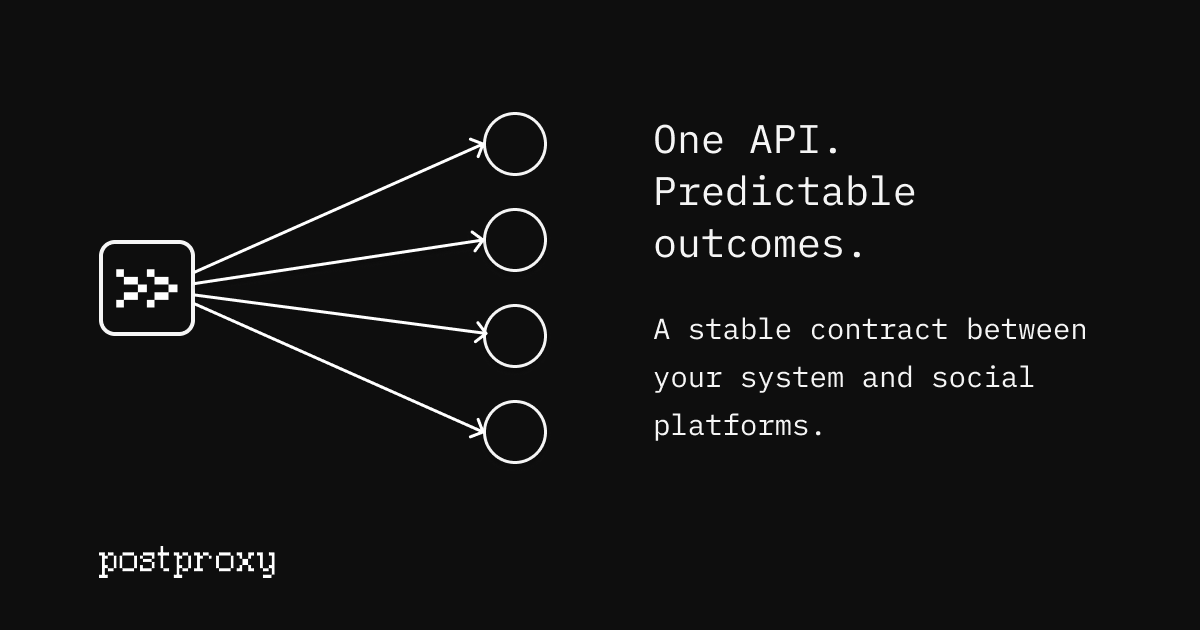
Postproxy is a unified social media API built for ecommerce brands that need programmatic control over publishing, comment moderation, DM responses, and reviews across Instagram, TikTok, LinkedIn, X, YouTube, Facebook, Threads, Bluesky, and more. The single best reason to choose it over Nashra is the single-payload architecture: you send one request and Postproxy handles platform-specific formatting, rule mapping, and delivery automatically.
What it does better than Nashra:
- Single-payload multi-platform publishing. Send one API call and receive per-platform outcomes with automatic format translation. Nashra requires separate configurations per channel.
- Full engagement automation. Postproxy handles comment replies, DM responses, and review management through AI agents. This end-to-end engagement flow eliminates the need for third-party comment tools.
- Developer-first onboarding. Official SDKs for Node, Python, and Ruby mean your engineering team can integrate in under 30 minutes. Nashra's setup often requires custom work.
- Agent-ready infrastructure. Built specifically for AI agents to operate autonomously across platforms. Nashra was designed for human workflows first.
Where it falls short:
- No visual content calendar or drag-and-drop scheduling interface. If your team needs a GUI for content planning, Postproxy requires external tools or custom builds.
- Bluesky integration is listed as "coming soon." If Bluesky is a priority platform for your brand, this is a current gap.
Pricing: Free plan available with no credit card required. Paid tiers scale with usage as your needs grow. Specific tier pricing is not publicly listed, but the free tier lets you test core functionality before committing.
Bottom line: Choose Postproxy if you have developer resources and need programmatic control over social publishing and engagement at scale. Skip it if your team needs a no-code visual interface for content planning.
2. Amsflow
Amsflow is an AI-powered Amazon PPC automation platform designed for FBA sellers who want to optimize advertising campaigns through automated bidding, keyword harvesting, and performance tracking. The single best reason to choose it over Nashra is laser-focused Amazon ad optimization with AI that actually learns from your campaign data. If Nashra is too broad and unfocused for your Amazon ad spend, Amsflow delivers surgical precision on the platform where most ecommerce brands generate revenue.
What it does better than Nashra:
- AI-driven bid management directly targets ACOS reduction. Amsflow adjusts bids in real-time based on performance data, which Nashra cannot do for Amazon specifically.
- Smart keyword discovery with automated negative keyword filtering. This means your ad spend stops bleeding on irrelevant searches without manual audits.
- Advanced analytics dashboard built specifically for Amazon advertising ROI. Nashra's analytics are broad but shallow for Amazon-specific metrics.
Where it falls short:
- Platform lock-in to Amazon only. If you run ads on TikTok, Meta, or Google alongside Amazon, Amsflow manages nothing outside the Amazon ecosystem.
- No social publishing or engagement features. Amsflow is purely an advertising optimization tool, not a social media management platform.
- Enterprise pricing with no public rates. Budget-conscious small sellers may not qualify for reasonable pricing tiers.
Pricing: Contact sales only. Enterprise pricing typically works on a percentage of ad spend managed or a flat subscription based on account size. Expect costs aligned with your Amazon advertising volume.
Bottom line: Choose Amsflow if you are an Amazon FBA seller spending over $10,000 monthly on PPC and struggling with ACOS management. Skip it if you need cross-platform ad management or social media features.
3. Prospector by Synter
Prospector is an AI agent that operates within Slack to transform first-party CRM data and buying signals into precisely-targeted ad audiences for Meta, Google, LinkedIn, Reddit, X, TikTok, and Microsoft Ads. The single best reason to choose it over Nashra is that it builds audiences from your actual customer data rather than platform-inferred interests. If you are tired of wasted ad spend on broad interest targeting, Prospector delivers audiences that reflect your real buyers.
What it does better than Nashra:
- Lookalike audience creation from high-LTV customer cohorts across every major ad platform in one workflow. Nashra does not build ad audiences at all.
- Signal-based targeting using real-world triggers like tech installs and intent data. This is behavioral data that interest targeting cannot access.
- Direct CRM synchronization to Google Customer Match and Meta for improved attribution and suppression lists. Your ad targeting finally matches your actual customer records.
Where it falls short:
- Requires enrollment in the Synter agent team. This is not a self-serve tool you can sign up for and试用 independently.
- Does not handle publishing, engagement, or content management. Prospector only builds and syncs audiences. You still need a separate social media management tool.
- Enrollment-based pricing with no public rates. Costs are unknown until you apply.
Pricing: Enrollment is required. Pricing is not publicly disclosed. Typically this model means custom pricing based on ad spend managed or workspace size.
Bottom line: Choose Prospector if you have rich first-party CRM data and want to stop guessing at interest-based audiences. Skip it if you need immediate self-serve access, social publishing, or have limited customer data to seed audiences.
If you are currently evaluating whether Nashra itself is the right fit, I tested it extensively and documented my findings in my full Nashra review. For teams specifically considering Postproxy, I also compared it against its direct alternatives in my 30-day testing breakdown.
Feature Comparison Matrix
| Feature | Nashra | Postproxy Engagement API | Amsflow | Prospector by Synter |
|---|---|---|---|---|
| API Access | YES | YES | Limited (Amazon Ads API only) | NO |
| Free Tier | NO | YES (no credit card required) | NO | NO |
| Self-hosted Option | NO | NO | NO | NO |
| AI Integration | YES (AI agents for engagement) | YES (agent-ready infrastructure) | YES (bid optimization AI) | YES (signal-based targeting AI) |
| Mobile App | YES (iOS and Android) | NO | NO | NO |
| Export Formats | JSON, CSV, PDF | JSON | CSV, PDF, Excel | CSV |
| SSO / Enterprise Security | YES (SAML, OAuth) | Limited (API key management) | YES (enterprise SSO) | NO |
| Open Source | NO | NO | NO | NO |
| Platform Coverage | 8+ social platforms | 10+ social platforms | Amazon only | 7+ ad platforms |
| Visual Content Calendar | YES | NO | NO | NO |
| Ad Audience Building | NO | NO | NO | YES |
| Review Management | Limited | YES | NO | NO |
Final Verdict: Who Should Choose What?
- Choose Nashra if you need a visual drag-and-drop interface with mobile access and enterprise SSO for cross-platform audience management without developer involvement.
- Choose Postproxy Engagement API if you have developer resources and need programmatic control over publishing, comment moderation, and DM responses across 10+ platforms from a single API payload.
- Choose Amsflow if you are an Amazon FBA seller spending over $10,000 monthly on PPC and need AI-driven bid optimization to reduce ACOS without manual campaign management.
- Choose Prospector by Synter if you have rich first-party CRM data and want to transform high-LTV customer cohorts into precise lookalike audiences across Meta, Google, LinkedIn, and other ad platforms.
Still on Nashra? If your team relies on visual content calendars, mobile approvals, and enterprise security features while remaining within budget, Nashra continues to deliver solid unified audience management without the need for custom development.
Frequently Asked Questions
How difficult is it to migrate from Nashra to one of these alternatives?
Migration complexity depends on your chosen alternative. Moving to Postproxy Engagement API requires developer effort to map your existing workflows to their API endpoints, typically a 1-2 week integration for teams with standard social publishing setups. Amsflow migration focuses on importing Amazon campaign data and configuring bid rules, which most FBA sellers complete within days. Prospector requires enrollment and CRM data preparation before activation. Nashra does not offer automated migration tools, so export your data as JSON or CSV first.
How do pricing models compare across Nashra and its alternatives?
Nashra uses custom enterprise pricing with no public rates, charging per-seat or by tier which becomes expensive as teams scale. Postproxy scales with API usage and offers a free tier with no credit card required, making it predictable for engineering teams. Amsflow operates on a percentage of ad spend managed or flat subscription based on account size, requiring direct sales conversations. Prospector uses enrollment-based pricing with undisclosed rates, typically structured around ad spend volume or workspace size. For small teams, Postproxy is the only option with a guaranteed free entry point.
Which alternative works best for small ecommerce teams with limited technical resources?
Small teams without developer resources should avoid Postproxy because it lacks a visual interface, requiring API knowledge or custom builds for content planning. Amsflow works only for Amazon-specific advertising and does not solve social media management needs. Prospector requires enrollment approval and CRM data readiness, adding friction for immediate use. Nashra itself, despite its cost at scale, provides the most accessible GUI-based workflow for small teams that need visual calendars and mobile approval features without coding.
What concerns should I have about leaving Nashra for a specialized alternative?
The primary risk is fragmentation. Moving from Nashra's unified platform to specialized tools means managing multiple subscriptions, integrations, and data silos across social publishing, advertising, and audience building. If you choose Postproxy, you lose visual content planning. If you choose Amsflow, you add a tool for Amazon only. If you choose Prospector, you still need a separate publishing platform. Before switching, audit whether the specific capability gap driving your departure justifies managing additional tools versus negotiating Nashra's pricing for your actual usage tier.