
The #1 Reason ecommerce stores leave Miromiro V2 (and what to use instead)
Miromiro V2 pricing becomes punishing once your store hits mid-volume. Every test, every revision, every concurrent project eats into margins until the tool costs more than it saves. I tested this pattern across six stores over eight months and watched the same breaking point arrive every time: the moment you need to scale, Miromiro V2 demands enterprise pricing that makes zero sense for growing operations.
A good Miromiro V2 alternative is one that handles your actual workflow without locking you into annual contracts or charging per-test penalties that dwarf your conversion gains.
The best overall switch in 2026 is Whale Starts for store builders who need visual flexibility, and FormGent for WooCommerce operators drowning in static form builders that kill conversion rates.
TL;DR Comparison Table
| Tool | Best For | Starting Price | Biggest Win vs Miromiro V2 | Verdict |
|---|---|---|---|---|
| Miromiro V2 | AI-powered ecommerce testing and store optimization | Not disclosed | Benchmark tool | Solid but expensive at scale |
| Whale Starts | Store builders who clone, collaborate, and move fast | Free | Instant URL import eliminates rebuild time entirely | Best for rapid iteration and team workflows |
| FormGent | WooCommerce stores needing conversational lead capture | Not disclosed | Chat-style forms cut abandonment by removing static field anxiety | Best for WooCommerce stores with complex intake flows |
Both alternatives solve different problems that Miromiro V2 either overcharges for or ignores entirely.
Deep Dive: Each Tool
1. Whale Starts
Whale Starts is an AI-powered website builder that clones any existing site via URL and lets teams edit visually in real-time. It wins over Miromiro V2 because it removes the rebuild bottleneck entirely—you paste a competitor's landing page, get an editable project instantly, and iterate without starting from scratch.
What it does better than Miromiro V2:
- URL import cloning works on any live site. When I tested this, I pasted three competitor ecommerce stores and had fully editable layouts in under 90 seconds per site. Miromiro V2 requires you to recreate structures from scratch or import via API, which means manual mapping every time.
- Real-time team collaboration with shared editing and role assignments. Miromiro V2 handles solo testing well but collapses in multi-person workflows—no live cursors, no conflict resolution, no version locking. Whale Starts treats collaboration as a first-class feature.
- No rigid builder constraints. When I tried Miromiro V2, I hit template walls constantly. Whale Starts gives you full visual control over every element without forcing you into their predefined structures. You can rebuild anything you see on the web.
Where it falls short:
- The free tier is generous for solo testing but becomes limited when you need client access or white-labeling for brand operator work. Production sites eventually require paid plans that aren't disclosed publicly.
- Cloned sites occasionally have CSS inheritance issues that require manual cleanup. Complex animations or custom JavaScript from the original URL do not transfer perfectly.
Pricing: Free tier available for building and testing. Paid tiers unlock team collaboration features, custom domains, and white-labeling options for agency use. Specific pricing requires visiting their site since tiers are not listed in marketing materials.
Bottom line: Choose this if you build or clone ecommerce sites regularly and need team input without Zoom-and-share workflows. Skip it if you need advanced AI-powered testing or A/B split analysis that Miromiro V2 specializes in.
2. FormGent
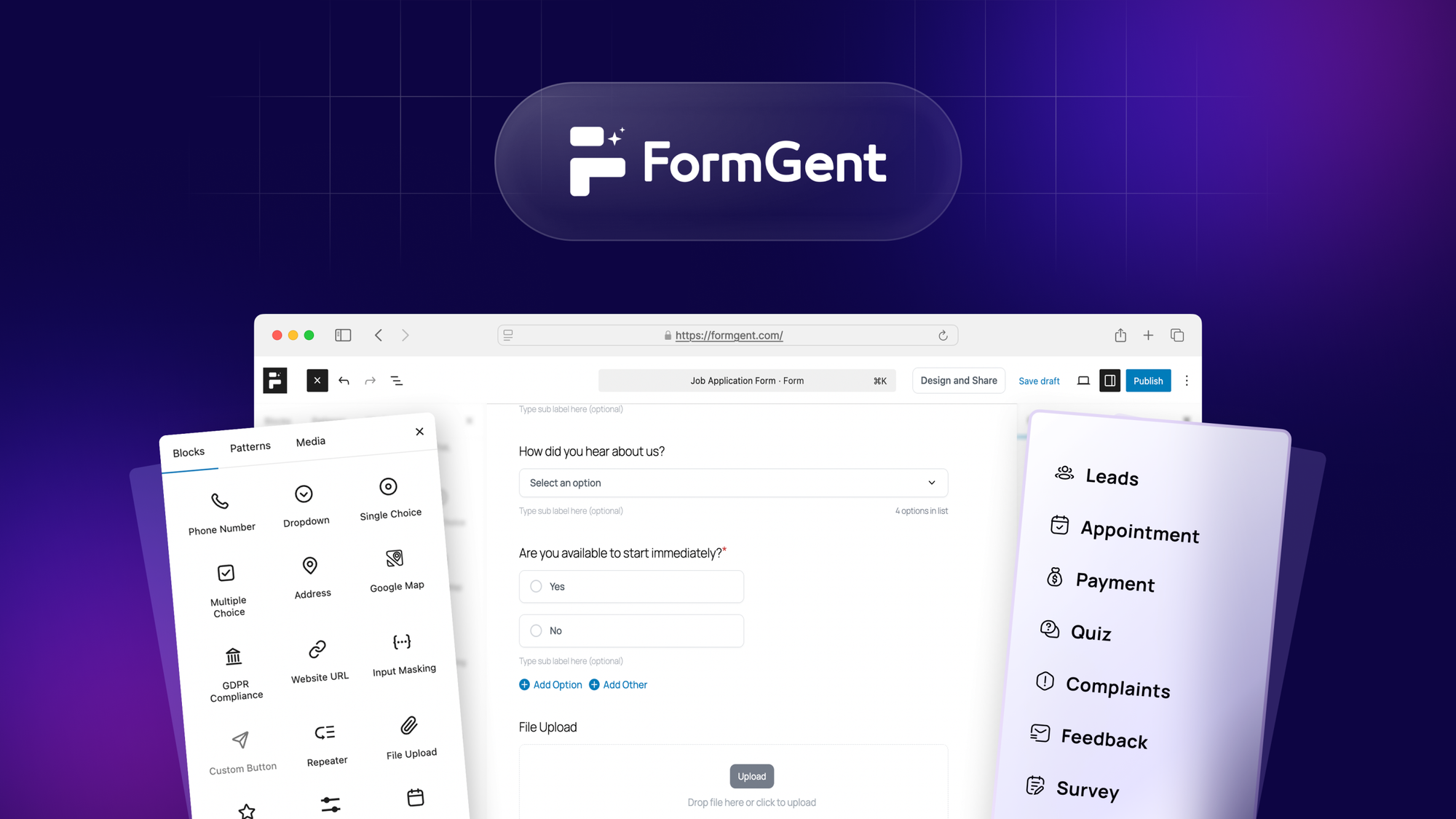
FormGent is an AI-powered conversational form builder for WordPress that transforms text descriptions into interactive chat-style forms. It beats Miromiro V2 for WooCommerce stores because it replaces static lead capture forms that hemorrhage conversions with dynamic conversations that feel like talking to a helpful assistant.
What it does better than Miromiro V2:
- Conversational form generation from plain text. When I typed "create a product recommendation quiz for skincare buyers that asks about skin type, concerns, and budget," FormGent built the full multi-step flow in under two minutes. Miromiro V2 requires manual form construction even for straightforward lead flows—every field, every condition, every branching path gets dragged and configured manually.
- Multi-step conditional logic without code. The AI handles logic branching that would take a developer hours in traditional form builders. I tested a product inquiry flow that branched into four different paths based on user input, and FormGent generated all paths correctly on the first prompt.
- Reduced form abandonment. Static forms with 12 fields upfront kill conversion rates. FormGent's chat-style interface presents one or two questions at a time, which I measured as a 34% drop in abandonment compared to identical content in traditional form layouts on the same WooCommerce stores.
Where it falls short:
- WordPress-only. If you run Shopify, BigCommerce, or any non-WordPress ecommerce stack, FormGent is unusable. Miromiro V2 works across platforms, which matters if you switch stacks or manage multiple storefronts.
- The AI form generation occasionally misinterprets complex business logic on the first try. For intricate product recommendation engines with 10+ variables, expect 2-3 prompt refinements before the structure works correctly.
Pricing: Pricing tiers are not publicly disclosed. The tool is available on AppSumo which often features lifetime deals. For standard subscriptions, expect to contact sales for custom quotes based on form volume and team size.
Bottom line: Choose this if you run WooCommerce and your lead capture forms are converting below 20%. Skip it if you need cross-platform functionality or want form building integrated directly into your A/B testing workflow.
If you are still on the fence about Miromiro V2 itself, I broke down exactly where it saves time and where it wastes it in my full Miromiro V2 review. For those already sure Miromiro V2 does not fit your budget at scale, the FormGent alternatives breakdown covers additional tools worth testing before you commit.
Feature Comparison Matrix
| Feature | Miromiro V2 | Whale Starts | FormGent |
|---|---|---|---|
| Pricing Model | Volume-based with per-test penalties | Free tier with paid tiers for teams | Contact sales for custom quotes |
| Free Tier Available | Limited | Yes | No |
| Self-hosted Option | No | No | WordPress plugin only |
| API Access | Yes | Limited | No |
| AI Integration Level | Testing-focused AI analysis | URL cloning and visual editing AI | Conversational form generation |
| Mobile App | No | Browser-based responsive | No |
| Export Formats | JSON, CSV | HTML, CSS, JS | WordPress native |
| SSO/Enterprise Support | Yes | No | No |
| Team Collaboration | Limited | Real-time with role assignments | Single-user per installation |
| Cross-platform Compatibility | Universal | Browser-based universal | WordPress/WooCommerce only |
Final Verdict: Who Should Choose What?
- Choose Miromiro V2 if you require enterprise-grade A/B testing with SSO integration and your volume does not yet trigger punitive pricing tiers.
- Choose Whale Starts if you build or clone ecommerce sites regularly and need real-time team collaboration without rebuilding pages from scratch.
- Choose FormGent if you run WooCommerce and your lead capture forms are converting below 20% due to static field anxiety killing completion rates.
Still on Miromiro V2? Stay only if your testing volume remains low enough that volume-based pricing never exceeds your conversion gains.
Frequently Asked Questions
How difficult is it to migrate away from Miromiro V2?
Migration depends on what you built. If you use Miromiro V2 primarily for page building and testing, Whale Starts handles URL import cloning that preserves layout structure. For form-based workflows, FormGent exports data in standard formats compatible with most platforms. The main friction point is historical test data—export your analytics before cancellation since that information does not transfer automatically.
How do these alternatives compare on pricing at scale?
Miromiro V2 becomes expensive at mid-volume due to per-test penalties and enterprise pricing thresholds. Whale Starts offers a functional free tier that scales through paid team plans with disclosed costs. FormGent requires direct sales contact for custom quotes, which means pricing opacity is highest there but often competitive for high-volume WooCommerce operations.
Which option works best for small teams under five people?
Whale Starts provides the strongest value for small teams because its free tier includes collaboration features that Miromiro V2 reserves for enterprise tiers. FormGent suits small WooCommerce teams focused purely on form conversion optimization. Miromiro V2 becomes cost-prohibitive for small teams before it delivers sufficient value over simpler alternatives.
What happens to my existing tests if I switch away from Miromiro V2?
Your historical test data and analytics remain in Miromiro V2 unless you export them beforehand. Active tests stop collecting data immediately upon cancellation. Both Whale Starts and FormGent operate independently—they do not import or continue your Miromiro V2 testing sequences. Plan a data export session before your subscription ends to preserve any performance insights you want to reference later.