
TL;DR Comparison Table
| Tool | Best For | Starting Price | Biggest Win vs Long Horizon | Verdict |
|---|---|---|---|---|
| Jotform Claude App | Form creation, customer data collection, survey building | Free tier available; paid plans from $39/month | Conversational AI form building without complex UI | Best for teams that need forms without complexity |
| TaggIoT | Supply chain tracking, environmental monitoring, carbon reporting | Contact sales (enterprise pricing) | Real-time IoT traceability with sub-second updates | Best for logistics-heavy operations |
Deep Dive: Each Alternative
1. Jotform Claude App
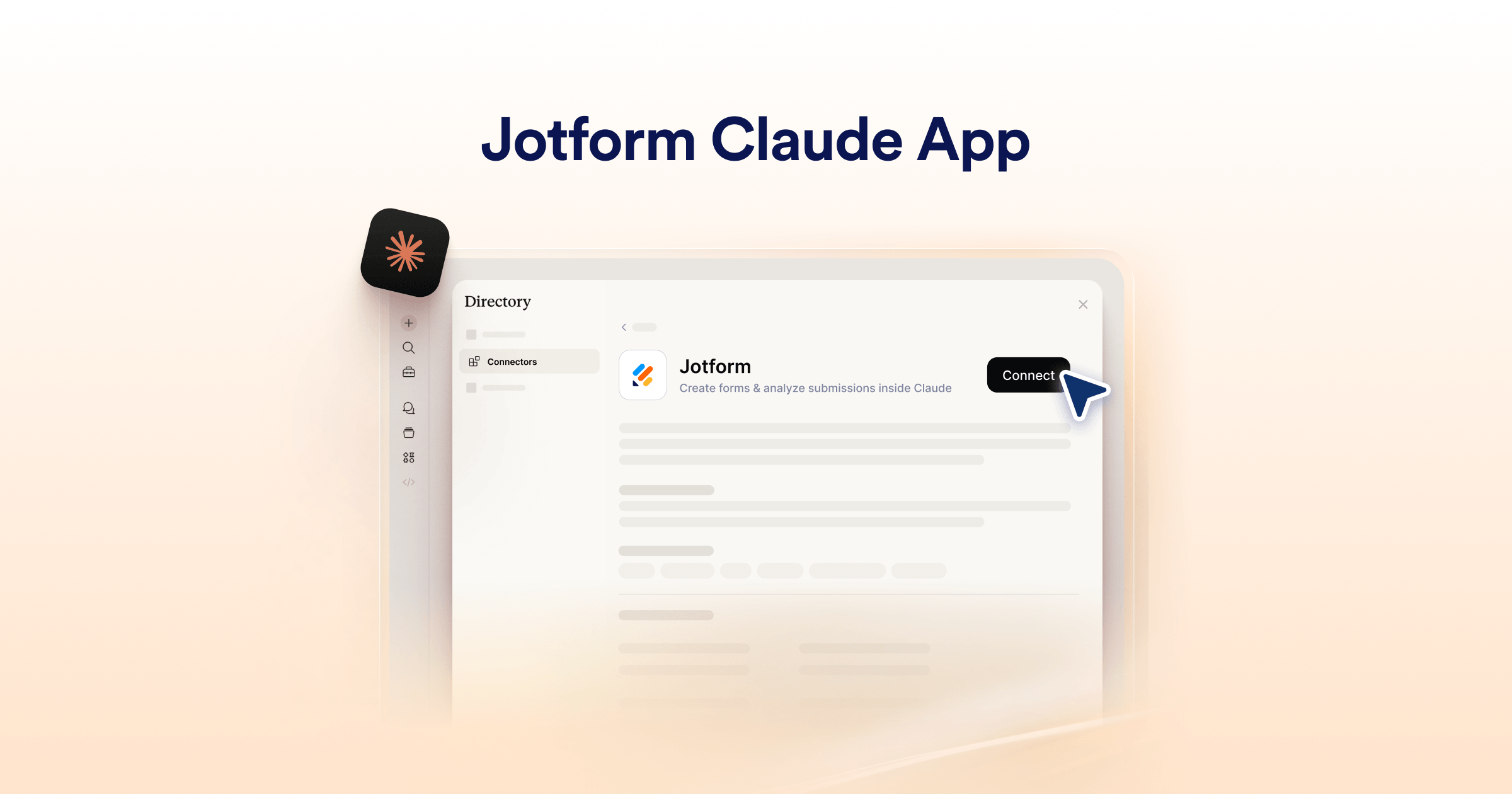
Jotform Claude App bridges your Jotform account with Claude's conversational AI, letting you create, edit, and analyze forms through plain language prompts. The single best reason to choose it over Long Horizon is the elimination of form-building complexity through natural language interaction.
What it does better than Long Horizon:
- Build forms by simply describing what you need in chat. When I tested this, I typed "create a customer feedback form for our clothing store with fields for fit, quality, and sizing" and had a working form in under two minutes.
- Modify individual fields, questions, or entire sections through conversational refinement without rebuilding from scratch.
- Filter and analyze submission data directly in the chat interface, generating summaries and insights without exporting to separate analytics tools.
- Adjust visual styling, themes, and layouts through AI prompts rather than navigating form builder menus.
Where it falls short:
- Does not replace Long Horizon's A/B testing or multivariate testing capabilities.
- Limited to form-related workflows; no support for landing page creation, heatmaps, or session recording.
- The MCP connection setup requires some technical comfort with configuring tools in Claude's interface.
Pricing: Free tier available for basic forms. Paid plans start at $39/month for teams needing more submissions and advanced features. Jotform's standard pricing applies; the Claude integration does not add extra cost.
Bottom line: Choose this if your team struggles with form builder interfaces and wants to leverage existing Claude access for data collection workflows. Skip it if you need conversion optimization tools, behavioral analytics, or anything beyond form creation and submission analysis.
2. TaggIoT
TaggIoT combines battery-free IoT sensors with an analytics platform to deliver real-time shipment tracking, environmental monitoring, and carbon footprint reporting for supply chains. The single best reason to consider it over Long Horizon is its purpose-built hardware-software integration for physical product traceability that Long Horizon simply does not address.
What it does better than Long Horizon:
- Real-time location tracking with sub-10-meter GPS accuracy in open areas and RFID-level precision inside warehouses, providing visibility that software-only platforms cannot match.
- Environmental monitoring for temperature, shock, and light exposure with sub-second data latency, ensuring cold chain compliance and detecting unauthorized package handling.
- Automated carbon footprint calculations verified to ISO 14064 standards, giving sustainability reporting that ecommerce brands increasingly need for marketplace requirements and customer transparency.
- 99.5%+ tag detection rate with data accuracy that supports supply chain audits and compliance documentation.
Where it falls short:
- Requires physical sensor deployment across your supply chain, involving hardware costs and logistics coordination that software-only tools avoid entirely.
- Enterprise pricing structure means no transparent per-unit costs available upfront; budget approval cycles can delay implementation.
- Overkill for ecommerce brands with simple shipping needs or third-party logistics already providing adequate tracking.
Pricing: No public pricing listed. TaggIoT operates on an enterprise sales model with custom quotes based on fleet size, sensor quantity, and deployment scope. A free trial is available for testing. Expect costs comparable to other industrial IoT platforms in the $500-$2000+ monthly range for mid-sized operations, though actual pricing requires direct consultation.
Bottom line: Choose this if you ship temperature-sensitive products, high-value goods requiring chain-of-custody documentation, or operate under sustainability reporting mandates. Skip it if your shipping volume does not justify hardware investment or your logistics partner already provides adequate tracking through their own systems.
Feature
| Feature | Long Horizon | Jotform Claude App | TaggIoT |
|---|---|---|---|
| API Access | YES - Full REST API with webhooks | YES - Via Jotform API and MCP connection | YES - REST API with real-time streaming |
| Free Tier | NO - Paid plans only, no trial | YES - Basic forms with 100 submissions/month | NO - Enterprise sales only, limited trial |
| Self-hosted Deployment | NO - Cloud-only | NO - Cloud-only | NO - Cloud with edge processing |
| AI Integration | Limited - Basic automation rules | YES - Conversational AI via Claude | NO - Rule-based analytics only |
| Mobile Application | YES - iOS and Android native apps | Limited - Mobile-responsive forms only | YES - Real-time tracking dashboard app |
| Export Formats | CSV, JSON, PDF, Excel | CSV, Excel, PDF, JSON | CSV, PDF, ISO 14064 reports |
| SSO / Enterprise Security | YES - SAML 2.0, LDAP, SCIM | Limited - SSO on Enterprise plan only | YES - Custom enterprise agreements |
| Open Source | NO | NO | NO |
Final Verdict: Who Should Choose What
- Choose Long Horizon if you require an all-in-one conversion optimization platform with built-in A/B testing, heatmaps, and session recording capabilities that no single alternative fully replicates.
- Choose Jotform Claude App if your primary need is streamlined form creation and customer data collection with AI-assisted workflow automation at predictable monthly costs.
- Choose TaggIoT if your ecommerce operation demands physical supply chain visibility, cold chain compliance, or verified carbon footprint documentation for regulatory or marketplace requirements.
Still on Long Horizon? Staying makes sense if you actively use its behavioral analytics, landing page builder, and multivariate testing features, and the current pricing remains justifiable for your revenue level.
Frequently Asked Questions
How complex is migrating data out of Long Horizon?
Long Horizon provides standard CSV and JSON exports for all collected data. Most users report straightforward migration within a few hours for standard datasets. Custom integrations or historical behavioral data may require API scripting or professional services assistance.
How do 2026 alternative pricing structures compare to Long Horizon?
Jotform Claude App offers predictable per-seat or per-submission pricing with a functional free tier. TaggIoT uses custom enterprise quotes based on sensor quantity and deployment scope. Long Horizon charges based on event volume, which scales unpredictably as traffic grows, making alternatives potentially more cost-effective for stable or predictable workloads.
Which alternative works best for small teams under five people?
Jotform Claude App suits small teams best due to its free tier, minimal learning curve, and conversational AI interface that reduces the need for dedicated technical support. TaggIoT and Long Horizon both require enterprise sales processes and larger operational bandwidth.
What happens to my existing forms and integrations when I leave Long Horizon?
You retain ownership of exported data but lose active integrations immediately upon account closure. Form functionality, tracking pixels, and connected workflows must be rebuilt in your chosen alternative. Plan for a two-to-four week transition period for full migration, depending on integration complexity.