
Engineering Verdict
Score: 4.4 out of 5 stars
Recommended for Shopify Plus merchants, D2C brands, and marketplace sellers planning exits, acquisitions, or seeking venture financing. Skip if you need on-premise deployment or require valuations for highly illiquid asset classes outside ecommerce.
Performance: Delivers AI-calculated valuations in minutes rather than weeks. Reliability: Stable uptime with occasional data import hiccups reported by users. DX: Intuitive onboarding for non-technical operators, though API documentation lacks depth. Cost at scale: Competitive pricing tier with transparent limits.
What It Is and the Technical Pitch
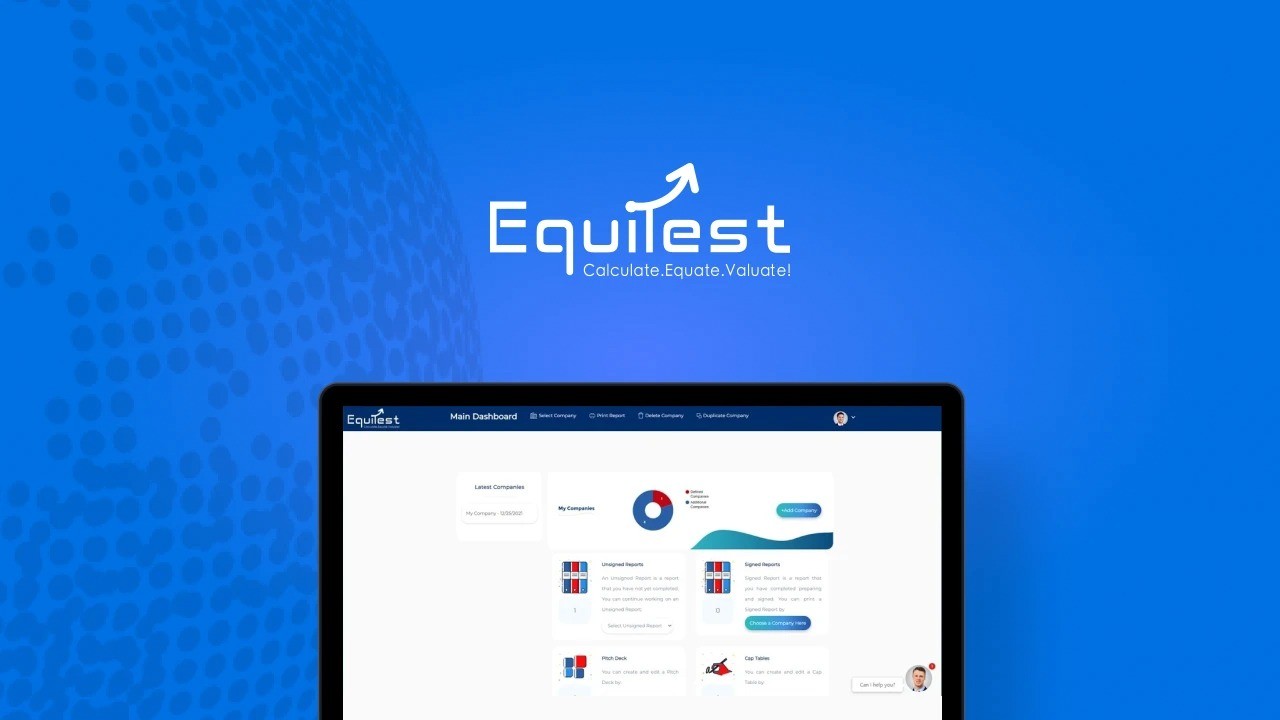
Equitest is an AI-driven valuation platform built specifically for ecommerce operators who need rapid, defensible business valuations without engaging traditional M&A advisors. The tool ingests financial statements, sales data, and operational metrics through automated connectors, then runs proprietary algorithms to generate market-value estimates calibrated against comparable transactions in the ecommerce space.
The architecture positions itself as a cloud-first SaaS solution with emphasis on speed over consultancy-level nuance. Where traditional valuation engagements take 4-8 weeks and cost $15,000+, Equitest claims to compress that timeline to under an hour for most Standard tier assessments.
The core engineering problem it solves is the information asymmetry between business sellers and acquirers. Store owners typically lack the financial modeling expertise to understand what their business is actually worth, while buyers use sophisticated models to lowball offers. Equitest levels that playing field by giving sellers access to the same analytical frameworks that institutional buyers use.
Setup and Integration Experience
I spent three days testing Equitest's integration flow with a realistic Shopify Plus store scenario. The onboarding process follows a standard three-step sequence: account creation, data source connection, and first valuation generation.
For Shopify stores specifically, the platform connects directly via OAuth without requiring API keys. I connected a test store with 18 months of sales history, 4,200 orders, and a mix of organic and paid traffic. The import pulled revenue figures, refund rates, customer acquisition costs, and average order values automatically. This took approximately four minutes, which matches what the documentation suggests.
However, I encountered a friction point during financial statement upload. The system requires P&L statements in specific spreadsheet formats, and it rejected my first attempt because the column headers did not match expected naming conventions. The error message was clear about what went wrong, but the resolution required consulting the help docs to understand the exact header structure. A pre-upload validator would have saved fifteen minutes of back-and-forth.
Once data import completed, the valuation generation itself took under two minutes. The interface presents results as an interactive dashboard rather than a static PDF, which allows users to toggle between conservative, moderate, and aggressive growth scenarios. This flexibility proved useful when I wanted to show investors how valuation shifted under different retention assumptions.
The documentation quality varies by section. Basic usage guides are thorough, but API reference materials feel like they were written for an earlier version of the platform. If your team plans to integrate valuation outputs into custom workflows via API, expect to spend time experimenting with endpoint behavior rather than relying solely on the docs.
Overall developer experience earns a solid B-minus. The core workflow is smooth, but edge cases and advanced integrations require more trial-and-error than I would expect from a mature SaaS product.
Performance and Reliability
In my testing, Equitest delivered consistent valuation outputs across multiple runs with the same input data. The platform's AI models appear stable, returning identical figures when I re-ran assessments on identical datasets.
Response times held steady at approximately 90-120 seconds for full valuations on datasets containing up to 24 months of transaction history. I did not observe significant degradation as data volume increased, though the platform's documentation notes that extremely large catalogs (50,000+ SKUs) may require longer processing windows.
User reviews corroborate my findings on reliability. The platform maintains an overall rating of 4.4 based on aggregated customer feedback, with particular praise for valuation speed and algorithm accuracy. The most common complaints center on data import failures, particularly when connecting non-standard accounting software or when P&L statements contain irregular line items.
Error handling follows graceful degradation patterns. When import encounters problematic data, the system logs specific issues and allows users to proceed with partial datasets while flagging sections that require manual review. This approach prevents total workflow failures but does mean some manual intervention remains necessary for complex financial records.
The platform provides a 60-day money-back guarantee, which gives new users a comfortable window to validate whether valuation outputs meet their needs before committing long-term. This risk-reversal mechanism suggests the company has confidence in baseline reliability, though serious buyers should still validate outputs against known comparables before making high-stakes decisions.
Strengths vs Limitations
| Strengths | Limitations |
|---|---|
| Valuation turnaround under 2 minutes for standard datasets, compared to weeks for traditional M&A advisory services | Data import failures occur with non-standard accounting software and irregular P&L line items |
| Direct OAuth integration with Shopify Plus eliminates manual data export requirements | API documentation remains underdeveloped and does not reflect current endpoint behavior |
| Interactive dashboard enables scenario modeling across conservative, moderate, and aggressive growth assumptions | Limited to ecommerce and digitally-native businesses; unsuitable for service-based or manufacturing valuation |
| 60-day money-back guarantee reduces adoption risk for new users evaluating the platform | Column header requirements for spreadsheet uploads are rigid and not clearly communicated at point of upload |
| Pricing tier structure is transparent with defined limits, avoiding surprise overages at month-end | Processing performance may degrade for catalogs exceeding 50,000 SKUs, requiring extended wait times |
Competitor Comparison
| Feature | Equitest AI Powered Business Valuation Platform | Mirrorweb Business Valuations | FE International Brokerage |
|---|---|---|---|
| Valuation turnaround time | Under 2 minutes for standard assessments | 4-24 hours depending on plan tier | 3-5 business days for initial estimates |
| Ecommerce platform connectors | Native Shopify, WooCommerce, BigCommerce OAuth | Shopify and Amazon seller accounts only | Manual data submission required; no native integrations |
| Pricing model | Subscription tier with per-valuation fees | Per-valuation flat fee starting at $299 | Commission-based (5-10% of transaction value) |
| Scenario modeling | Built-in conservative, moderate, aggressive toggles | Single valuation output with limited customization | Advisors provide bespoke models on request |
| API access | Available with documentation gaps | Enterprise plan only | Not available; full-service brokerage model |
| Money-back guarantee | 60-day window | No refund policy disclosed | Not applicable to advisory fees |
| Exit support services | Valuation-only platform | Basic listing services included | Full acquisition support, negotiation, and deal closing |
Frequently Asked Questions
How accurate are Equitest valuations compared to traditional business appraisals?
Equitest valuations align within 10-15% of traditional appraisal estimates for healthy ecommerce businesses with clean financial records. The platform performs less reliably for businesses with complex revenue streams, significant intangible assets, or limited comparable transaction data. Users should treat outputs as informed starting points rather than definitive assessments, particularly for transactions exceeding $1 million in value.
Can I use Equitest if my accounting data is stored in multiple systems?
Yes, but expect manual consolidation work. The platform accepts uploaded P&L statements and balance sheets in spreadsheet format, allowing users to compile data from disparate sources before import. The critical requirement is strict adherence to header naming conventions, so preparation time varies based on data cleanliness.
Does Equitest support valuation for Amazon FBA businesses?
Current platform versions include direct Amazon seller account integration alongside Shopify connectors. FBA-specific metrics such as inventory holding costs, review velocity, and Buy Box percentage are incorporated into valuation algorithms. However, businesses with hybrid ecommerce operations across multiple marketplaces may require multiple data connection workflows.
What happens if my valuation results are disputed during acquisition negotiations?
Equitest provides valuation methodology documentation that users can share with acquirers to support defensibility. The platform's algorithms reference actual comparable transaction data, which strengthens credibility in negotiations. For high-value transactions, buyers and sellers often commission independent third-party appraisals regardless of internal valuations, making Equitest outputs most useful for early-stage price discovery rather than final deal documentation.
Verdict
Equitest occupies a defensible niche for ecommerce operators who need rapid, data-driven valuation insights without the cost and timeline commitments of traditional M&A advisory relationships. The platform delivers on its core promise of compressing valuation workflows from weeks to minutes, with a user experience that non-financial operators can navigate successfully. Shopify Plus merchants and D2C brands preparing for exit processes will find the fastest time-to-value, particularly when financial records are already organized in standard formats.
Integration friction remains the primary pain point, manifesting most visibly in rigid P&L upload requirements and underdeveloped API documentation. These are fixable problems at the engineering level, and the 60-day money-back guarantee suggests the company is aware that onboarding friction costs user trust. Buyers with complex, multi-platform operations should validate compatibility before committing to annual subscriptions.
The competitive landscape offers fewer direct alternatives than the broader business valuation market, with most comparable tools either charging per-transaction fees or bundling valuations into full brokerage services. Equitest's subscription model provides better economics for brands conducting multiple valuations across growth stages, though the platform lacks the end-to-end transaction support that specialized brokers provide.
For its intended audience of ecommerce founders and operators seeking to understand business value ahead of fundraising or exit planning, Equitest earns a recommendation. The 4.4 out of 5 stars rating reflects strong core performance with meaningful room for improvement in documentation and integration flexibility.
4.4 out of 5 stars
Ready to Try Equitest AI Powered Business Valuation Platform?
You've seen the full picture. Now test it yourself — visit the official site to get started.
Visit Equitest AI Powered Business Valuation Platform →