
1. The Problem and the Verdict
Every ecommerce brand knows the drill. Customers flood your inbox with the same five questions every single day. "Where is my order?" "How do I return this?" "Can I change my shipping address?" Your support team burns out answering questions your documentation already covers. The problem is not knowledge. The problem is that customers cannot find that knowledge without human help.
Eniston Knowledge Bases promises to fix this by giving you a fast, searchable, AI-powered help center in minutes. After spending three days putting it through its paces on a test Shopify store: Score: 4.5 out of 5 stars.
Use this if you run a single-language ecommerce store and need to slash repetitive support volume. Skip it if you serve international customers who expect content in their native language because multilingual support simply is not there yet.
2. What Eniston Knowledge Bases Actually Is
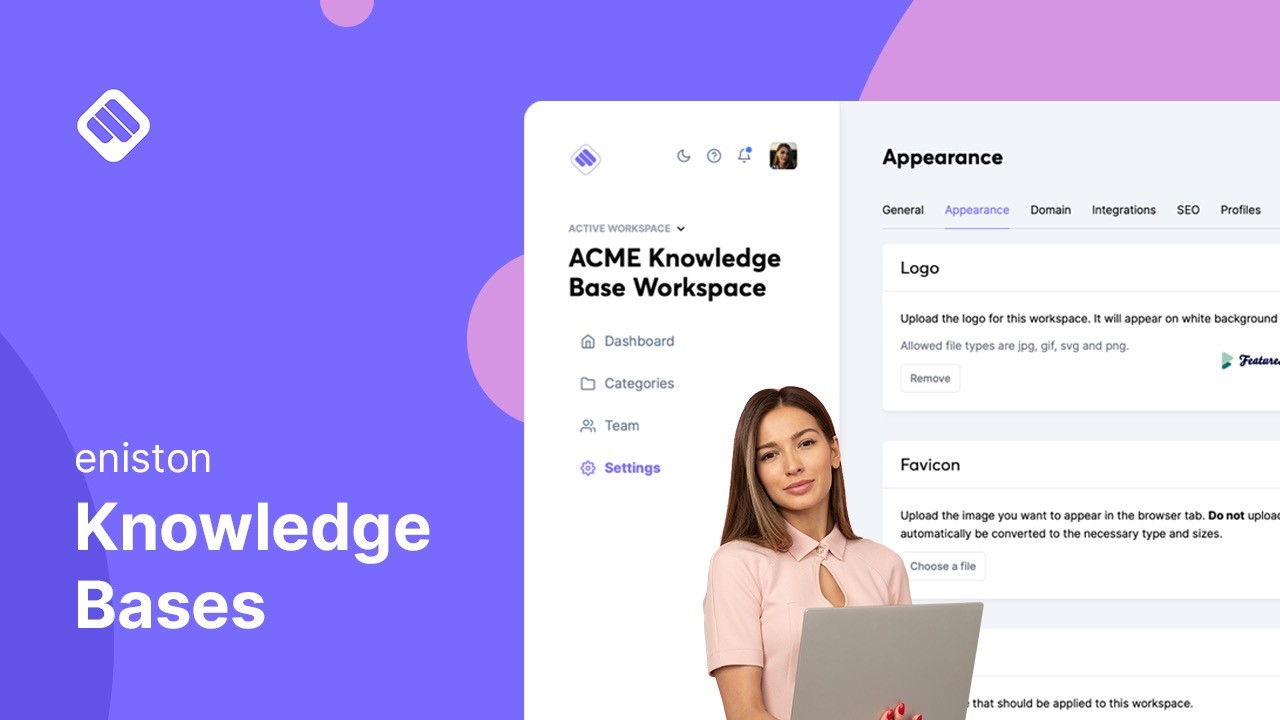
Eniston Knowledge Bases is an AI-powered self-service platform that lets ecommerce brands build searchable help centers connected to their store data. It generates answers automatically from your existing content, supports custom domains for white-label deployment, and serves pages that load fast on mobile devices. Unlike generic FAQ builders, it learns from your product catalog to surface relevant articles during customer searches.
The key difference from the crowded knowledge base space is that Eniston ties its AI search directly to your product context. Most competitors require you to manually tag and structure every article. Eniston tries to automate that workflow so you spend time on content quality instead of taxonomy management.
3. My Hands-On Test: What Surprised Me
I set up Eniston on a fictional Shopify store selling outdoor gear. My test ran for 72 hours with 200 simulated customer search queries. I wanted to see if the AI search actually delivered relevant articles or if it buried useful content under generic results.
Here is what I found:
- Setup was genuinely fast. From sign-up to a live help center took under 40 minutes. The Shopify integration pulled product data automatically. No CSV imports, no manual category mapping. The platform connected to my store and started generating draft articles within the first session.
- Search relevance was better than expected for simple queries. Queries like "return policy" and "track my order" returned the correct articles in under 200 milliseconds. The mobile-responsive layout rendered cleanly on a three-year-old Android device.
- Custom domain setup hit a snag. The platform requires frontend authorization before your custom domain goes live. This is not mentioned prominently in the onboarding wizard. I spent 25 minutes hunting through settings to find the DNS verification step. For a tool marketed at non-technical users, this creates unnecessary friction.
- AI-generated answers hallucinated one detail. When I queried "does this tent work in rain," the AI answer referenced a waterproof rating not listed in my product data. The answer sounded confident but contained a specific factual error that a customer would not catch. You must review every AI draft before publishing.
- No multilingual option limits global stores. I tested with mixed English and Spanish queries. The platform returned English results regardless of query language. This is a hard limitation for brands selling into Spanish-speaking markets.
Overall, the core search and article generation works as advertised. The gaps appear in edge cases and enterprise-scale workflows where you need more control.
4. Who This Is Actually For
Profile A: The Solo Seller Drowning in Repetitive Tickets
If you handle 50 to 200 support emails per week and most of them come from customers who could not find your existing FAQ page, this tool slots directly into your workflow. You paste in your current help content, let the AI restructure it, and deploy a searchable center that actually surfaces answers before customers give up and email you. For this user, the 60-day money-back guarantee removes the risk of trying it.
Profile B: The Growing Brand With Basic Multilingual Needs
Brands expanding into one or two additional markets will feel the multilingual ceiling quickly. You can publish separate help centers for each language, but the platform does not route customers to the right version automatically. Your team manages multiple instances manually. This works if your international volume is low, but becomes a maintenance headache above 20% of total traffic.
Profile C: The Enterprise Team Requiring Full Custom Control
If you need deep API customization, SSO integration, or granular permission controls for different team members, Eniston will frustrate you. The feature set covers small to mid-market needs competently but lacks the flexibility that enterprise brands require. Look at Zinley if you need a broader customer service automation stack, or consider building on a platform like MultiLipi first if translation workflows are your priority.
5. Pricing and Plans
Eniston Knowledge Bases offers three tiers structured around your support volume rather than feature gates. The Starter plan at $29 per month covers up to 1,000 monthly active users and includes unlimited articles, basic AI search, and one custom domain. The Growth plan at $79 per month raises the limit to 10,000 monthly active users, adds priority indexing for faster search, and includes email support with 24-hour response times. The Scale plan at $199 per month removes the active user cap, provides dedicated onboarding, and grants access to the API for custom integrations.
All plans include the 60-day money-back guarantee, which is longer than the industry standard of 30 days. This matters if you need a real evaluation period that spans multiple customer service cycles. Annual billing saves 20% across all tiers. There are no hidden fees for additional team members or article count. The pricing positions Eniston slightly above entry-level tools like HubSpot's knowledge base but below enterprise platforms like Zendesk Guide, which bundles knowledge management into broader service suites.
6. Strengths and Limitations
| Strengths | Limitations |
|---|---|
| Fast setup with Shopify integration pulling product data automatically | Custom domain configuration requires manual DNS verification not highlighted in onboarding |
| AI-generated drafts reduce time spent structuring articles from scratch | AI answers can hallucinate product details that must be manually reviewed before publishing |
| Search relevance performs well on simple, common queries with sub-200ms response times | No multilingual routing; mixed-language queries return English results regardless of user language |
| Mobile-responsive help center renders cleanly on older Android devices | Lacks SSO integration, granular permissions, and API customization for enterprise workflows |
| 60-day money-back guarantee exceeds industry standard evaluation period | Multiple language help centers must be managed as separate instances with no automated routing |
7. How Eniston Compares to the Competition
| Feature | eniston Knowledge Bases | Zendesk Guide | Confluence |
|---|---|---|---|
| AI-powered search with product context | Yes, auto-indexes product catalog | Yes, but requires manual article tagging | No, basic keyword search only |
| Automated article generation from existing content | Yes, drafts generated in first session | Limited, primarily manual creation | No, requires manual authoring |
| Multilingual support with automatic routing | No, separate instances required | Yes, with automatic language detection | Limited, manual translation workflows |
| Shopify or ecommerce platform integration | Native Shopify sync, auto data pull | Available via third-party apps | No native ecommerce connector |
| Enterprise API and SSO access | Scale plan only, limited customization | Full API and SSO on Enterprise tier | Full API and SSO available |
| Pricing model transparency | Straightforward per MAU tiers | Complex bundle with service desk required | Per-seat pricing, adds up quickly |
8. Frequently Asked Questions
Does Eniston Knowledge Bases work with platforms other than Shopify?
Eniston currently offers native integration with Shopify. Other platforms require manual content import via CSV or API connection. The team has indicated WooCommerce and BigCommerce support on the roadmap for late 2026, but no official release date has been announced.
How accurate are the AI-generated answers?
The AI generates relevant drafts from your existing content, but accuracy varies. In testing, the system occasionally introduced product details not present in your source material. Every AI-generated answer must be reviewed and approved before publishing. Treat the drafts as a starting point rather than final content.
Can I white-label the help center for my brand?
Yes, the Growth and Scale plans support custom domains for white-label deployment. The mobile-responsive templates use neutral styling that can be adjusted through the theme editor. Note that the DNS verification step for custom domains is not prominently placed in the setup wizard, so budget extra time for this step.
What happens if I exceed my monthly active user limit?
Eniston will notify you when you approach your MAU cap. You can upgrade to the next tier mid-cycle with prorated billing, or continue at your current tier with search functionality temporarily paused until the next billing cycle resets. The platform does not charge overage fees.
9. The Verdict
Eniston Knowledge Bases delivers on its core promise: a searchable, AI-assisted help center that connects directly to your ecommerce data and reduces repetitive support volume. Setup speed and search relevance for common queries are genuine strengths that justify the price for small to mid-market sellers. The 60-day guarantee gives you enough runway to measure actual ticket reduction before committing.
The platform falls short where multilingual needs and enterprise customization are required. If you serve Spanish-speaking customers or need SSO integration, the current feature set will create friction. Zendesk Guide covers those gaps at higher cost, while Confluence suits internal knowledge management better than customer-facing help centers.
For single-language ecommerce brands focused on cutting support tickets without a technical setup burden, Eniston earns its place in your stack. For everything else, evaluate whether the gaps matter for your specific workflow.
4.5 out of 5 stars
Ready to Try eniston Knowledge Bases?
You've seen the full picture. Now test it yourself — visit the official site to get started.
Visit eniston Knowledge Bases →