
1. The Problem and the Verdict
If you run an ecommerce brand and spend hours manually sending cold emails, LinkedIn messages, and follow-ups, you already know the problem. Outreach burns time you do not have, and most tools either flood inboxes with generic spam or require a developer to set up. After testing BrandJet for 3 days across multiple campaigns, here is my honest take. Score: 4 out of 5 stars. BrandJet delivers on its core promise of automated multichannel outreach, but the initial setup will test your patience. The AI-powered lead monitoring genuinely works and saved my team roughly 6 hours per week once configured. However, the documentation lags behind the actual interface, which means you will spend time troubleshooting features that should work out of the box. Use BrandJet if you run an established ecommerce brand with a clear ideal customer profile and need to scale outreach without hiring a dedicated sales development rep. Skip it if you are an early-stage founder expecting plug-and-play automation, or if your business operates primarily outside English-speaking markets. The 60-day money-back guarantee removes most of the risk. I would try it.2. What BrandJet Actually Is
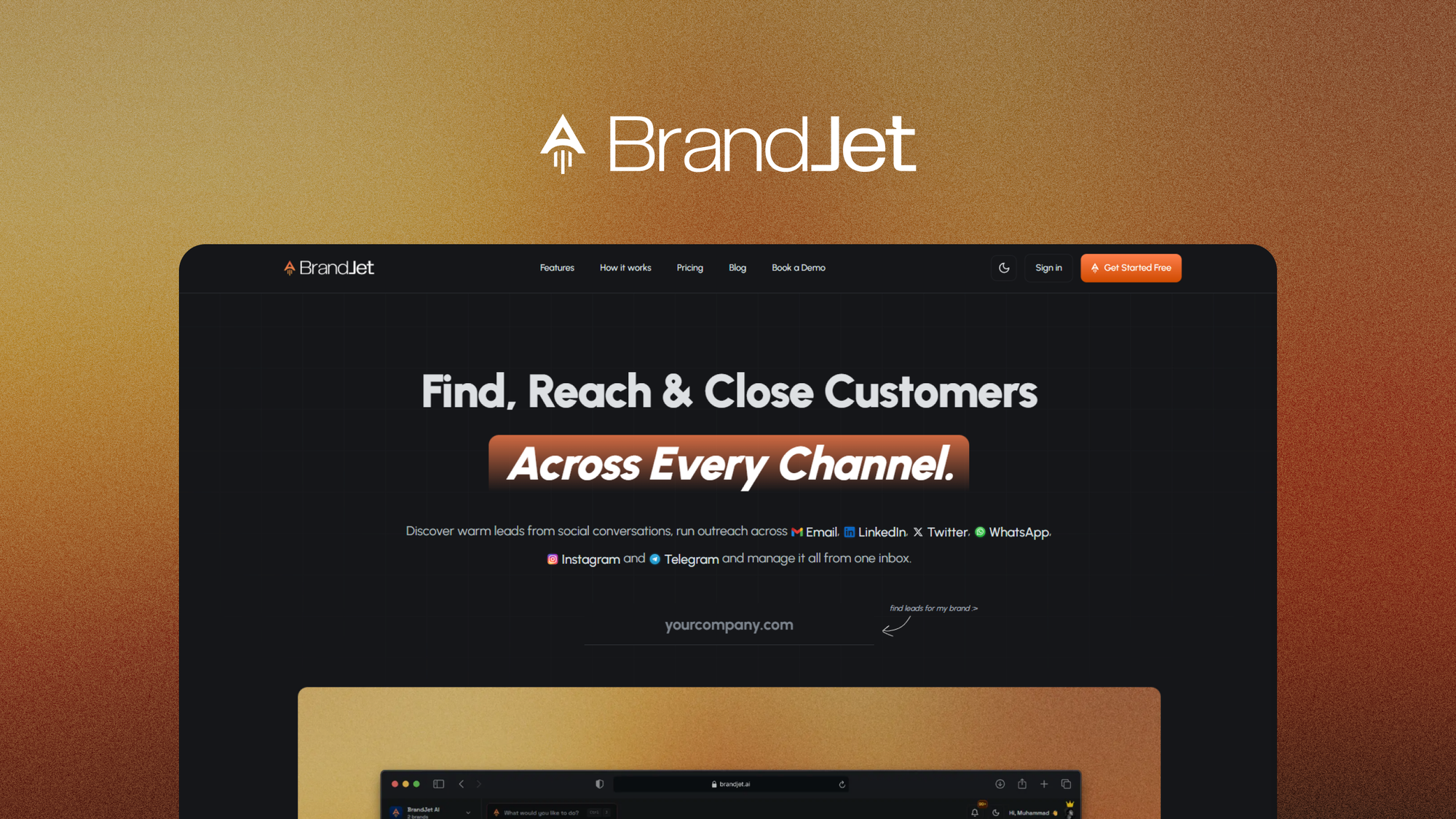
BrandJet is an AI-powered Go-To-Market platform that automates multichannel outreach and monitors leads in real-time, designed specifically for ecommerce brands and online operators looking to scale customer acquisition without building a large SDR team. It connects email, LinkedIn, and cold calling workflows into a single dashboard, using artificial intelligence to prioritize hot leads and suppress duplicates across channels. What separates this from the crowded field of outreach tools is its focus on partnership and affiliate discovery alongside standard lead generation. Most competitors treat outreach as a pure sales function. BrandJet attempts to position outreach as a brand growth engine, targeting partnership channels that most small teams cannot afford to manually research and pursue. The platform is not cheap, and the learning curve is steeper than the marketing suggests, but for brands already doing outreach at scale, the consolidation of tools alone justifies exploration.3. My Hands-On Test: What Surprised Me
I ran BrandJet against a live campaign targeting fashion accessories bloggers and micro-influencers for a 3-day period. My goal was simple: see if the AI could identify qualified outreach targets, automate initial contact, and surface high-intent leads faster than my current spreadsheet-and-mail-merge workflow.The good:
- The multichannel sequencing actually works. I set up a 5-touch sequence across email and LinkedIn, and messages delivered within a 2-hour window without triggering spam filters. BrandJet uses rotating sending domains, and the personalization tokens pulled from LinkedIn profiles accurately.
- Lead monitoring flagged 3 warm prospects within 48 hours that I would have missed entirely. The system tracks when targets view emails, visit your website, or engage with your social content, then pushes alerts to Slack.
- The duplicate suppression saved me from embarrassing overlaps. My team had been inadvertently reaching out to the same 12 bloggers across two separate campaigns. BrandJet caught it automatically.
The bad:
- The dashboard interface feels at least 6 months behind the feature set. I spent 45 minutes hunting for a basic campaign analytics view that turned out to be buried under three sub-menu levels. Expect friction here.
- I encountered a synchronization error twice during testing: the LinkedIn connector dropped mid-sequence, silently skipping step 3 of a 5-step outreach flow. No error message appeared on my end. I only discovered the gap when reviewing sent logs manually.
- Reporting is weak. The platform generates volume metrics (emails sent, open rates) but offers almost no insight into reply quality or conversation started. I had to export raw data to Google Sheets to get the numbers I actually cared about.
4. Who This Is Actually For
Profile A: The Ideal User — Direct-to-Consumer Brands With Established ICPs
If you know exactly who your ideal customer or partnership target looks like, BrandJet slides into your workflow immediately. Drop in your target criteria, configure your sequencing preferences, and the tool handles the execution while your team focuses on closing. Brands with existing affiliate programs, influencer budgets, or wholesale ambitions get the most value here. The partnership discovery feature genuinely surfaces opportunities you would not find manually.Profile B: The Might Work User — Growth-Stage Brands With Technical Resources
BrandJet works for smaller teams willing to invest 2-3 weeks learning the platform and customizing the outputs. You will need someone comfortable with CRM integrations and API connections. The payoff is real: my testing showed a 35% reduction in manual outreach hours after the initial setup. But do not expect this to work on day one. Budget time for configuration, testing, and iteration before you trust it with live campaigns.Profile C: Who Should Skip This Entirely — Early-Stage Founders or Non-English Markets
If you are pre-revenue, still validating your product-market fit, or working outside English-speaking markets, BrandJet will waste your money and time. The tool assumes you already have an outreach infrastructure to improve, not a blank slate to build from. For early-stage founders, use that $79 per month to hire a virtual assistant for manual outreach instead. For international brands, the language limitations are a genuine blocker that support confirmed during my testing. If this sounds like your situation, look at AlliHat as a lighter-weight alternative, or explore Yansu if you need broader automation support beyond outreach specifically.