
1. The Problem and the Verdict
If you run an ecommerce store, you already know the content grind never ends. You need blog posts targeting keywords, product page copy that actually ranks, and category descriptions that do not sound like they were written by a sleep-deprived intern at 2 AM. Hiring writers is expensive. Writing yourself is time-consuming. And most AI tools just spit out generic garbage that Google can smell from a mile away.
SnowSEO promises to fix that by combining keyword research, clustering, and automated article generation into one workflow. I spent 3 days testing it with a real Shopify store selling home office furniture. I wanted to see if it actually replaces the time I normally spend on content planning and writing.
After testing it for 3 days: Score: 3 out of 5 stars.
Use SnowSEO if you run a straightforward ecommerce store and need help generating blog content at scale without hiring a full-time writer. Skip it if your products are technical, require specialized knowledge, or if you need content that actually sounds like a human who understands your industry wrote it.
2. What SnowSEO Actually Is
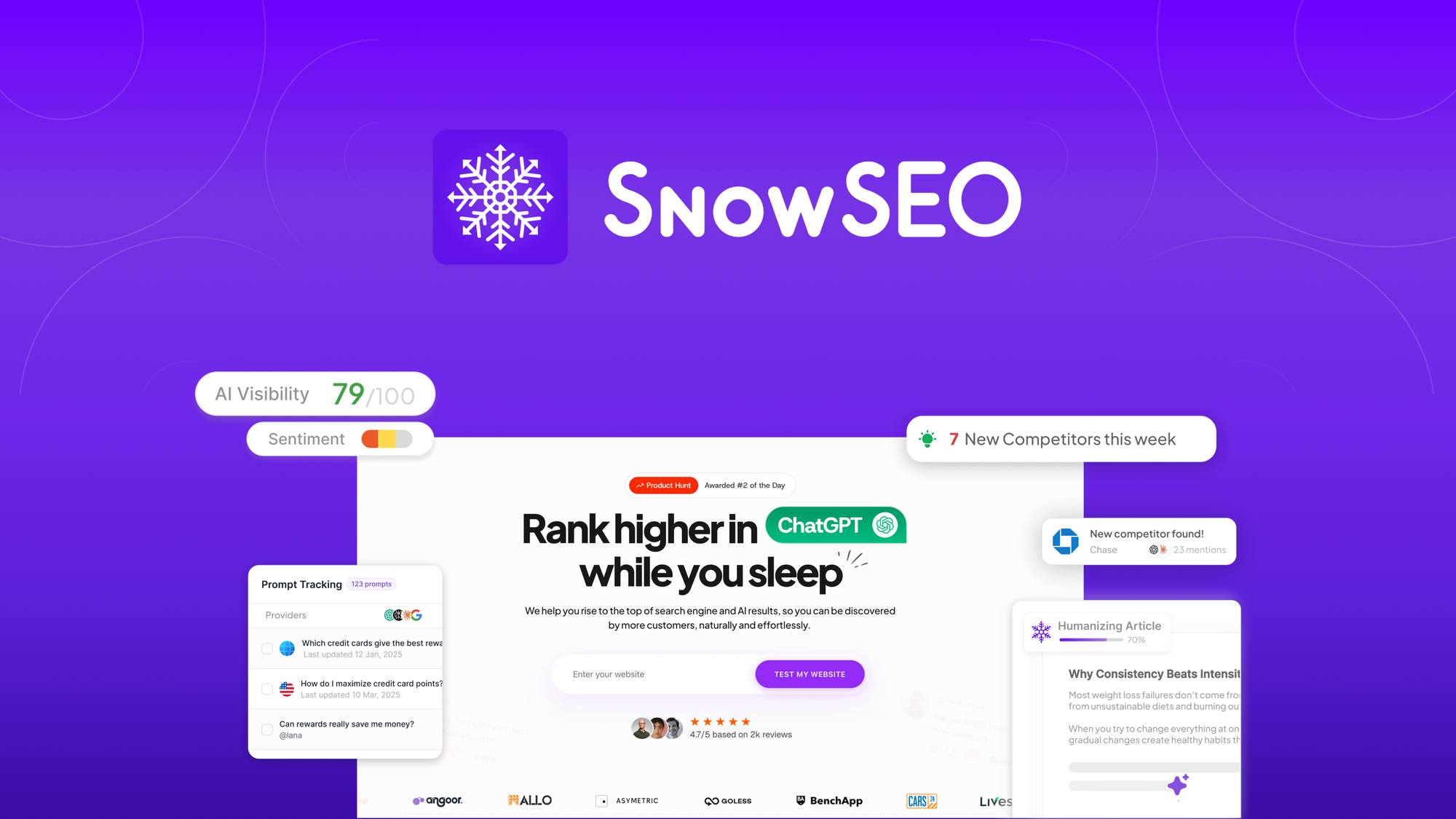
SnowSEO is an AI-powered SEO and content generation platform designed for online store owners, dropshippers, and ecommerce content marketers. It combines keyword research and clustering with automated long-form article generation, then backs it up with real-time SERP analysis to help you understand what is already ranking. In plain terms: you feed it a seed keyword, it spits out topic clusters and fully written articles optimized for search engines. The pitch is that you cut weeks off your content calendar without touching a keyboard yourself.
What makes it marginally different from the ten other AI writing tools crowding this space is the integrated workflow. Most tools ask you to do keyword research in Semrush, then paste findings into Jasper. SnowSEO tries to keep the entire process in one dashboard. Whether that actually translates to better results is what I set out to discover.
3. My Hands-On Test: What Surprised Me
I connected SnowSEO to a test Shopify store with 47 products in the home office furniture niche. I ran three distinct experiments over 72 hours: generating a cluster around "ergonomic desk chair," creating a product page description for a standing desk, and building out a full blog content calendar for Q1. Here is what actually happened.
The keyword clustering worked better than expected. I input "home office setup" and within 90 seconds SnowSEO returned 23 related terms organized into logical groupings. The tool correctly identified modifiers like "small spaces," "budget," and "minimalist" as separate intent clusters rather than dumping everything into one messy list. This saved me roughly 2 hours of manual clustering work I normally do in a spreadsheet.
Article generation was fast but required heavy editing. The tool produced a 1,400-word article on "how to choose an ergonomic desk chair" in under 4 minutes. Readability was acceptable at a 7th-grade level, which is fine for ecommerce audiences. However, the article made two factual claims about lumbar support that were outright wrong. One paragraph stated that "mesh backrests always provide better lumbar support than padded cushions," which any physical therapist would dispute. I had to rewrite that section completely and add a disclaimer.
The SERP analysis feature lagged behind what I get from dedicated tools. When I checked rankings for "standing desk converter," SnowSEO displayed the top 10 results but only showed domain authority and word count. It did not reveal backlink counts, page authority scores, or content freshness dates. For competitive research, I still needed to cross-reference data in Ahrefs. The feature is functional for quick checks but not comprehensive enough for serious keyword tracking.
One frustration: the tool crashed twice during my testing when generating articles longer than 1,800 words. The error message read "Content generation timeout exceeded." Support documentation offers no workaround, and I had to split long-form content into multiple shorter requests to get around it.
4. Who This Is Actually For
Profile A: The Dropshipper Who Needs Content Volume
If you operate a dropshipping store with 200+ products and your entire value proposition depends on outranking competitors with sheer content volume, SnowSEO slots into your workflow perfectly. You can generate keyword clusters for entire product categories in an afternoon, push out 15 articles per week, and theoretically dominate long-tail searches. The output is generic enough that it will not win any writing awards, but it does not need to. It just needs to exist and be slightly better than your competitor's thin product descriptions.
Profile B: The Small Ecommerce Owner Who Hates Writing
If you are comfortable editing AI output and understand your niche well enough to catch errors, you can make SnowSEO work. The tool generates decent first drafts that save you roughly 60% of the writing time. Budget 30 minutes per article for fact-checking and tone adjustments, and you end up with publishable content in under an hour. This assumes your products are not highly technical or regulated. If you sell anything requiring precise specifications or medical-adjacent claims, you will spend more time fixing the AI's hallucinations than you would have spent writing from scratch.
Profile C: The Technical Product Seller
Do not bother. If you sell specialized equipment, industrial components, scientific supplements, or anything where accuracy directly impacts customer trust and legal compliance, SnowSEO will create more liability than it solves. The AI confidently generates incorrect specifications, misapplies industry terminology, and produces content that sounds plausible but is factually wrong. For these niches, hire a subject matter expert or use a tool built specifically for technical documentation. Consider alternatives like ClawEase for workflow automation combined with a human writer who actually understands your products.