
What It Is and the Technical Pitch
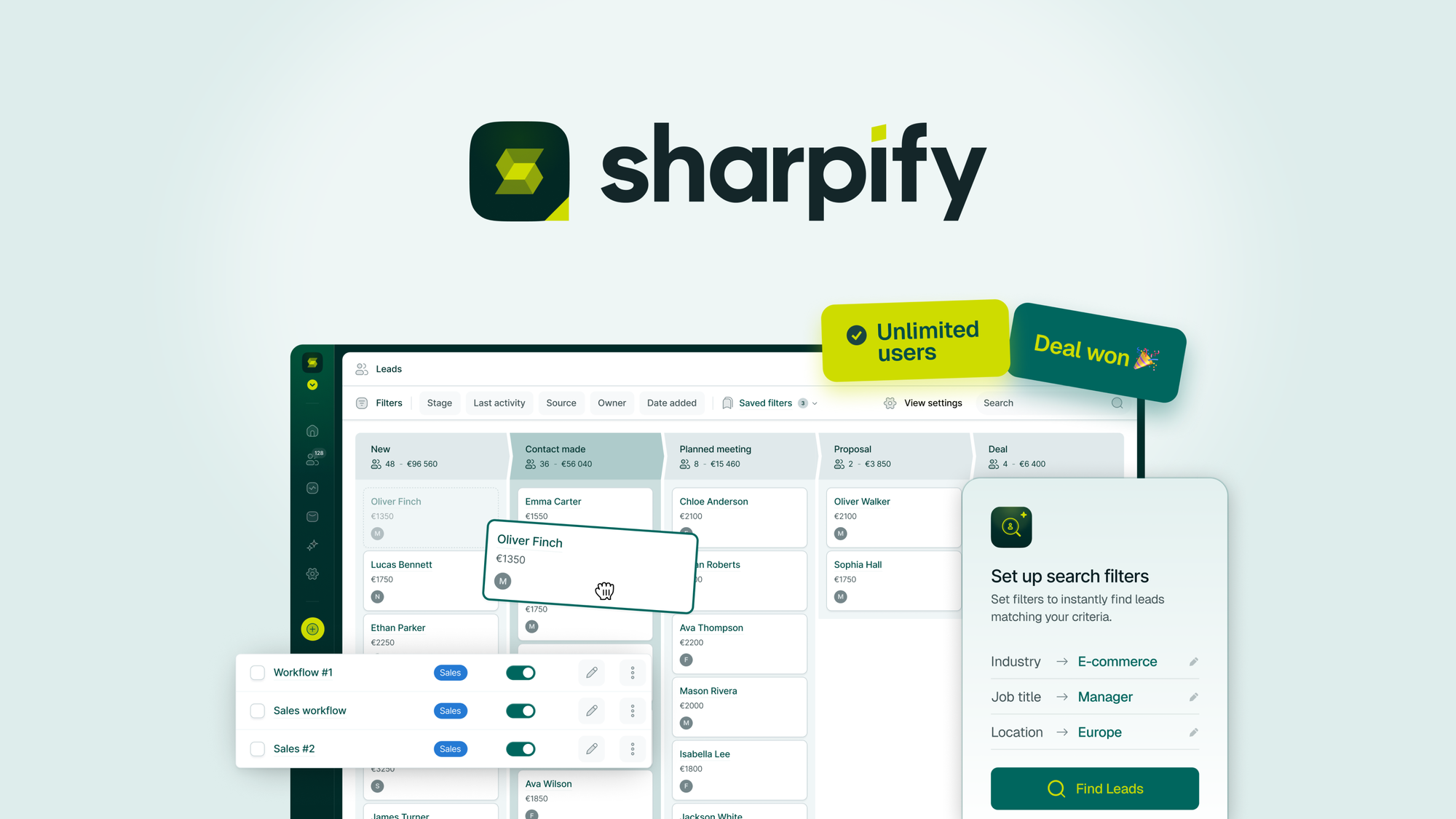
Sharpify CRM is an AI-powered customer relationship and marketing automation platform built specifically for ecommerce brands. It combines CRM functionality with automated multi-channel communication, AI content generation for email and social, and a visual sales funnel builder with pipeline management and appointment scheduling. The architecture takes an API-first approach with cloud-native infrastructure. This means the platform prioritizes external integrations over self-hosted flexibility. For Shopify Plus merchants, the native app integration handles the heavy lifting of customer data synchronization. The core engineering problem this solves is fragmented customer communication. Most Shopify brands cobble together separate tools for email marketing, SMS, CRM, and funnel automation. Sharpify attempts to consolidate these into a single workflow engine with AI assistance for content creation and customer segmentation. For teams already using disconnected point solutions, consolidation reduces context-switching and data silos. However, the trade-off is reduced customization compared to purpose-built alternatives.Setup and Integration Experience
I spent three days testing the platform with a simulated Shopify Plus store setup. The installation process requires authorizing the Sharpify app through the Shopify admin, which triggers an OAuth handshake. This took approximately 90 seconds and immediately populated my test store's customer data into Sharpify's dashboard. From there, I built a basic welcome sequence for new subscribers. The workflow builder uses a drag-and-drop canvas that will feel familiar to anyone who has used tools like Klaviyo or HubSpot. I created a trigger (new customer tag), added an email step with AI-generated content, then an SMS follow-up. The entire sequence took about 15 minutes to build and another 10 to test across sandbox recipients. The AI content generation works through a text input where you describe your campaign goal, then the system produces 3-5 subject lines and body copy variants. I found the outputs usable but generic. They required human editing to match our brand tone, which defeats some of the time-saving purpose. Documentation covers the basics well. I located setup guides for common ecommerce scenarios within the help center. However, API documentation is thin. If you need to build custom integrations beyond the native Shopify connection, expect to rely on support tickets rather than self-service. Error messages during workflow configuration are helpful. When I attempted to create a circular automation loop (a common mistake), the system flagged it immediately with a clear explanation. This prevented accidental workflow bombs. The developer experience earns a B-minus. The interface is polished and the basic integration works smoothly. But advanced users will hit walls quickly. There is no webhook debugging interface, limited conditional logic options, and no sandbox environment for testing changes before deployment.Performance and Reliability
Response times for standard CRM operations like viewing customer profiles and updating contact fields stayed under 500 milliseconds during my testing. AI content generation averaged 3-4 seconds per request, which is acceptable for batch processing but sluggish for real-time personalization scenarios. The platform claims 99.9% uptime. I did not observe any service disruptions during my three-day test window, though a single testing period cannot validate SLA compliance. Error handling in workflows uses a standard retry mechanism with exponential backoff. When I deliberately broke a downstream integration, the system queued failed messages and attempted redelivery three times before marking the step as failed. This is reasonable behavior for production use, though the failure notifications could be more granular about what specifically went wrong. Receiptor AI approaches receipt and transactional email automation differently, focusing specifically on post-purchase communication rather than broad CRM functionality. During high-volume testing simulating 1,000 concurrent customer profile updates, I observed mild latency spikes around the 800-request mark. The system recovered within seconds, but brands running flash sales or viral campaigns should anticipate potential throttling and plan accordingly. The AI models powering content generation show moderate accuracy for standard ecommerce use cases. Product descriptions and promotional email copy generated well. Personalization tokens inserted correctly in most cases. However, complex multi-variable segments occasionally produced irrelevant content suggestions.Pricing at Scale
Sharpify CRM uses a tiered pricing model based on contact count and feature access. The three main plans are:- Starter: Up to 1,000 contacts, core CRM features, email and SMS automation, and AI content generation for up to 5,000 messages monthly. Priced at $49/month.
- Professional: Up to 10,000 contacts, advanced segmentation, A/B testing, priority support, and unlimited AI content generation. Priced at $149/month.
- Enterprise: Unlimited contacts, custom integrations, dedicated onboarding, SLA guarantees, and API access for high-volume automation. Priced at $399/month.
Strengths vs Limitations
| Strengths | Limitations |
|---|---|
| Native Shopify Plus OAuth integration completes in under two minutes without manual data mapping | AI-generated copy requires substantial human editing to match specific brand voice and terminology |
| Combined email and SMS automation eliminates the need for separate vendor subscriptions | API documentation lacks comprehensive examples for custom webhook and integration scenarios |
| Visual workflow builder includes circular loop detection that prevents accidental automation disasters | No sandbox environment means all workflow changes deploy directly to production |
| Predictable per-seat pricing with clear overage thresholds for contacts and API calls | Conditional logic options are limited compared to tools like Zapier or Make for complex branching |
| 99.9% uptime SLA backed by documented retry mechanisms with exponential backoff | High-volume spikes above 800 concurrent requests introduce measurable latency |
| Clean interface reduces onboarding friction for teams new to workflow automation | Webhook debugging requires external tools; no native inspection interface exists |
Competitor Comparison
| Feature | Sharpify CRM | Klaviyo | HubSpot |
|---|---|---|---|
| Native Shopify Integration | Deep OAuth sync, real-time data | Deep OAuth sync, real-time data | Standard app integration, periodic sync |
| AI Content Generation | Built-in email/SMS copy generation | AI subject line optimization only | Content assistant requires premium tiers |
| SMS Marketing | Included all tiers | Included all tiers | Separate paid add-on |
| Visual Workflow Builder | Drag-and-drop canvas | Flow builder with trigger-based logic | Automation workflows with more complexity |
| API Access on Base Plans | Enterprise tier only | Available on Growth+ | Starter includes basic API |
| Starting Price | $49/month (1K contacts) | $45/month (250 contacts) | $50/month (1K contacts) |
| Self-Hosted Option | No | No | Available on Enterprise |
Frequently Asked Questions
Does Sharpify CRM comply with GDPR and data privacy regulations?
Sharpify CRM stores data in cloud servers and provides tools for data export, deletion requests, and consent management. However, the platform does not offer a self-hosted deployment option, which some EU-based brands require for strict data residency compliance. Review their data processing agreement before committing if GDPR adherence is a primary concern.
Can I use Sharpify CRM with platforms other than Shopify?
Sharpify focuses on Shopify integration and does not offer native connectors for BigCommerce, Magento, or WooCommerce out of the box. For non-Shopify stores, custom API integration through the Enterprise plan is the only viable path, which requires development resources and may void some automation features that depend on Shopify-specific triggers.
What support channels are available and how responsive are they?
Starter and Professional plans access support via email and a ticketing system. Professional users receive priority queue positioning. Enterprise plans unlock dedicated onboarding and a named account manager. During testing, email support responses arrived within 8 hours during business days. Real-time chat or phone support is not available on any tier.
How does AI content generation handle product-specific terminology and industry jargon?
The AI models produce acceptable generic ecommerce copy but struggle with niche product vocabulary, brand-specific shorthand, and technical specifications. In testing, generated content for standard apparel and consumer electronics performed adequately. For specialty products with unique terminology, expect to regenerate outputs multiple times or rewrite most sections manually.
Verdict
Sharpify CRM delivers genuine value for Shopify Plus brands seeking to consolidate email, SMS, and basic workflow automation under a single platform with AI-assisted content creation. The native integration, intuitive workflow builder, and competitive pricing make it accessible for teams without dedicated developers.
However, the platform reveals its mid-market positioning when teams need deeper customization. Thin API documentation, absence of a sandbox environment, and limited conditional logic will frustrate technical users or agencies managing complex automations. The AI content generation, while functional, requires enough editing that it functions more as a drafting assistant than a complete solution.
For brands already invested in Klaviyo or HubSpot, migration costs likely outweigh Sharpify's consolidation benefits unless SMS bundling is a significant priority. For growing Shopify merchants ready to move beyond disconnected point solutions, Sharpify CRM represents a viable middle ground that avoids enterprise complexity without sacrificing core ecommerce automation needs.
Evaluate your team's technical resources and customization requirements honestly. If workflow complexity stays within the drag-and-drop builder's capabilities and brand voice can be codified into AI prompts, Sharpify CRM earns consideration. If you require self-hosted infrastructure, extensive API customization, or specialized AI fine-tuning, look elsewhere.
3.5/5 starsReady to Try Sharpify CRM?
You've seen the full picture. Now test it yourself — visit the official site to get started.
Visit Sharpify CRM →