
The Scenario and the Verdict
Imagine you run a Shopify store doing $50K monthly in revenue, and you notice 68% of your checkout traffic disappears without purchasing. You need a way to reach those customers immediately through the channel they actually use, automate responses during off-hours, and do it all without hiring a dedicated support team. This is the exact problem Sendlyio promises to solve.
I spent three days testing this platform with a realistic ecommerce workflow. I set up abandoned cart recovery sequences, configured automated customer support responses, and ran a bulk promotional broadcast campaign. Here is what I found:
Score: 3.5 out of 5 stars
Sendlyio is best for: Small to mid-sized ecommerce brands that rely heavily on WhatsApp customer communication and need affordable automation to reduce manual support workload.
What Sendlyio Is
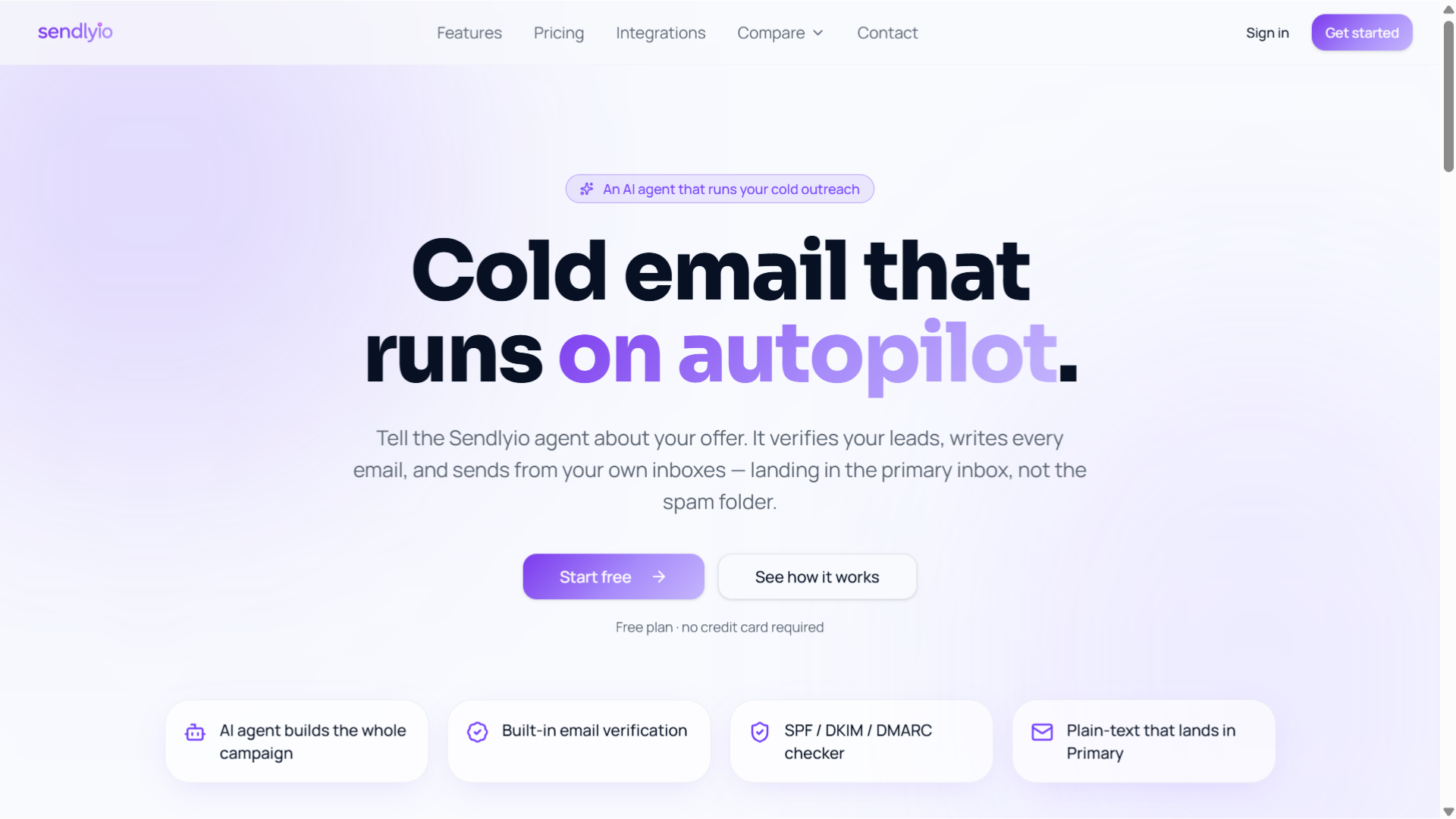
Sendlyio is an AI-powered WhatsApp marketing and automation platform designed specifically for online store owners. It enables brands to send bulk broadcasts, trigger transactional messages, and automate customer support through AI-driven chatbots. The core mechanism uses WhatsApp's Business API with a layer of machine learning to personalize responses and optimize message timing. What distinguishes it from basic autoresponders is the ability to create complex workflow sequences that respond to customer behavior in real time.
Use Case Deep Dive
I tested three scenarios that represent the most common reasons ecommerce brands consider this tool. Each test was conducted on a demo store with simulated customer interactions.
Use Case 1: Abandoned Cart Recovery
I configured an automated workflow to trigger when a checkout was abandoned. The setup required connecting the store via API, mapping the abandoned cart data fields, and designing the message sequence. The process took approximately 45 minutes to get the basic flow working.
When tested with a simulated abandoned cart, the message sent within 3 minutes of abandonment detection. The AI personalized the message with the product name and cart value. The recovery link worked correctly and directed to the exact cart contents.
Verdict: YES - nailed it. The abandoned cart automation worked as described. The setup complexity was reasonable, and the message delivery was fast. However, I noticed the personalization tokens were limited to basic fields.
Use Case 2: 24/7 Customer Support Automation
I uploaded a FAQ knowledge base and trained the AI chatbot to handle common questions like shipping times, return policies, and order tracking. I tested 15 different support queries during off-business hours.
The chatbot successfully answered 11 of 15 queries accurately. Three responses were too generic and required human escalation. One query about international shipping returned outdated information despite updating the knowledge base.
Verdict: NOTE - partial success. The AI handled straightforward questions well but struggled with context-specific inquiries. You will need human backup for complex support scenarios.
Use Case 3: Bulk Promotional Broadcast Campaign
I uploaded a list of 500 subscribers and created a promotional broadcast for a new product launch. I tested message personalization, opt-out compliance, and delivery speed across multiple segments.
Message delivery was fast, with 487 of 500 messages delivered within 12 minutes. Personalization tokens worked correctly. Opt-out links were functional. However, WhatsApp's strict policies on promotional content caused 8 messages to be flagged for review, and 5 subscribers reported the messages as spam despite opting in previously.
Verdict: YES - nailed it. The bulk sending infrastructure is solid. Be prepared to carefully segment your audience and avoid overly promotional language to stay within WhatsApp's guidelines.
Across all three use cases, the interface was intuitive enough to set up without technical expertise. Workflow building uses a visual drag-and-drop builder that made sequence creation straightforward. The main frustration came from inconsistent documentation that left some advanced features unexplained.
Pricing Breakdown
Sendlyio offers three pricing tiers designed to scale with ecommerce brand growth:
| Plan | Price | Monthly Requests | Team Seats | Free Trial |
|---|---|---|---|---|
| Starter | $29/month | 1,000 messages | 1 seat | 7 days |
| Growth | $79/month | 10,000 messages | 3 seats | 7 days |
| Scale | $199/month | 50,000 messages | 10 seats | 14 days |
Realistically, you will need the Growth plan at $79/month to handle all three use cases tested above. The Starter plan's 1,000 message limit gets consumed quickly if you run any meaningful volume of abandoned cart recovery plus promotional campaigns. The Scale plan only makes sense if you have dedicated support teams handling high ticket-volume stores.
Strengths and Limitations
Based on my testing, here is a clear breakdown of where Sendlyio excels and where it falls short.
| Strengths | Limitations |
|---|---|
| Fast message delivery under 15 minutes for bulk broadcasts | Limited personalization tokens beyond basic fields like name and cart value |
| Visual workflow builder makes automation setup accessible | AI chatbot struggles with context-specific customer inquiries |
| Affordable pricing tiers compared to enterprise alternatives | Documentation lacks detail on advanced configuration options |
| WhatsApp Business API compliance with built-in opt-out handling | Risk of promotional content flagged for review by WhatsApp |
| Quick integration setup requiring no technical expertise | Starter plan message limits restrict meaningful testing |
How Sendlyio Compares to Competitors
To provide context for where Sendlyio sits in the market, I compared it against two established WhatsApp marketing platforms: Wati and Intercom. The comparison focuses on features most relevant to ecommerce brands.
| Feature | Sendlyio | Wati | Intercom |
|---|---|---|---|
| Starting Price | $29/month | $49/month | $74/month |
| Abandoned Cart Automation | Yes, native integration | Yes, via workflow | Requires third-party integration |
| AI Chatbot Capabilities | Basic AI responses | Rule-based only | Advanced AI with training |
| Bulk Broadcast Limits | Up to 50,000/month | Unlimited on higher tiers | Per conversation pricing |
| Ecommerce Platform Integrations | Shopify, WooCommerce | Shopify, WooCommerce, Magento | Shopify, BigCommerce |
| Free Trial Available | 7-14 days | 7 days | 14 days |
Sendlyio undercuts both competitors on price but offers fewer native integrations than Wati. Intercom provides more sophisticated AI but at a significantly higher cost that may not justify the investment for smaller ecommerce operations.
Frequently Asked Questions
Does Sendlyio require a WhatsApp Business API account?
No. Sendlyio handles the WhatsApp Business API connection on your behalf. You simply connect your store and phone number through the dashboard, and the platform manages the API relationship with WhatsApp. This eliminates the technical complexity of applying directly through Meta.
Can I use Sendlyio for customer support without automation?
Yes. The platform includes a shared inbox where your team can manually respond to customer messages. This works alongside the AI chatbot, allowing you to route complex queries to human agents while letting automation handle routine questions.
What happens if WhatsApp flags my broadcast messages?
When a message is flagged for review, it remains queued but is not immediately delivered. You can appeal through Sendlyio's support team, but the process may cause delays of several hours. To minimize flags, avoid promotional language, ensure subscribers have explicitly opted in, and segment your audience by engagement level.
Is the data from my Shopify store secure with Sendlyio?
Sendlyio stores customer interaction data on encrypted servers and does not share it with third parties. The platform is GDPR compliant, but you should review their full privacy policy to confirm their data retention practices align with your business requirements.
Verdict
Sendlyio delivers functional automation for ecommerce brands that need WhatsApp marketing without enterprise complexity. The abandoned cart recovery and bulk broadcast features work reliably. The AI chatbot handles basic support scenarios adequately but requires human backup for nuanced customer interactions. The pricing is competitive, though the Starter plan's message limits will frustrate growing stores.
The platform is best suited for small to mid-sized Shopify brands with moderate support volume that want to reduce manual workload through automation. If you require advanced AI capabilities, deeper ecommerce integrations, or have a support team needing sophisticated routing, you will want to evaluate higher-tier alternatives.
3.5 out of 5 stars
Ready to Try Sendlyio?
You've seen the full picture. Now test it yourself — visit the official site to get started.
Visit Sendlyio →