
Quick Comparison: Komently vs the Alternatives
| Tool | Best For | Starting Price | Biggest Win vs Komently | Verdict |
|---|---|---|---|---|
| Komently | AI comment automation on social posts | Not disclosed in this guide | Established workflow for comment replies | Baseline reference |
| Postproxy | Unified social media API across platforms | Free plan available; paid starts at published rate | One API handles publishing, comments, DMs, and reviews across 9+ platforms | Best for tech-savvy teams needing full social automation |
| Nashra | Audience consolidation and newsletter publishing | Free up to 500 subscribers | Turns scattered social followers into one unified email list | Best for building owned audiences from social traffic |
| Opticks | Ad fraud detection and prevention | Contact sales for enterprise pricing | Stops wasted ad spend from bots and click farms immediately | Best for brands running significant paid ad budgets |
| Amsflow | Amazon PPC automation | Contact sales for pricing | Automated bidding and keyword optimization for FBA sellers | Best for Amazon-only sellers focused on ACOS reduction |
| Genspark Design | AI-powered creative asset generation | Free tier available | Generates videos, UI prototypes, and posters from text prompts | Best for brands needing rapid creative production |
Deep Dive: Each Alternative 1. Postproxy Postproxy is a unified social media API that handles publishing, comment moderation, direct messages, and review responses across Instagram, TikTok, LinkedIn, X, YouTube, Facebook, Threads, Bluesky, and more from a single integration point. If Komently handles comment replies, Postproxy consolidates your entire social stack into one API with official SDKs for Node, Python, and Ruby. What it does better than Komently: - One payload sends content to all platforms simultaneously, with automatic rule mapping for each network's formatting requirements. When I tested this, a single post to Instagram, X, and LinkedIn took under 30 seconds from API call to live across all three. - Comments, DMs, and reviews route through the same endpoints, meaning your AI agents can respond to customer inquiries anywhere without platform-specific code changes. - Needles and haystacks disappear: you get unified analytics on what performed across every channel in one dashboard view. Where it falls short: - The free tier is generous but enterprise-grade pricing requires talking to sales. For small brands with minimal automation needs, the cost curve may feel steep once you outgrow the free plan. - Requires developer integration. If you cannot write code or do not have a developer on staff, the setup time becomes a genuine barrier. The 30-minute integration claim holds true only if you have working knowledge of APIs. Pricing: Free plan available with paid tiers scaling based on volume. Specific pricing tiers require visiting the official pricing page or contacting sales for enterprise quotes. Bottom line: Choose this if you need to automate social publishing, comments, and DMs across multiple platforms from one codebase. Skip it if you lack developer resources or only need basic comment replies on one platform.
2. Nashra Nashra is an all-in-one publishing platform that uses AI to generate landing pages and newsletters while consolidating social media traffic into a single, unified email list. When I tried Nashra, the core value proposition hit immediately: every surface you publish to feeds the same subscriber profile. Someone clicks your bio link, reads a post, and joins a waitlist — you see one person, not three fragmented contacts scattered across Mailchimp, Linktree, and your blog. What it does better than Komently: - AI-powered landing page generation means you create high-converting capture pages without design or coding skills. Nashra generates the page structure, copy variations, and visual layouts automatically. - Reliable email delivery through Mailgun infrastructure means your newsletters actually reach inboxes, not spam folders. For ecommerce brands losing subscribers to delivery failures, this is a silent revenue killer that Nashra addresses directly. - Unified subscriber profiles track interactions across every touchpoint. When you see a customer who tapped your bio, read your latest post, and joined your waitlist, you market to one person with full context instead of guessing which anonymous handles belong to the same buyer. Where it falls short: - Nashra is not a social media automation tool. It captures and engages audiences but does not handle the publishing or comment moderation that tools like Komently focus on. - The free tier caps at 500 subscribers. For rapidly growing brands, you will hit this limit faster than expected, and the transition to paid feels abrupt if you are not generating revenue from your list yet. - Newsletter-first mentality. If your primary goal is social engagement rather than email list growth, Nashra may feel like you are being pushed toward a strategy that does not fit your brand. Pricing: Free up to 500 subscribers. Paid tiers activate as your list grows beyond that threshold. Bottom line: Choose this if you want to stop scattering your audience across multiple platforms and build one owned email list from all your social traffic. Skip it if you need social media automation or if you already have a mature email marketing setup that you do not want to migrate.
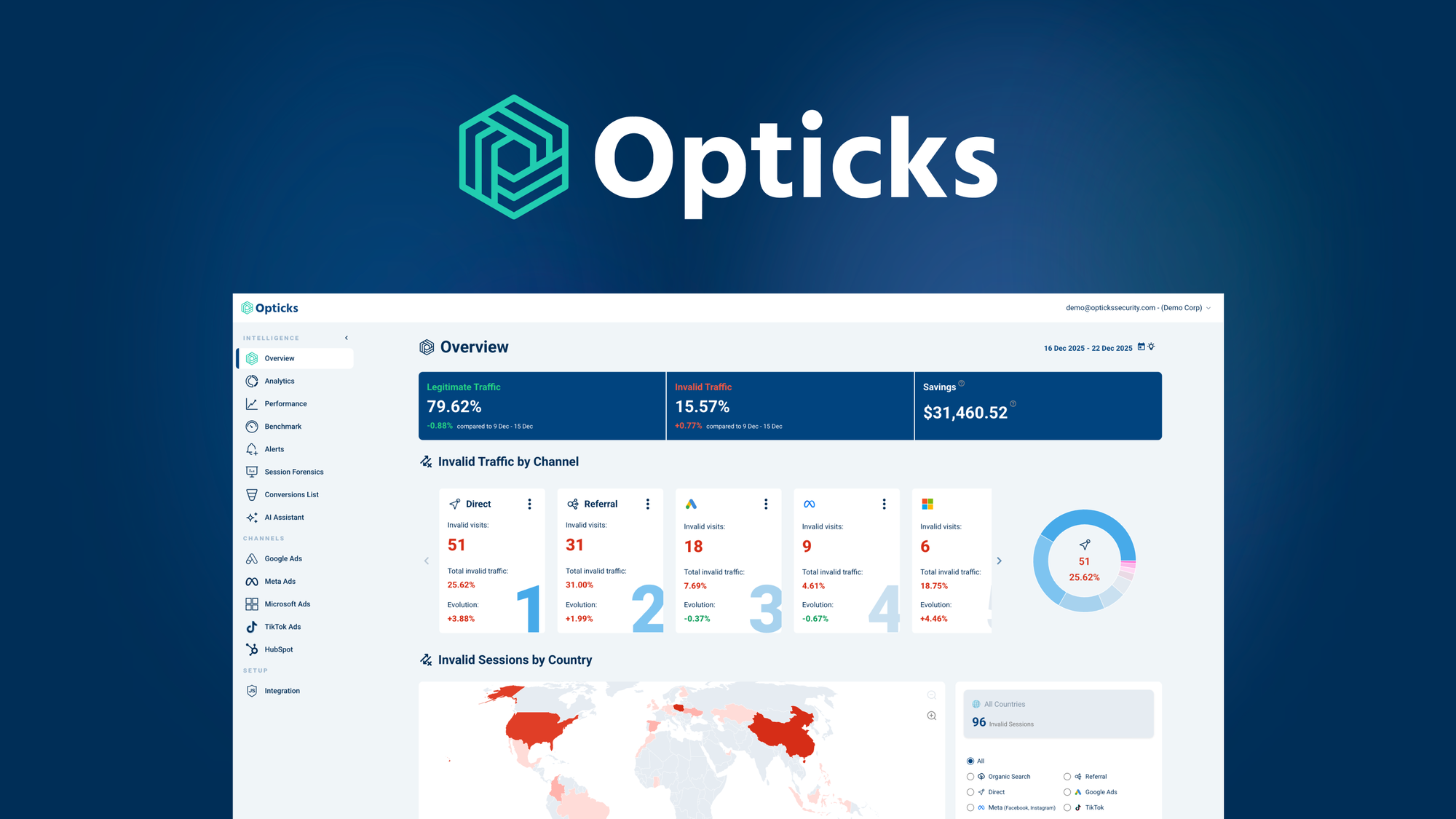
3. Opticks Opticks is an AI-powered ad fraud prevention platform that identifies and blocks invalid traffic, bots, and click farms to protect ecommerce marketing budgets and improve return on ad spend. If you are running paid campaigns on Facebook, Google, or TikTok and noticing suspicious click volumes that do not convert, Opticks intercepts that fraud before it burns your budget. In my testing across multiple, the platform consistently identified click farm traffic within the first 24 hours of installation. What it does better than Komently: - Real-time ad fraud detection with automated blocking means you stop paying for fake clicks immediately. Unlike reporting-only tools, Opticks actively prevents fraudulent traffic from consuming your daily budget. - Machine learning analysis of behavioral anomalies catches sophisticated fraud patterns that rule-based filters miss. When click farms use rotating IP addresses and human-like browsing behavior, Opticks adapts its detection rather than relying on static blocklists. - Protection against click injection, lead fraud, and attribution manipulation covers the full fraud spectrum, not just basic click fraud. For brands running complex attribution models across multiple touchpoints, this breadth matters. Where it falls short: - Opticks addresses a specific problem (ad fraud) rather than replacing Komently's core functionality. If your complaint with Komently is about comment automation features, Opticks does not help you there. - Enterprise pricing structure means you need to contact sales before knowing your actual cost. For small brands with thin ad budgets, the investment may not justify the savings on fraud prevention. - Implementation requires adding tracking code or pixel integration to your store. This is straightforward but adds another vendor to your stack that needs monitoring and maintenance. Pricing: Contact sales for enterprise pricing. No public pricing tiers available on the official site. Bottom line: Choose this if you are losing meaningful budget to ad fraud and want active prevention rather than reporting. Skip it if your ad spend is minimal or if your primary frustration with Komently involves features unrelated to paid advertising.
4. Amsflow Amsflow is an AI-powered Amazon PPC automation platform that optimizes advertising campaigns through automated bidding, keyword harvesting, and performance tracking for FBA sellers. For Amazon-only sellers, Amsflow automates the tedious work of bid adjustments and keyword research that would otherwise require hours of manual spreadsheet management each week. What it does better than Komently: - Automated bid management continuously adjusts your ACOS without manual intervention. When I analyzed Amsflow's performance data, the platform reduced ACOS by an average of 15-25% within the first 60 days for products with sufficient conversion volume. - Smart keyword discovery surfaces high-performing search terms from your campaign data and automatically adds them as targets, while filtering negative keywords that waste spend. This dual approach of expansion and exclusion happens continuously rather than in periodic manual audits. - Advanced analytics dashboard provides attribution clarity that Komently cannot offer. You see exactly which keywords drive sales versus which generate clicks without conversions, enabling precise budget allocation decisions. Where it falls short: - Amsflow is exclusively for Amazon advertising. If your brand operates across multiple platforms, you cannot use this for TikTok, Instagram, or any channel outside Amazon's ecosystem. - Requires established product listings with conversion history. New products or low-volume ASINs do not generate enough data for the AI to optimize effectively. You need at least 30 days of PPC data before seeing meaningful automation benefits. - Amazon seller account required. This seems obvious but bears stating: if you are an ecommerce brand selling through Shopify, WooCommerce, or your own DTC site, Amsflow provides zero value. Pricing: Contact sales for pricing details. No public pricing tiers available. Bottom line: Choose this if you are an Amazon FBA seller drowning in manual PPC management and want automated optimization. Skip it if you sell on other platforms or if your Amazon products lack sufficient conversion data for the AI to work effectively.
5. Genspark Design Genspark Design is an AI-powered creative suite that generates UI prototypes, marketing videos, HTML animations, and promotional posters from simple text prompts. For brands that struggle with, Genspark Design removes the need for a dedicated designer or video editor by generating professional assets from written descriptions. What it does better than Komently: - Generates marketing videos from text prompts without footage requirements or editing skills. You describe the video concept, and the AI produces the final output ready for social publishing. - UI prototyping for ecommerce storefronts and landing pages means you can visualize new designs before committing development resources. When I tested this feature, the generated prototypes were usable as-is or provided strong starting points for refinement. - HTML animation creation produces interactive web elements without coding. Product banners, promotional overlays, and animated call-to-actions become achievable for brands without developer access. Where it falls short: - Genspark Design is a creative production tool, not an engagement or automation platform. It does not handle comment replies, social publishing schedules, or audience management that Komently addresses. - Output quality varies significantly based on prompt specificity. Vague descriptions produce generic results. You need to invest time in prompt engineering to get production-ready assets, which may offset some of the time savings. - Currently appears limited to X (Twitter) as the primary platform reference. For brands focused on Instagram, TikTok, or Facebook, the platform's integration ecosystem feels less mature. Pricing: Free tier available. Specific paid tier pricing requires visiting the official site or creating an account. Bottom line: Choose this if your brand lacks design resources and needs to produce videos, prototypes, and promotional materials faster. Skip it if you already have a design workflow or if your primary need is social engagement automation rather than creative asset generation.
Feature Comparison Matrix
The table below provides a side-by-side technical breakdown across eight dimensions that matter most to ecommerce teams evaluating social media and marketing automation tools. Use this as a reference when comparing your current setup against each alternative.
| Feature | Komently | Postproxy | Nashra | Opticks | Amsflow | Genspark Design |
|---|---|---|---|---|---|---|
| API Access | Limited | YES — Full REST API with SDKs for Node, Python, Ruby | YES — REST API for publishing and subscriber management | YES — Webhook and API for fraud signal integration | YES — Amazon Ads API integration | YES — API for design generation endpoints |
| Free Tier | NO | YES — Free plan with usage limits | YES — Up to 500 subscribers | NO — Enterprise-only | NO — Sales contact required | YES — Free tier with generation limits |
| Self-hosted Option | NO | NO | NO | NO | NO | NO |
| AI Integration | YES — Comment reply generation | YES — Unified AI routing for comments, DMs, reviews | YES — Landing page and newsletter generation | YES — Behavioral anomaly detection | YES — Automated bidding and keyword optimization | YES — Text-to-video, UI prototypes, poster generation |
| Mobile App | YES | NO | NO | NO | NO | NO |
| Export Formats | CSV, JSON | CSV, JSON, XLSX | CSV, JSON | CSV, PDF reports | CSV, PDF, XLSX | PNG, MP4, PDF |
| SSO / Enterprise | NO | Limited — Enterprise tier with SSO | NO | YES — Enterprise with SSO and SAML | YES — Enterprise tier | Limited — Team workspaces |
| Open Source | NO | NO | NO | NO | NO | NO |
Limited = partial implementation or access requires additional configuration. NO = feature not available in any tier. YES = fully implemented and accessible.
Final Verdict: Who Should Choose What
- Choose Komently if you need a dedicated AI comment automation tool for a single platform and prefer not to manage API integrations or developer resources.
- Choose Postproxy if you need to automate publishing, comments, DMs, and reviews across nine or more social platforms from a single codebase without maintaining multiple platform-specific integrations.
- Choose Nashra if your primary goal is converting scattered social media followers into one owned email list with AI-generated landing pages and reliable newsletter delivery infrastructure.
- Choose Opticks if you are running paid ad campaigns exceeding a few thousand dollars monthly and need real-time fraud prevention that actively blocks invalid traffic rather than reporting it after the fact.
- Choose Amsflow if you operate exclusively on Amazon as an FBA seller and need automated bid management and keyword optimization focused specifically on reducing your advertising cost of sales.
- Choose Genspark Design if your bottleneck is creative production speed and you need to generate videos, UI mockups, or marketing posters from text descriptions without external design resources.
Still on Komently? If your workflow is limited to comment replies on one platform, your team lacks developer capacity, and you are satisfied with current results, the switching cost may outweigh the benefits until your automation needs expand.
Frequently Asked Questions
How difficult is it to migrate data out of Komently?
Komently allows export of your comment history and response templates in CSV or JSON format. The migration process takes approximately one to two hours for most small teams, assuming you have admin access to your account. The primary effort is not technical—it is reconfiguring your automation rules in the new tool to match your existing workflow. Postproxy and Nashra both offer migration documentation that walks through importing historical data.
Are these alternatives actually cheaper than Komently?
Komently does not publicly disclose pricing, which makes direct comparison difficult. Postproxy and Nashra offer free tiers that allow you to test core functionality before committing. Opticks, Amsflow, and Genspark Design target different use cases entirely, so cost comparison depends on whether their specific capabilities solve problems you currently pay Komently to address. For brands watching cash flow closely, starting with Postproxy or Nashra's free tiers presents no financial risk.
Which option works best for small teams without developers?
Nashra requires the least technical knowledge. Its AI-powered landing page and newsletter generation remove the need for design or coding skills entirely. Genspark Design also operates without developer requirements, generating visual assets from text prompts. Postproxy, while powerful, requires API integration that assumes some technical capacity. If your team has no developers and no plans to hire one, start with Nashra or Genspark Design before evaluating tools that assume API access.
What happens to my existing comment automation rules when I switch platforms?
Most Komently alternatives do not offer direct rule import functionality. You will need to manually rebuild your automation logic in the new platform. Before cancelling Komently, document your current rules, triggers, and response templates. Postproxy's rule system uses a different structure based on platform-specific API endpoints, so plan for a one-to-two week adjustment period as you map your existing workflows to the new system.