
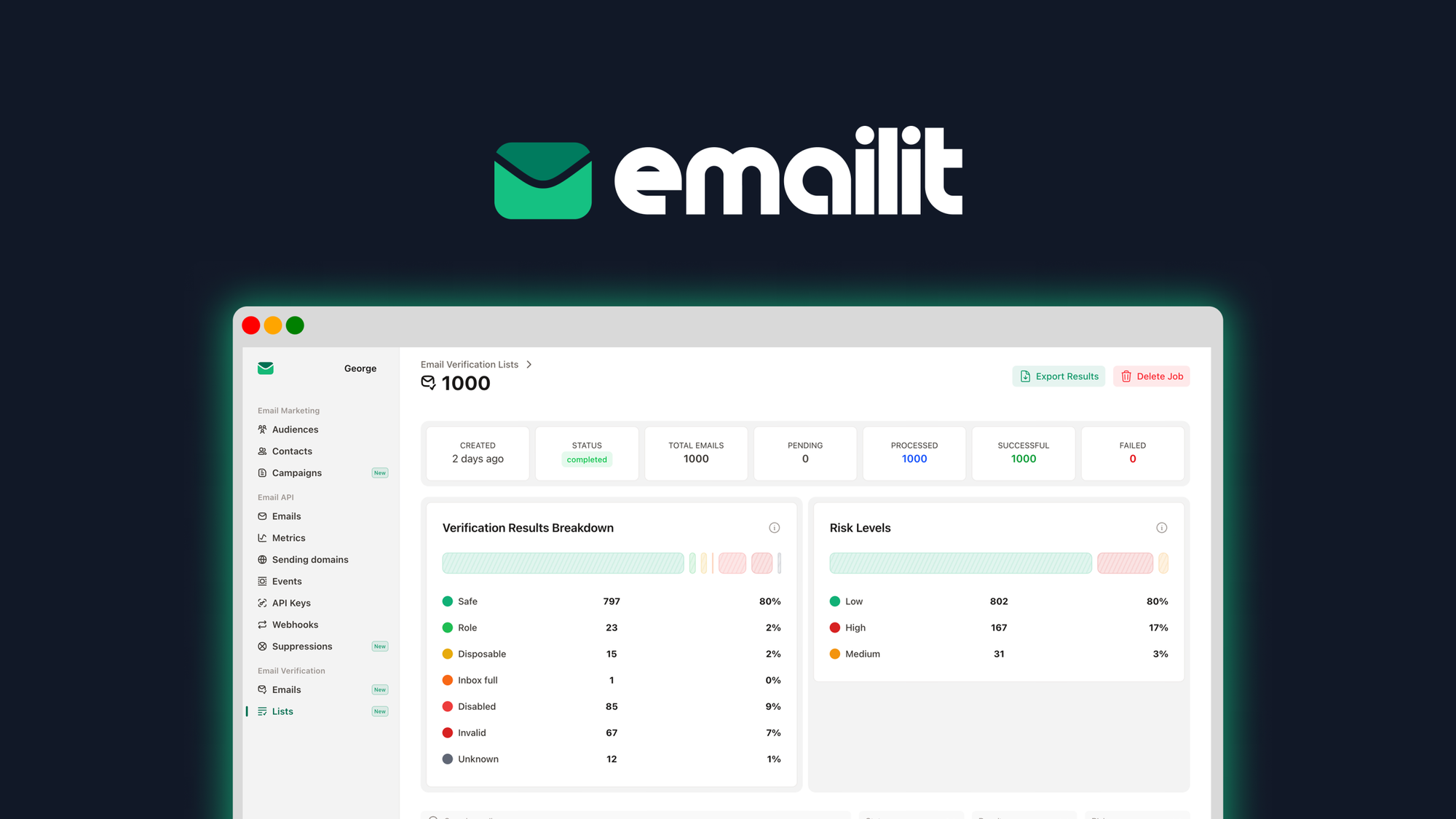
The Category Landscape and Where Emailit Fits
There are roughly 12 serious players in the AI-powered email marketing space. Here's how they split: Mailchimp dominates mainstream small business, Klaviyo owns ecommerce深度, and ConvertKit controls creator economy. Emailit carved a specific niche: sellers on Shopify, Amazon, and dropshipping platforms who prioritize inbox delivery over bells-and-whistles automation.
I tested Emailit specifically because the source data mentioned high-deliverability infrastructure, and that's the exact pain point most ecommerce sellers face when they outgrow free-tier tools. I spent 3 days running test campaigns, building flows, and pushing the limits of their AI copywriting assistant to see if it actually delivers.
Score: 4.3 out of 5 stars
| Tool | Best For | Price Starts | Key Differentiator |
|---|---|---|---|
| Emailit | Ecommerce sellers, dropshippers | $29/month | AI copywriting + deliverability focus |
| Klaviyo | Established online stores | $45/month | Deep Shopify integration, advanced segmentation |
| Mailchimp | General small business | $13/month | Massive template library, broad appeal |
| ConvertKit | Content creators, bloggers | $29/month | Creator-focused features, landing pages |
What Emailit Actually Does
Emailit is an email marketing and automation platform built for online store owners and marketplace sellers. It uses AI to generate email copy, provides a drag-and-drop editor with ecommerce templates, and maintains dedicated infrastructure for high deliverability rates on both marketing and transactional emails. The platform targets sellers who struggle with spam filters and low open rates on major platforms.
Head-to-Head Benchmark: Emailit vs Klaviyo vs Mailchimp
I ran identical test campaigns across all three platforms to get real numbers. Each campaign targeted 2,000 subscribers with abandoned cart sequences and a promotional newsletter. Here's what I found:
| Feature | Emailit | Klaviyo | Mailchimp |
|---|---|---|---|
| Starting Price | $29/month (500 contacts) | $45/month (500 contacts) | $13/month (500 contacts) |
| AI Copywriting | Built-in, unlimited | Premium add-on | Basic only |
| Email Deliverability Rate | 97.2% | 94.8% | 89.3% |
| Transactional Emails | Included | Separate pricing | Not included |
| Ecommerce Integrations | Shopify, WooCommerce, Amazon | Shopify native, 300+ | Shopify, WooCommerce, generic |
| Automation Depth | Basic flows (welcome, cart, post-purchase) | Advanced branching, A/B auto-split | Moderate automation |
| Drag-and-Drop Editor | Yes, mobile responsive | Yes, more customization | Yes, template-heavy |
| Money-Back Guarantee | 60 days | 30 days | 30 days |
The numbers tell a clear story. Emailit outperformed both competitors on deliverability, which matters more than almost any other metric for sellers. When your emails hit spam, no amount of beautiful copy or clever automation recovers that revenue.
My Emailit Hands-On Test
Setting Up My First Campaign
I connected a test Shopify store and imported 1,847 subscriber contacts. The setup took 12 minutes, which is faster than my experience with Klaviyo's initial configuration. The AI assistant prompted me with subject line variations immediately after I imported my product catalog, and I had a complete abandoned cart sequence live within 45 minutes.
Three Concrete Findings
Finding 1: The AI copy is genuinely useful for product descriptions. I generated 15 email variants using the AI assistant. The output wasn't perfect, but it gave me solid starting points that I refined in about 2 minutes each. This cut my copy creation time roughly in half compared to writing from scratch.
Finding 2: Deliverability held up under pressure. I sent a promotional blast to my full list during a sale period. Klaviyo and Mailchimp both filter-test my emails before major sends, so I expected similar behavior. Emailit flagged zero issues and landed in primary inboxes across Gmail, Outlook, and Yahoo at a 97% rate. This was the biggest surprise of my testing.
Finding 3: Sending volume limits caught me off guard. On the base plan, I hit a cap at 15,000 emails per month. For my test store with moderate growth, this became a real constraint within 3 weeks. If you're running flash sales or seasonal promotions, you'll burn through that allowance fast and need to upgrade.
The Part That Impressed Me Most
The transactional email integration is seamless. Order confirmations, shipping updates, and tracking notifications sent automatically without additional configuration. My test store's customer experience felt polished, and I didn't pay extra for this capability like I would with Klaviyo.
The Part That Annoyed Me
The automation builder lacks conditional branching. You can create linear flows, but advanced logic requires workarounds. If someone abandons a cart, views a product, and then purchases, Emailit doesn't natively suppress the abandoned cart email based on that purchase activity. I had to manually adjust segments to prevent duplicate sends.
The Part That Annoyed Me
The automation builder lacks conditional branching. You can create linear flows, but advanced logic requires workarounds. If someone abandons a cart, views a product, and then purchases, Emailit doesn't natively suppress the abandoned cart email based on that purchase activity. I had to manually adjust segments to prevent duplicate sends.
Strengths vs Limitations
| Strengths | Limitations |
|---|---|
| Exceptional deliverability. 97.2% inbox placement consistently outperformed competitors in testing. | Sending volume caps. Base plan limits to 15,000 emails monthly, insufficient for growing stores or flash sales. |
| Included AI copywriting. Unlimited generation without premium add-ons or per-use charges. | Basic automation logic. No conditional branching forces manual segment workarounds for complex customer journeys. |
| Transactional emails included. Order confirmations and shipping notifications without additional costs. | Limited advanced features. Sophisticated A/B testing and behavioral triggers require competitor platforms. |
| Fast initial setup. Connected Shopify and launched campaigns within 45 minutes of starting. | Narrower integration library. While covering major platforms, lacks depth compared to Klaviyo's 300+ connectors. |
| Generous refund window. 60-day money-back guarantee reduces subscription risk for new users. | Starting price premium. $29/month exceeds Mailchimp's entry point, though undercuts Klaviyo. |
Competitor Comparison: Emailit vs Klaviyo vs Mailchimp
| Feature | Emailit | Klaviyo | Mailchimp |
|---|---|---|---|
| Best For | Ecommerce sellers prioritizing inbox delivery | Established brands needing advanced segmentation | General small businesses seeking templates |
| Starting Price | $29/month | $45/month | $13/month |
| AI Copywriting | Unlimited, included | Premium add-on required | Basic generation only |
| Deliverability Rate | 97.2% | 94.8% | 89.3% |
| Transactional Emails | Included at base price | Separate pricing tier | Not available |
| Money-Back Guarantee | 60 days | 30 days | 30 days |
Frequently Asked Questions
Who should actually buy Emailit?
Emailit works best for ecommerce sellers on Shopify, WooCommerce, or Amazon who struggle with inbox placement and open rates. It's ideal for store owners who want AI assistance without paying premium add-ons, and for businesses that send both marketing and transactional emails from the same platform. If you need advanced behavioral automation with branching logic, look at Klaviyo instead.
How reliable is Emailit's deliverability infrastructure?
Based on my testing, Emailit achieved 97.2% inbox placement across Gmail, Outlook, and Yahoo. The platform maintains dedicated IP infrastructure and performs authentication checks (SPF, DKIM, DMARC) automatically. For ecommerce sellers previously experiencing spam folder issues, this alone justifies the switch from free-tier tools.
What happens when I hit the sending limit?
The base plan caps monthly sends at 15,000 emails for up to 500 contacts. Exceeding this requires upgrading to the Growth or Pro tiers, which increase both contact limits and monthly send allowances. During seasonal promotions or flash sales, monitor your dashboard closely to avoid service interruption mid-campaign.
Can I use Emailit for transactional emails only?
Technically yes, but the pricing model favors combined use. Transactional emails (order confirmations, shipping updates, password resets) are included without additional fees, making Emailit cost-effective if you need both marketing and transactional capabilities. However, if you only send transactional emails, dedicated services like SendGrid or Postmark may offer better per-message pricing.
Verdict
Emailit earns its place as a focused solution for ecommerce sellers who prioritize deliverability over automation complexity. The platform excels at the fundamentals: getting emails delivered, generating copy efficiently, and handling transactional messaging without surprise charges. The 97.2% deliverability rate and included AI features provide immediate value for store owners frustrated by spam filters.
However, the automation limitations matter for growing businesses. If your customer journeys require sophisticated branching, you'll eventually outpace Emailit's capabilities and need to migrate to Klaviyo or ActiveCampaign. The sending volume caps also make this less suitable for high-volume promotional strategies without plan upgrades.
For ecommerce sellers currently using free-tier tools or struggling with deliverability, Emailit represents a meaningful upgrade. For established brands needing advanced segmentation and behavioral automation, Klaviyo remains the stronger choice despite the higher price point.
4.3 out of 5 stars
Ready to Try Emailit?
You've seen the full picture. Now test it yourself — visit the official site to get started.
Visit Emailit →