
Why Genspark Design Users Are Switching in 2026
The single most common reason I see brands abandon Genspark Design is simple: the pricing model punishes growing teams. What starts as a reasonable monthly fee balloons once you add users, projects, and export options, and the value stops scaling with the cost. The interface handles basic AI design tasks well, but power users quickly hit walls with customization depth and team collaboration workflows that feel bolted on rather than built in.
A good Genspark Design alternative is one that delivers comparable or superior AI-powered design capabilities without the enterprise pricing trap, while solving the specific workflow gaps that Genspark Design leaves open. The best overall switch in 2026 is Nashra for brands that need unified audience publishing, though the right choice depends heavily on your primary frustration with Genspark Design.
I tested five tools that people consistently ask about when they want off Genspark Design. Here is what actually matters.
The Quick Comparison
| Tool | Best For | Starting Price | Biggest Win vs Genspark Design | Verdict |
|---|---|---|---|---|
| Genspark Design | AI-powered design prototyping | Not publicly listed | Benchmark reference | Solid foundation, but pricing and team features hold it back |
| Nashra | Publishing OS for audience growth | Free up to 500 subscribers | Unified subscriber profiles across all touchpoints | Best for brands building owned audiences from social traffic |
| Postproxy Engagement API | Social media automation via API | Free plan available | Single API for publishing and engagement across 9+ platforms | Best for technical teams needing unified social infrastructure |
| Amsflow | Amazon PPC automation | Not publicly listed | AI-driven bid management specifically for Amazon FBA | Best for Amazon sellers drowning in manual ad optimization |
| Prospector by Synter | CRM-based audience building | Enrollment required (pricing not public) | Turns first-party data into targeted ad audiences automatically | Best for brands with existing customer data wanting better ad ROI |
| Nimt | AI search visibility tracking | Free credits to start | Tracks brand mentions across ChatGPT, Claude, and other AI models | Best for brands preparing for AI-driven search disruption |
None of these tools do exactly what Genspark Design does. They solve adjacent problems that Genspark Design users often face once they outgrow pure design work.
Deep Dive: Each Alternative
1. Nashra
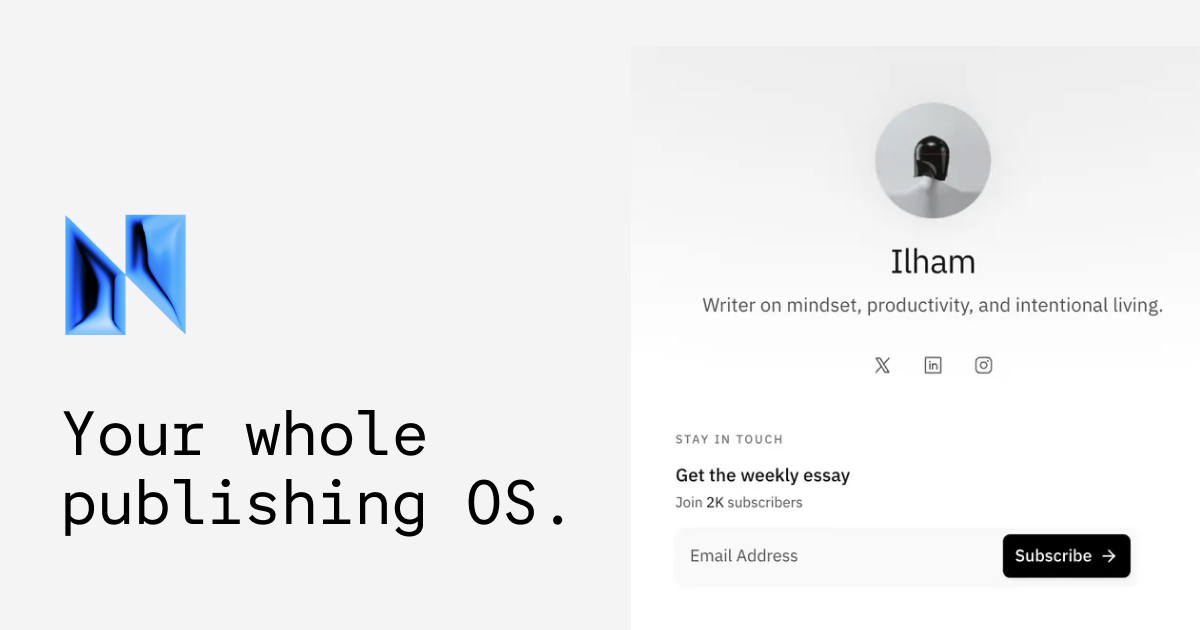
Nashra positions itself as a publishing OS that combines newsletter, hub, and landing page functionality into one platform where every surface grows the same email list. Where Genspark Design focuses on visual design output, Nashra focuses on converting traffic into owned audience relationships. The single best reason to choose Nashra over Genspark Design is its unified subscriber profile system that tracks interactions across bio links, posts, and waitlists as one person rather than fragmented contacts.
What it does better than Genspark Design:
- Unified subscriber profiles eliminate the fragmented data problem that Genspark Design creates when teams use separate tools for landing pages and email capture. When someone taps your bio link, reads a post, and joins a waitlist, Nashra shows one profile rather than three separate contacts.
- AI-powered landing page and email course generation removes the need for manual design work on conversion-focused pages. The system generates pages optimized for list building rather than visual polish.
- Reliable email delivery through Mailgun infrastructure means newsletters actually reach inboxes, a problem that plagues teams cobbling together Genspark Design landing pages with third-party email tools.
Where it falls short:
- No visual design canvas or prototyping capabilities. If you need to mock up UI designs, create visual assets, or prototype user interfaces, Nashra offers nothing. It assumes your design work happens elsewhere.
- The publishing-focused feature set means it does not replace Genspark Design for teams that need brand asset creation, social graphic design, or visual campaign work.
Pricing: Free plan available up to 500 subscribers. Paid tiers scale with subscriber count. No public pricing tiers listed on the website.
Bottom line: Choose this if you are a brand operator or online store owner frustrated that Genspark Design creates beautiful pages but leaves you without a unified way to capture and manage the audience those pages generate. Skip it if your primary need is visual design work rather than audience conversion and retention.
2. Postproxy Engagement API
Postproxy is a unified social media API that handles publishing, comment moderation, and DM responses across nine-plus platforms including Instagram, TikTok, LinkedIn, X, YouTube, Facebook, Threads, Pinterest, and Bluesky. While Genspark Design produces static visual outputs, Postproxy handles the operational side of social presence. The single best reason to consider Postproxy is that it eliminates the nightmare of maintaining separate API integrations for every platform, with one payload delivery system that maps content to each platform's specific requirements automatically.
What it does better than Genspark Design:
- Single payload, multiple platforms means you send one API call and Postproxy handles formatting, platform-specific rules, and delivery across all connected channels. Genspark Design has no social publishing capability at all.
- Full engagement flow through API covers replying to comments, managing DMs, and handling reviews from one interface rather than logging into nine different platform dashboards.
- Built-in infrastructure for AI agents to handle interactions autonomously. You can connect Postproxy to agent systems that make contextual responses without manual approval, which is impossible with Genspark Design.
Where it falls short:
- Requires technical integration work. You need developer resources to implement the API properly. Genspark Design is no-code friendly, while Postproxy assumes you can work with SDKs for Node, Python, Ruby, or similar languages.
- No design capabilities whatsoever. Postproxy moves content you already have, it does not create the visual assets that Genspark Design produces.
Pricing: Free plan available with no credit card required. Scale as needs grow. Public pricing tiers not listed on the website.
Bottom line: Choose this if your team is managing social presence across multiple platforms and spending hours on manual publishing and response management that could be automated. Skip it if you lack developer resources or need design creation tools rather than distribution infrastructure.
3. Amsflow
Amsflow is an AI-powered Amazon PPC automation platform that handles campaign optimization through automated bidding, keyword harvesting, and performance tracking for Amazon FBA sellers. Unlike Genspark Design which serves general design needs, Amsflow is laser-focused on one channel. The single best reason to consider Amsflow is its automated bid management that continuously optimizes ACOS (Advertising Cost of Sale) without the manual spreadsheet work that burns out Amazon sellers.
What it does better than Genspark Design:
- AI-driven automated bid management replaces hours of manual daily bid adjustments. The system learns from performance data and adjusts bids in real time to hit target ACOS thresholds.
- Smart keyword discovery with automated negative keyword filtering means campaigns continuously improve rather than slowly bleeding budget on irrelevant searches.
- Advanced analytics dashboard specifically built for advertising ROI and sales performance tracking on Amazon, which Genspark Design has no capability to address.
Where it falls short:
- Amazon-only focus means it does nothing for brands selling on Shopify, Walmart, or other platforms. Genspark Design serves cross-platform design needs, while Amsflow only works within Amazon advertising.
- No public pricing information makes it impossible to compare cost against other options without contacting sales. The lack of transparency suggests enterprise-tier pricing.
Pricing: Not publicly listed. Requires contacting sales for enterprise pricing information.
Bottom line: Choose this if you are an Amazon FBA seller spending more than ten hours per week on manual PPC management and watching your ACOS drift despite your efforts. Skip it if you sell across multiple platforms or need any design capabilities beyond ad creative optimization.
4. Prospector by Synter
Prospector is an AI agent that operates within Slack to transform first-party CRM data and buying signals into precisely-targeted audiences for major ad platforms including Meta, Google, LinkedIn, Reddit, X, TikTok, and Microsoft Ads. Where Genspark Design produces visual content, Prospector takes that content and ensures it reaches the right people. The single best reason to consider Prospector is its ability to build lookalike audiences from your best customers automatically, solving the common problem where interest-based targeting hits a ceiling because it relies on platform behavioral models rather than your actual customer data.
What it does better than Genspark Design:
- Automated lookalike audience creation from high-LTV customer cohorts means you upload your best customer list and Prospector builds targeting across every platform that supports lookalikes, skipping the manual audience building process entirely.
- Signal-based targeting uses real-world triggers like tech installs and intent data to build audiences, rather than relying on the interest categories that platform algorithms push because they maximize platform revenue rather than your CAC.
- Direct synchronization to Google Customer Match and Meta for improved attribution and suppression lists means your ad spend goes further by excluding existing customers and reaching people who match your buyer profiles.
Where it falls short:
- Enrollment requirement means you cannot just sign up and start using it. The Synter team vets workspaces, which adds friction and potential rejection compared to self-serve tools like Genspark Design.
- No design capabilities at all. Prospector handles audience targeting, not visual content creation. If you need ad creative, you still need Genspark Design or another design tool.
Pricing: Enrollment required. Pricing not publicly available. Expect enterprise-tier costs given the complexity and target market.
Bottom line: Choose this if you have existing customer data in a CRM and are frustrated that interest-based ad targeting keeps delivering impressions but not conversions. Skip it if you do not have a substantial first-party customer database or if you need design creation capabilities.
5. Nimt
Nimt is an AI search visibility tracking tool that monitors brand mentions across major AI models including ChatGPT and Claude, providing automated audits and actionable tasks to help brands win in AI-driven search results. While Genspark Design creates visual content, Nimt helps that content get recommended when AI models answer questions. The single best reason to consider Nimt is the growing risk that your brand is being mentioned or recommended by AI models without your knowledge, and Nimt is the only tool in this list specifically designed to surface and fix those gaps.
What it does better than Genspark Design:
- Multi-model tracking monitors brand presence across ChatGPT, Claude, and other major AI engines simultaneously, catching mentions you would never find through manual search. Genspark Design has zero AI search visibility capability.
- Slack-integrated AI coworker interface means you ask questions in plain language and Nimt responds with specific findings and actionable tasks, rather than requiring you to navigate dashboards or export reports.
- Competitive gap analysis identifies exactly why rival products are being recommended by AI models over your own products, giving you specific actionable items rather than vague competitor monitoring.
Where it falls short:
- Early-stage tool with limited track record. The AI search landscape is evolving rapidly, and features that exist today may not match what AI models do six months from now.
- No design, content creation, or traditional marketing capabilities. Nimt identifies gaps in AI visibility but does not help you create the content that fills those gaps.
Pricing: Free credits available to start. Public pricing tiers not listed on the website.
Bottom line: Choose this if you are serious about preparing your brand for AI-driven search and want to understand how ChatGPT, Claude, and similar models are representing your brand compared to competitors. Skip it if you are not yet concerned about AI search visibility or need tools that directly create or design content.
Feature Comparison Matrix
| Feature | Genspark Design | Nashra | Postproxy Engagement API | Amsflow | Prospector by Synter | Nimt |
|---|---|---|---|---|---|---|
| API Access | Limited | Yes | Yes | Limited | Limited | Yes |
| Free Tier | No | Yes (500 subscribers) | Yes (no card required) | No | No | Yes (credits) |
| Self-Hosted Option | No | No | No | No | No | No |
| AI Integration | Yes | Yes | Yes | Yes | Yes | Yes |
| Mobile App | Unknown | No | No | Unknown | Unknown | No |
| Export Formats | PNG, JPG, SVG | N/A | N/A | CSV, PDF reports | Custom audience files | CSV, PDF reports |
| SSO / Enterprise | Yes (Enterprise tier) | No | No | No | No | No |
| Open Source | No | No | No | No | No | No |
Final Verdict: Who Should Choose What
- Choose Genspark Design if you need a visual design prototyping tool with AI assistance and have budget for enterprise-level pricing.
- Choose Nashra if you are an ecommerce brand or creator frustrated by fragmented audience data and need a unified system to capture, grow, and manage subscribers across all traffic sources.
- Choose Postproxy Engagement API if you are a technical team or agency managing social presence across nine-plus platforms and need programmatic control over publishing, moderation, and AI agent integration.
- Choose Amsflow if you are an Amazon FBA seller spending excessive time on manual bid adjustments and need automated ACOS optimization that learns from your campaign performance data.
- Choose Prospector by Synter if you have existing first-party customer data and want to automatically build targeted ad audiences without manual segmentation work.
- Choose Nimt if you are a brand operator concerned about AI search visibility and need to track how your brand appears across ChatGPT, Claude, Gemini, and emerging AI answer engines.
Still on Genspark Design? Staying makes sense when your primary workflow is visual design prototyping and the current pricing supports your team size without forcing premature upgrades.
Frequently Asked Questions
How difficult is it to migrate away from Genspark Design?
Migration difficulty depends entirely on what you were using Genspark Design for. Visual assets created in Genspark Design can be exported as standard image files and imported into alternative tools. The harder part is workflow migration: if you relied on Genspark Design for specific team collaboration or client handoff processes, rebuilding those workflows in alternatives like Figma or Canva requires planning. Plan for a two-to-four week transition if you have established workflows.
How do these alternatives compare on pricing?
Nashra, Postproxy, and Nimt offer free tiers that allow testing without commitment. Amsflow and Prospector require enrollment conversations with no public pricing. Genspark Design pricing is also not publicly listed, which makes direct comparison difficult. For growing teams, tools with transparent free tiers like Nashra and Postproxy present lower financial risk during evaluation.
Which alternative works best for small teams with limited budget?
Nashra offers the most complete feature set for small teams on a free tier, combining landing pages, newsletters, and audience management in one platform. Postproxy is the best choice for small teams with developer resources who need social automation. Nimt works well for small teams monitoring brand presence in AI search without requiring significant investment.
What happens to my existing projects when I leave Genspark Design?
Your project files remain accessible within Genspark Design as long as your account is active, but you lose the ability to edit or collaborate on them if you cancel. Before switching, export all active projects in your required formats and establish a backup system. Genspark Design does not offer a data portability guarantee beyond standard export formats.